Genome Sequencing: Mapping the Blueprint of Life
At the core of every living organism lies a complex set of instructions known as the genome. Whole genome sequencing (WGS) is the scientific process used to determine the entire DNA sequence of an organism's genome at a single time. This comprehensive approach involves sequencing all chromosomal DNA, as well as DNA found in the mitochondria and, in the case of plants, the chloroplasts.
While WGS has historically served as a vital research tool, its role is expanding. Since 2014, it has been introduced into clinical settings, paving the way for the future of personalized medicine. By analyzing genetic data at the SNP (Single Nucleotide Polymorphism) level—small variations in a single DNA building block—researchers can pinpoint functional variants, study evolutionary biology, and potentially predict disease susceptibility and individual drug responses.
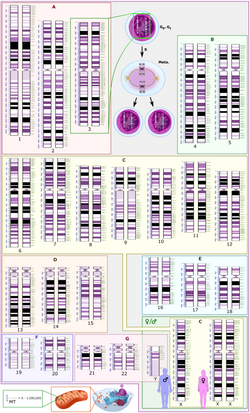
The Fundamentals of DNA
To understand sequencing, one must first understand the structure of DNA, or deoxyribonucleic acid. DNA is the genetic material of a cell, housed within chromosomes in the nucleus and mitochondria. In most cells, the nucleus contains 23 pairs of chromosomes, each containing numerous genes. A gene is a specific segment of DNA that provides the code required to construct proteins or RNA molecules.
The DNA molecule is shaped like a long, coiled double helix, resembling a spiral staircase. The sides of this staircase are composed of sugar (deoxyribose) and phosphate molecules, while the "steps" are made of four chemical bases. These bases pair specifically: adenine pairs with thymine, and guanine pairs with cytosine. Each pair is held together by a hydrogen bond. The specific sequence of these bases determines the genetic information, where sequences of three bases code for an amino acid—the building blocks of proteins.
![Electropherograms are commonly used to sequence portions of genomes.[1]](/images/61/ae/61aebb0403b7fcf6f31a42d230ce1ddd68b05eb4850b6eea0a30f2f3ed2e2b3f.jpg)
Key Facts
- Scope: WGS sequences all chromosomal, mitochondrial, and (for plants) chloroplast DNA.
- Clinical Use: WGS is increasingly used in personalized medicine to guide therapeutic interventions.
- Genomic Coverage: A "draft sequence" covers ~90% of the genome at 99.9% accuracy, while a "finished sequence" covers >95% at 99.99% accuracy.
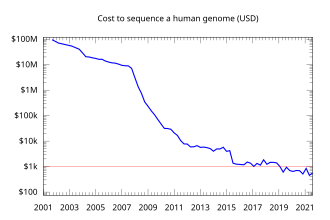
- Cost Variance: Recent reviews show WGS costs can range from US$1,906 to US$24,810.
- Diagnostic Yield: Depending on the patient group, the diagnostic yield of WGS varies between 17% and 73%.
Milestones in Genomic History
The journey to sequence entire genomes has been marked by significant scientific breakthroughs across various species. From bacteria to complex plants, each milestone has expanded our biological understanding.
Biological Milestones
- Bacteria: The first bacterial whole genome sequenced was Haemophilus influenzae.

The first bacterial whole genome to be sequenced was of the bacterium Haemophilus influenzae. - Animals: The worm Caenorhabditis elegans was the first animal to have its whole genome sequenced.

The worm Caenorhabditis elegans was the first animal to have its whole genome sequenced. - Insects: The genome of Drosophila melanogaster was sequenced in 2000.
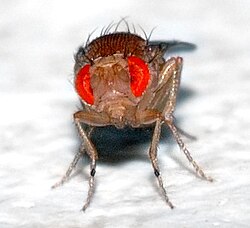
Drosophila melanogaster's whole genome was sequenced in 2000. - Plants: Arabidopsis thaliana was the first plant genome to be sequenced.

Arabidopsis thaliana was the first plant genome sequenced. - Mammals: The genome of the lab mouse, Mus musculus, was published in 2002.

The genome of the lab mouse Mus musculus was published in 2002.
Not all genomes are easy to map. For example, sequencing the oil palm (Elaeis guineensis) required 10 years and 50 scientists globally due to many difficult-to-organize repeated sequences.
![It took 10 years and 50 scientists spanning the globe to sequence the genome of Elaeis guineensis (oil palm). This genome was particularly difficult to sequence because it had many repeated sequences which are difficult to organise.[10]](/images/22/07/2207cbdc5a616aca77e5fabcb08285e0983af79cd2d70867412a659e4bd40b44.jpg)
Technological Evolution and Databases
Early sequencing efforts were automated using tools like capillary sequencers, such as the ABI PRISM 3100 genetic analyzer.
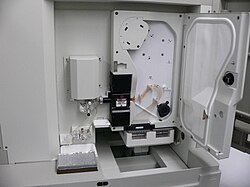
Today, massive amounts of genomic data are stored in major international databases to facilitate global research:
| Database | Completed Whole Genomes | Access Information |
|---|---|---|
| UK Biobank | 500,000 | Available |
| Trans-Omics for Precision Medicine | 161,000 | Requires project-specific consent |
| Million Veteran Program | 125,000 | Non-VA researchers access in 2022 |
| Genomics England's 100,000 Genomes | 120,000 | Researchers must join collaboration |
| All of Us | 90,000 | Expected release by early 2022 |
Frequently Asked Questions
What is the difference between a draft and a finished genome sequence?
A draft sequence covers approximately 90% of the genome with about 99.9% accuracy. A finished sequence is more comprehensive, covering more than 95% of the genome with a higher accuracy of approximately 99.99%.
How much does whole genome sequencing cost?
Costs vary widely. A 2018 review found prices ranging from US$1,906 to US$24,810. While there have been discussions regarding a "$1,000 genome," effective clinical use can often exceed that amount.
Why is sequencing some genomes more difficult than others?
Some organisms, such as the oil palm, have genomes with many repeated sequences. These repetitions make it difficult for scientists to organize and assemble the genetic data correctly.
What is the clinical significance of WGS?
WGS is used in personalized medicine to guide therapeutic interventions and can help identify functional variants that contribute to disease susceptibility or influence how a patient responds to specific drugs.
Does WGS sequence all DNA in a cell?
Yes, whole genome sequencing aims to determine the entirety of an organism's DNA, including chromosomal DNA, mitochondrial DNA, and, in plants, chloroplast DNA.