Galliformes: The Evolution and Diversity of Landfowl
The order Galliformes, commonly known as landfowl, encompasses a diverse array of heavy-bodied ground birds. From the tiny king quail to the massive wild turkey, these birds are characterized by their strong legs, rounded wings, and a preference for terrestrial life. Spanning a temporal range from the Eocene to the present (55–0 Ma), the Galliformes represent a significant lineage of the superorder Galloanserae.
Key Facts
- Size Range: Varies from the king quail (5 inches) to the North American wild turkey (over 47 inches).
- Temporal Range: Extant species date back to the Eocene, though relatives appear in the Late Cretaceous.
- Key Families: Includes Phasianidae (pheasants, turkeys), Numididae (guineafowl), Cracidae (chachalacas), and Megapodiidae (mound-builders).
- Physical Traits: Generally possess heavy bodies, short curved bills, and rounded wings suited for brief flights.
- Distribution: Found globally, with specific families like the Cracidae concentrated in the Americas.
Systematics and Evolutionary History
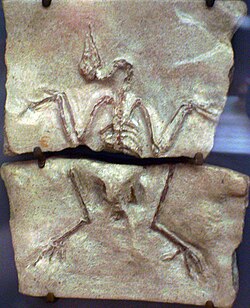
The evolutionary origins of Galliformes are rooted deep in the Cretaceous period. One of the most notable early relatives is Austinornis lentus, found in the Austin Chalk of Texas and dating to approximately 85 million years ago. While closely related to modern landfowl, researchers classify it within the larger clade Pangalliformes—a group more closely related to chickens than to ducks, but outside the crown group of modern galliforms.
Other early evidence includes specimen PVPH 237 from Argentina (about 90 Mya), a partial coracoid bone that resembles the basal lineages of the order. Over millions of years, these birds diversified into various extinct and extant families, including the ancient Gastornithidae and the more recent Phasianidae.
Classification of Modern Landfowl
Modern Galliformes are divided into several distinct families, each with unique ecological niches and physical adaptations.
Phasianidae: Pheasants, Turkeys, and Quail
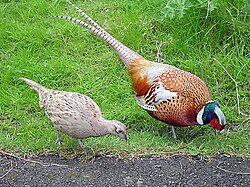
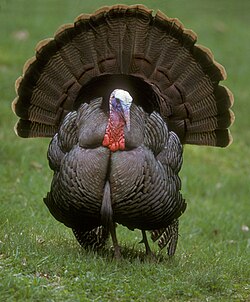
This is the most diverse family, containing true pheasants, partridges, and the North American wild turkey. This group is noted for sexual dimorphism, where males often possess vibrant, iridescent plumage to attract mates, while females remain drab for camouflage.
Cracidae: Chachalacas, Guans, and Curassows
Unlike many other landfowl, chachalacas are primarily arboreal, nesting in trees between 1.5 to 4.6 meters above the ground. They are found in chaparral ecosystems from southern Texas through Mexico and Costa Rica.
Numididae and Megapodiidae
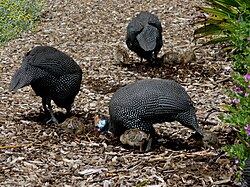
The Numididae family consists of guineafowl, while the Megapodiidae are known as mound-builders or scrubfowl, utilizing unique nesting strategies to incubate their eggs.
Comparative Biology and Ecology
The biological diversity of Galliformes is reflected in their varied sizes and survival strategies. The North American wild turkey (Meleagris gallopavo) can weigh up to 14 kg, while the king quail (Coturnix chinensis) weighs as little as 28 g.
Adaptations for Survival
Many species have evolved specialized traits to survive harsh environments. For example, grouse and ptarmigans develop feather "snowshoes" on their feet to navigate winter landscapes and roost beneath the snow for warmth. In terms of diet, some species exhibit extreme specializations; the male western capercaillie feeds on bilberry leaves during mating season, despite these leaves being toxic to most other herbivores.
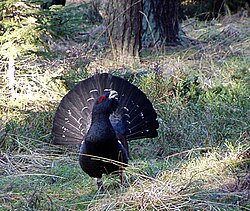
While most galliforms are capable of flight, their rounded wings are designed for short, explosive bursts of speed to escape predators rather than long-distance travel.
Summary of Major Galliform Groups
| Family | Common Examples | Key Characteristics | Primary Habitat |
|---|---|---|---|
| Phasianidae | Pheasants, Turkeys, Quail | Strong sexual dimorphism, heavy bodies | Global |
| Cracidae | Chachalacas, Guans | Arboreal nesting, long tails | Americas |
| Numididae | Guineafowl | Social flocking, helmet-like heads | Africa/Asia |
| Megapodiidae | Mound-builders | Unique mound-nesting behavior | Australasia |
Frequently Asked Questions
Are wild turkeys related to pheasants?
Yes, the wild turkey is a close relative of pheasants, both belonging to the family Phasianidae.
How do grouse survive cold winters?
Grouse and ptarmigans adapt by growing dense, soft plumage and specialized feathers on their feet that act as snowshoes, and they often roost beneath the snow for insulation.
What makes chachalacas different from other landfowl?
Chachalacas are primarily arboreal, meaning they live and nest in trees, whereas most other galliforms are predominantly ground-dwelling.
How old is the Galliformes lineage?
While the order is formally dated from the Eocene (55 Ma), fossil evidence of galliform-like birds, such as Austinornis lentus, suggests relatives existed as far back as 85 million years ago in the Late Cretaceous.
What is the size difference between the smallest and largest landfowl?
The size range is extreme, spanning from the king quail at approximately 5 inches in length to the North American wild turkey, which can exceed 47 inches and weigh up to 14 kg.