Fridtjof Nansen: The Polymath of Polar Exploration and Humanitarianism
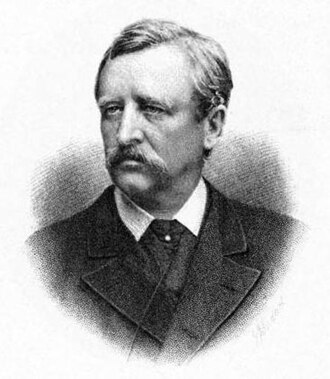
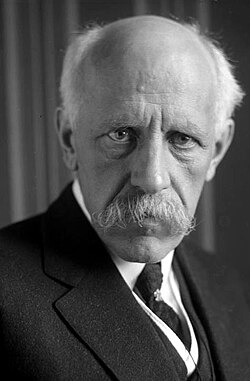
Fridtjof Nansen was a true Norwegian polymath—a man whose life spanned the rigorous demands of Arctic survival, the precision of scientific inquiry, and the compassionate complexities of international diplomacy. From his early days as a daring explorer to his later years as a Nobel Peace Prize laureate, Nansen left an indelible mark on the world, redefining how humans traverse the frozen north and how the international community supports the displaced.
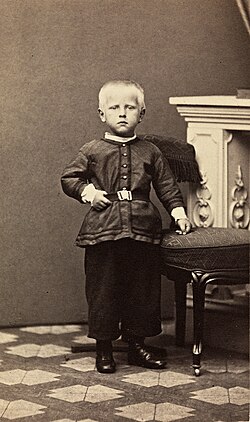
Born on October 10, 1861, in Store Frøen, Christiania (now Oslo), Nansen grew up in a family with deep ties to Norwegian civic life. His education at the Royal Frederick University provided the intellectual foundation for a career that would see him excel as a scientist, diplomat, and humanitarian.
Key Facts
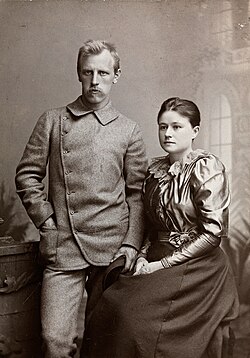
- First Greenland Crossing: Led the first team to cross the Greenland interior on skis in 1888.
- The Fram Expedition: Reached a record northern latitude of 86°14′ between 1893 and 1896.
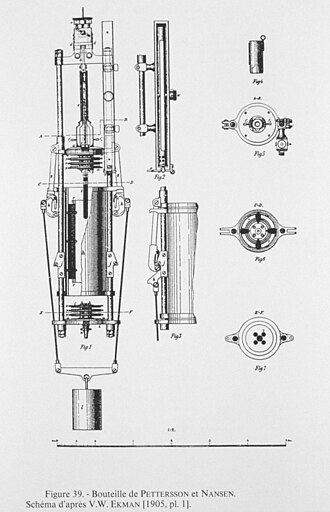
- Scientific Innovation: Developed the Nansen bottle for sampling seawater temperature at specific depths.
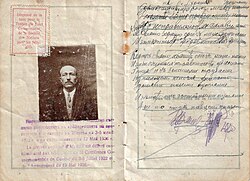
- Humanitarian Legacy: Created the Nansen passport to provide legal status to stateless persons.
- Nobel Peace Prize: Awarded the prize in 1922 for his work with refugees and prisoners of war.
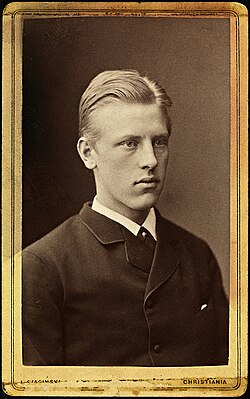
The Daring Polar Expeditions
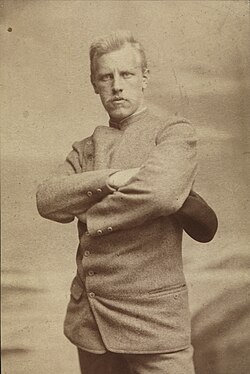
Crossing the Greenland Interior
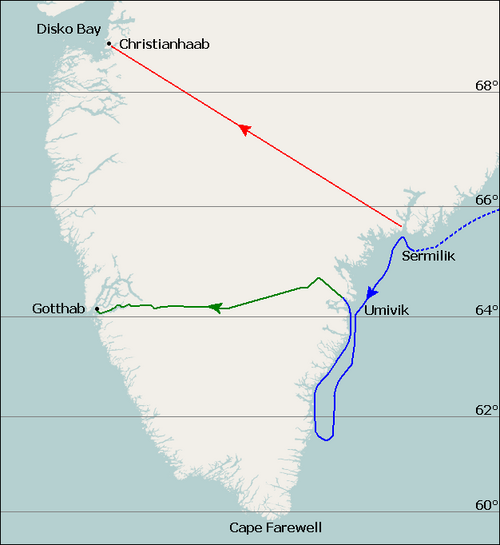
In 1888, Nansen embarked on a mission to be the first to cross the interior of Greenland. Unlike previous attempts, such as that of Adolf Erik Nordenskiöld in 1883, Nansen's strategy relied on cross-country skis and a daring approach to landing.
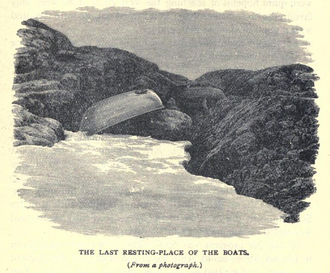
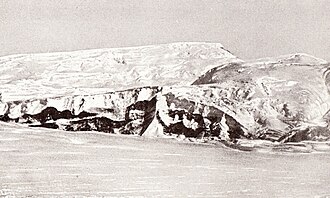
The expedition landed at Umivik Bay on August 11, 1888. After four days of preparation, the team set out on August 15, heading northwest toward Christianhaab. This grueling journey proved that the Greenland icecap could be traversed, establishing Nansen as a premier explorer of his era.
The Fram Expedition (1893–1896)
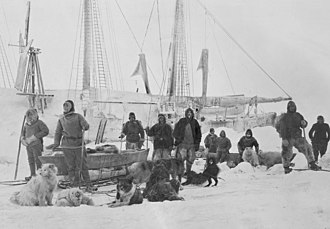
Nansen's most famous venture was the Fram expedition. He theorized that a ship could be frozen into the pack ice and drift naturally toward the North Pole. To achieve this, he commissioned a specially designed vessel, the Fram, which featured a rounded hull to prevent it from being crushed by ice pressure.
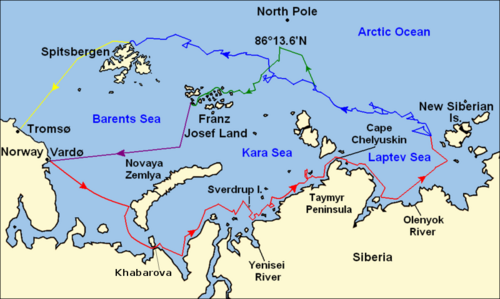
The Fram entered the ice at 78°N and began a three-year drift. Realizing the ship's progress was too slow to reach the pole, Nansen and Hjalmar Johansen left the vessel in March 1895 to attempt a dash for the pole by dog sledge. They reached 86°14′N before being forced to retreat, eventually spending a winter in a makeshift hut on Franz Josef Land.
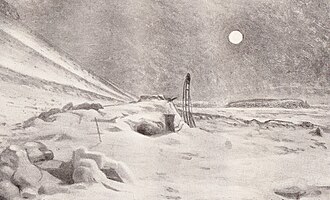
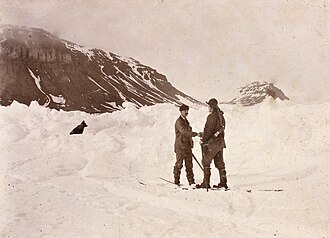
The pair was eventually rescued near Cape Flora in June 1896, coinciding with a meeting with Frederick Jackson. The expedition's success lay not in reaching the pole, but in the scientific data gathered and the proof of the transpolar drift.
Scientific Contributions and National Leadership
Upon his return, Nansen became a national hero and a leading scientific voice. He published Farthest North in 1897, which secured his financial independence. Beyond exploration, he made significant strides in oceanography (the study of the physical and biological properties of the sea) and polar meteorology.
One of his most enduring legacies is the Nansen bottle, a device used to collect water samples from specific depths without contamination. His research into salinity in the North Polar Basin aboard his yacht, Veslemøy, further advanced the field.
Nansen also played a pivotal role in Norway's political independence. In 1905, he advocated for the end of the union with Sweden and helped persuade Prince Carl of Denmark to become the King of Norway. He later served as the Norwegian representative in London to negotiate the Integrity Treaty.
Humanitarianism and the League of Nations
In the final decade of his life, Nansen shifted his focus toward alleviating human suffering. In 1921, he was appointed the High Commissioner for Refugees by the League of Nations. He first tackled the repatriation of nearly half a million prisoners of war, successfully returning over 427,000 men to their homes by 1922.
To assist those who had lost their nationality due to war and revolution, he introduced the Nansen passport. This internationally recognized travel document allowed stateless persons to cross borders legally, providing a lifeline to thousands.
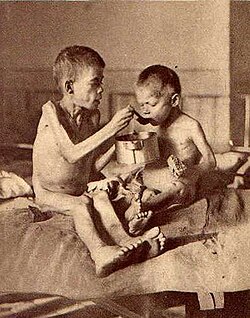
Nansen also worked tirelessly to combat famine in Russia and sought to resettle Armenian refugees following the Armenian genocide. Although some of his irrigation and settlement plans failed due to lack of funding, his advocacy brought global attention to these crises.
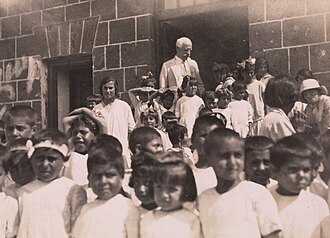
Summary of Nansen's Life and Achievements
| Domain | Key Contribution/Achievement | Notable Outcome |
|---|---|---|
| Exploration | Greenland Crossing (1888) & Fram Expedition | First interior crossing; record northern latitude |
| Science | Nansen Bottle & Oceanographic Research | Advanced deep-sea sampling and salinity studies |
| Diplomacy | Norwegian Independence (1905) | Helped establish Norway as a sovereign nation |
| Humanitarian | Nansen Passport & POW Repatriation | 1922 Nobel Peace Prize |
Frequently Asked Questions
What was the purpose of the Nansen passport?
The Nansen passport was a legal travel document created for stateless persons who had lost their citizenship due to conflicts, such as World War I. It allowed them to cross international borders legally and was recognized by over 50 countries.
How did the Fram ship differ from other vessels?
The Fram was designed with a specifically rounded hull. This unique shape ensured that when the pack ice squeezed the ship, it would be pushed upward rather than being crushed, allowing it to drift safely with the ice currents.
Why did Nansen receive the Nobel Peace Prize?
Nansen was awarded the Nobel Peace Prize in 1922 for his extraordinary humanitarian efforts, specifically the repatriation of hundreds of thousands of prisoners of war and his work providing aid and legal status to refugees.
What is the Nansen bottle used for?
The Nansen bottle is an oceanographic instrument designed to collect seawater samples from specific, predetermined depths while maintaining the temperature and chemical integrity of the sample.
Did Nansen ever reach the North Pole?
No, Nansen did not reach the North Pole. However, during his dash from the Fram, he reached a record northern latitude of 86°14′N, which was the farthest north any human had traveled at that time.