Fourth Army: From the Somme to World War II Deception
The Fourth Army was a significant field army of the British Army, serving as a critical component of the British Expeditionary Force (BEF)—the primary British military force sent to France during the First World War. From its inception as a combat powerhouse in 1916 to its later role as a phantom force in the Second World War, the Fourth Army played a dual role in military history: first as a spearhead of offensive operations and later as a tool of strategic deception.
Key Facts
- Established: February 5, 1916, in France.
- Primary WWI Role: Led the main British contribution to the Battle of the Somme.
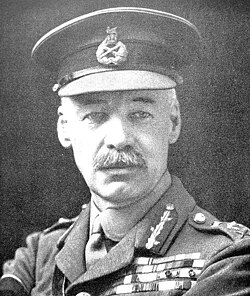
- Notable Commander: General Sir Henry Rawlinson.
- Major Success: Spearheaded the Hundred Days Offensive in 1918.
- WWII Role: Used exclusively for deception operations (Operation Fortitude).
The First World War: Combat and Evolution
The Fourth Army was formed on February 5, 1916, under the command of General Sir Henry Rawlinson. Its creation was a strategic necessity; after the French Tenth Army was transferred to the Battle of Verdun, the Fourth Army was established to manage the British effort for the upcoming Battle of the Somme.
During the first day of the Somme, eleven divisions from the Fourth Army attacked along the Albert–Bapaume road. While the northern sector suffered a complete defeat, the army shifted its focus to the southern sector, transferring control of the north to the Reserve Army.
Operation Hush and Disbandment
By 1917, during the Third Battle of Ypres, the Fourth Army was tasked with Operation Hush, a planned amphibious invasion of the Belgian coast. The goal was to launch a coastal operation via the XV Corps once German forces were pushed back from the Passchendaele–Westroosebeke ridge. However, as the fighting at Ypres stalled, the Fourth Army's divisions were reassigned as reinforcements, leading to the army's effective disbandment.
The 1918 Reformation and Victory
The Fourth Army was reformed in early 1918, again under Sir Henry Rawlinson, following the collapse of the Fifth Army during the German offensive known as Operation Michael. This reformed force became the vanguard of the Hundred Days Offensive, starting with the Battle of Amiens and continuing until the Armistice in November 1918.
Order of Battle
The composition of the Fourth Army evolved significantly between its two primary active periods in the First World War.
| Period | Key Components / Corps | Notable Units |
|---|---|---|
| Battle of the Somme (1916) | III, VIII, X, XIII, and XV Corps | New Zealand Division, 36th (Ulster) Division |
| Battle of Amiens (1918) | Cavalry Corps, III Corps, Canadian Corps, Australian Corps | 1st-5th Australian Divisions, 1st-4th Canadian Divisions |
| Late 1918 Reinforcements | II Corps (American Expeditionary Force) | 27th and 30th Infantry Divisions (AEF) |
The Second World War: A Phantom Army
Unlike its role in the First World War, the Fourth Army never saw actual combat in the Second World War. Instead, it existed as a phantom army—a fictitious unit used in military deception to mislead German intelligence.
Under Operation Cockade and Operation Fortitude North, the Allies convinced the Germans that a Fourth Army was headquartered at Edinburgh Castle and preparing to invade Norway. This successfully diverted German troops away from the actual invasion site in Normandy.
The deception continued with Operation Fortitude South, where the Fourth Army was presented as part of the fictitious First United States Army Group (FUSAG), threatening the Pas-de-Calais. Finally, the army was notionally linked to Operation Trolleybar, a fake amphibious assault on the Netherlands and German coasts involving the phantom 76th Infantry Division, before the deception ended in January 1945.
Frequently Asked Questions
Who was the primary commander of the Fourth Army?
General Sir Henry Rawlinson was the most notable commander, leading the army during its formation in 1916 and again after its reformation in 1918.
What was the Fourth Army's role in the Battle of the Somme?
The Fourth Army was created specifically to carry out the main British contribution to the Battle of the Somme after French forces were moved to Verdun.
Did the Fourth Army fight in World War II?
No. In the Second World War, the Fourth Army was used exclusively for deception purposes to mislead the German military about Allied invasion plans.
What was Operation Hush?
Operation Hush was a planned amphibious invasion of the Belgian coast during the Third Battle of Ypres, which was never fully realized as the Fourth Army's divisions were diverted to other areas.
How did the Fourth Army contribute to the end of WWI?
The Fourth Army spearheaded the Hundred Days Offensive, a series of victorious operations that began with the Battle of Amiens and led directly to the Armistice in November 1918.