First Upper Peru Campaign: The Struggle for Independence in the Andes
The First Upper Peru campaign (1810–1811) was a pivotal military effort during the Argentine War of Independence. Led by Juan José Castelli, the campaign sought to extend the revolutionary influence of the May Revolution—the movement that ousted Spanish rule in Buenos Aires—into Upper Peru, known today as Bolivia.
While the campaign began with promising victories and bold social reforms, it ultimately ended in a decisive defeat that returned the region to Royalist control. This conflict set the stage for years of struggle between the patriot forces of the Río de la Plata and the Spanish Viceroyalty of Peru.
Key Facts
- Timeline: 1810–1811.
- Primary Objective: Expand the influence of the Buenos Aires Junta into Upper Peru.
- Key Patriot Leader: Juan José Castelli, commander of the Army of the North.
- Key Royalist Leader: José Manuel de Goyeneche.
- Major Turning Point: The Battle of Huaqui, which resulted in a Royalist victory.
- Social Impact: Temporary abolition of native slavery and the mita (a forced labor system).
Historical Antecedents
The campaign was triggered by the Peninsular War in Europe, where the capture of King Ferdinand VII by Napoleon left a power vacuum. In the Spanish colonies, this led to a surge in self-determination. While early revolutions in Chuquisaca and La Paz were suppressed, the May Revolution in Buenos Aires successfully established the Primera Junta.
To secure their territory, the Junta organized military expeditions. Before moving toward Upper Peru, the patriot forces had to suppress a counter-revolution in Córdoba led by former viceroy Santiago de Liniers. Following this, Juan José Castelli was appointed commander of the Army of the North.
The Advance into Upper Peru
Castelli's journey was fraught with logistical challenges, particularly in Salta, where he struggled to secure food, funding, and weaponry. Despite these hurdles, the patriot forces saw early success. While Colonel Antonio González Balcarce suffered an initial defeat at the Battle of Cotagaita, he later secured a vital victory at the Battle of Suipacha.
This victory allowed the patriots to control much of Upper Peru. During this period, figures like Martín Miguel de Güemes joined the cause, later becoming legendary leaders of the Guerra Gaucha.
Political and Social Reforms
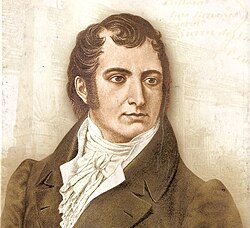
Upon establishing his government in Chuquisaca, Castelli implemented radical changes aimed at dismantling the colonial structure. He proclaimed the end of native slavery, granted political rights to indigenous peoples, and abolished the mita labor system. To ensure these laws reached the population, decrees were published in Spanish, Guarani, Quechua, and Aymara.
Castelli also targeted the influence of the church, prohibiting new convents and parishes to prevent religious orders from forcing natives into servitude. However, these progressive measures alienated the local aristocracy and the church, who viewed Castelli and his secretary, Bernardo Monteagudo, as dangerous radicals akin to Robespierre during the French Revolution.
The Path to Defeat
Tensions rose between Castelli and the leadership in Buenos Aires. Castelli proposed an ambitious plan to cross the Desaguadero river and seize Puno, Cuzco, and Arequipa to threaten the royalist stronghold in Lima. The Junta rejected this as too risky, ordering him to remain in Upper Peru.
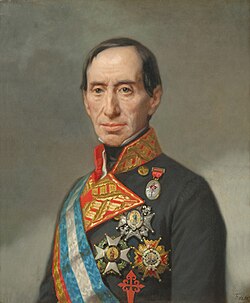
While a fragile truce existed, the Royalist army, led by José Manuel de Goyeneche, used the time to consolidate their strength. The peace shattered on June 19, 1811, when Royalist troops attacked at Juraicoragua.
The Battle of Huaqui
The decisive clash occurred at the Battle of Huaqui near Lake Titicaca. The patriot army was plagued by internal division; many recruits from La Paz defected to the Royalists, and some officers refused to engage in the conflict. The result was a crushing defeat for the Army of the North.
Demoralized and disbanded, the patriot forces were forced to retreat. The inhabitants of Upper Peru, fearing the consequences or favoring the crown, welcomed the returning Royalists.
Aftermath and Legacy
Castelli returned to Buenos Aires in a state of political isolation. He was accused of failure at Huaqui and faced a lengthy trial. During this time, he suffered from tongue cancer, which eventually robbed him of his speech. He died in October 1812 before his trial could be concluded.
Although the first campaign failed, it highlighted the deep social fractures of the colonial era and the potential for indigenous liberation, paving the way for future campaigns by Manuel Belgrano and eventually the final liberation of the region by Antonio José de Sucre and Simón Bolívar.
| Category | Patriot Forces (Río de la Plata) | Royalist Forces (Viceroyalty of Peru) |
|---|---|---|
| Key Commanders | Juan José Castelli, Antonio González Balcarce | José Manuel de Goyeneche, José de Córdoba y Rojas |
| Major Victories | Battle of Suipacha | Battle of Cotagaita, Battle of Huaqui |
| Political Goal | Expansion of May Revolution / Independence | Maintenance of Spanish Colonial Rule |
| Outcome | Retreat to Buenos Aires | Restoration of control over Upper Peru |
Frequently Asked Questions
What was the primary goal of the First Upper Peru campaign?
The primary goal was to expand the political influence of the May Revolution from Buenos Aires into Upper Peru (modern-day Bolivia) and secure the region against Spanish Royalist control.
Who was Juan José Castelli and what was his role?
Juan José Castelli was the commander of the Army of the North. He was not only a military leader but also a political reformer who attempted to abolish native slavery and the mita system in the region.
Why was the Battle of Huaqui significant?
The Battle of Huaqui was the decisive engagement of the campaign. The Royalist victory there effectively ended the patriot presence in Upper Peru and forced the Army of the North to retreat to the Río de la Plata.
What social reforms did Castelli implement in Upper Peru?
Castelli abolished native slavery and the mita (forced labor), granted political rights to indigenous people, authorized free trade, and established bilingual schools to promote education in native languages.
Why did Castelli lose support from the Junta in Buenos Aires?
His support declined due to his radical social policies, his conflict with the church, and political rivalries within the Junta, specifically between the followers of Mariano Moreno and Cornelio Saavedra.