Ferdinand VII: The Turbulent Reign of Spain's 'Criminal King'
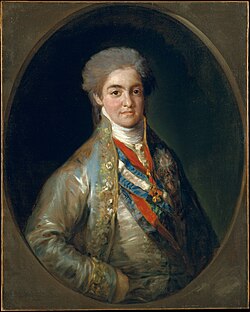
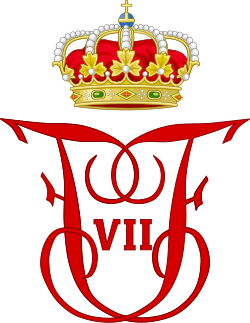
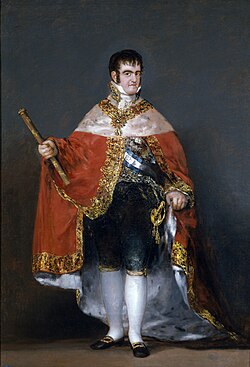
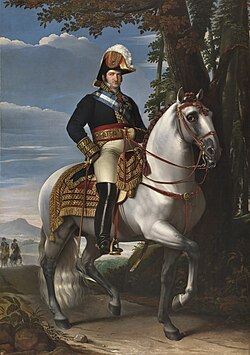
Ferdinand VII was a pivotal and polarizing figure in early 19th-century Spanish history. His tenure as King of Spain was split into two distinct periods, marked by a dramatic shift in public perception. Initially hailed as el Deseado (the Desired) during the struggle against Napoleonic occupation, he later became known as el Rey Felón (the Criminal King) due to his reactionary policies and suppression of liberal reforms.
Born in 1784 at El Escorial, Ferdinand's path to the throne was fraught with tension. As the heir apparent, he was largely excluded from governance by his parents, Charles IV and Maria Luisa of Parma, and their influential advisor, Manuel Godoy. This marginalization led Ferdinand into the El Escorial Conspiracy of 1807, an attempt to secure French support to overthrow the existing administration.
Key Facts
- Reign Periods: Briefly in 1808, and again from 1813 to 1833.
- Dynasty: House of Bourbon.
- Major Conflict: The Peninsular War, triggered by Napoleon's overthrow of the Spanish monarchy.
- Political Stance: A staunch absolutist who repeatedly rejected the liberal Constitution of 1812.
- Succession: His daughter, Isabella II, succeeded him, sparking the Carlist Wars.
The First Reign and Napoleonic Captivity
Ferdinand's first ascent to the throne occurred in March 1808 following the Tumult of Aranjuez, a popular riot that forced his father, Charles IV, to abdicate. However, this victory was short-lived. By May 6, 1808, Napoleon Bonaparte forced Ferdinand to abdicate, replacing him with his own brother, Joseph Bonaparte.
For the next six years, Ferdinand was held under guard by Napoleon at the Château de Valençay in France. While the Spanish elite initially wavered, the general population resisted the French imposition, sparking the Peninsular War. Local provincial juntas formed to govern in Ferdinand's name, and by 1809, the British government officially recognized him as the legitimate king.
![Silver coin: 8 reales New Spain with a portrait of King Fernando VII, 1810[3]](/images/59/d4/59d406aa368eb5563da5987fff969cac9aa0e919024ae27f113c90cb0a2f2b4b.png)
![Silver coin: 8 reales Viceroyalty of the Río de la Plata with a portrait of King Fernando VII, 1823[4]](/images/08/81/0881601e22d4ef2da95ad71916d06520b09d6a36679f35b5f642dde20b2526f5.png)
The Second Reign: Restoration and Reaction
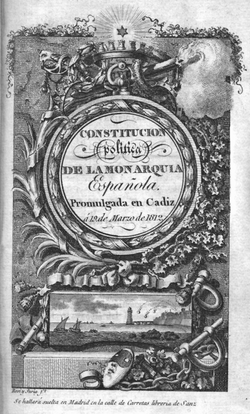
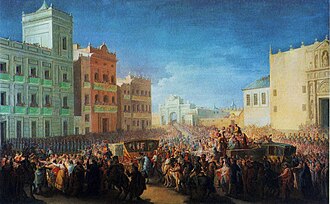
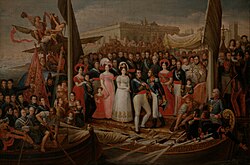
Following Napoleon's setbacks, the Treaty of Valençay was signed on December 11, 1813, allowing Ferdinand to return to Spain. He returned to a nation transformed; in his absence, liberals had drafted the Constitution of 1812, which sought to limit royal power.
Although Ferdinand gave lukewarm assurances that he would govern under the constitution to secure his return, he quickly re-established an absolute monarchy. He relied on a small circle of favorites, known as a camarilla, and frequently cycled through prime ministers, often arresting them shortly after their appointment.
The Liberal Triennium and the Ominous Decade
The tension between absolutism and liberalism culminated in 1820 when Rafael del Riego led a military uprising (a pronunciamiento). This forced Ferdinand to restore the Constitution of 1812, initiating the Liberal Triennium, a three-year period of liberal rule.
This era ended in 1823 when the Congress of Verona authorized a French intervention. King Louis XVIII of France sent troops to restore Ferdinand to absolute power. This ushered in the "Ominous Decade," a period of severe repression where the king suppressed the liberal press, jailed writers, and aggressively persecuted Freemasons, whom he viewed as agents of secular revolution.
Succession Crisis and Death
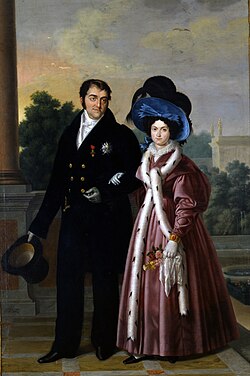
Ferdinand's personal life was marked by tragedy; he married four times, with three of his wives dying young. It was only with his fourth wife, Maria Christina of the Two Sicilies, that he produced surviving heirs.
In 1830, Ferdinand published the Pragmatic Sanction, a decree allowing his daughters to inherit the throne. This displaced his brother, Infante Carlos María Isidro, as the heir. When Ferdinand died on September 29, 1833, at the age of 48, his daughter Isabella II ascended the throne. This sparked a violent succession dispute and the subsequent Carlist Wars, as Carlos and his supporters refused to recognize Isabella's legitimacy.
Summary of Ferdinand VII's Life and Reign
| Category | Details |
|---|---|
| Full Name | Ferdinand VII (Fernando VII) |
| House | Bourbon |
| Reign Dates | 1808 (briefly); 1813–1833 |
| Key Opponents | Napoleon Bonaparte, Liberal Reformers, Infante Carlos |
| Major Legislation | Pragmatic Sanction (1830), Constitution of 1812 (rejected/restored) |
| Burial Site | El Escorial |
Frequently Asked Questions
Why was Ferdinand VII called "the Desired" and then "the Criminal King"?
He was called "the Desired" (el Deseado) before 1813 because the Spanish people viewed him as the symbol of national independence against Napoleon's occupation. He became "the Criminal King" (el Rey Felón) after his restoration, due to his betrayal of the liberal constitution and his brutal suppression of political opponents.
What was the significance of the Constitution of 1812?
The Constitution of 1812 was a liberal document created during Ferdinand's absence. It aimed to transition Spain from an absolute monarchy to a constitutional monarchy, limiting the king's power and introducing representative government.
How did Ferdinand VII view Freemasonry?
Ferdinand VII was an ardent opponent of Freemasonry, believing it was a tool for secular liberal revolutions and a threat to the Catholic faith and the Crown. He declared Freemasons traitors and conducted aggressive campaigns to suppress their lodges.
What caused the Carlist Wars after his death?
The wars were caused by a succession crisis. Ferdinand's Pragmatic Sanction allowed his daughter Isabella II to inherit the throne, but his brother, Infante Carlos, claimed the throne for himself, leading to a long-term conflict between traditionalists (Carlists) and liberals.