Federal Chancellor of the Federal Republic of Germany
The Federal Chancellor (Bundeskanzler) serves as the head of government of the Federal Republic of Germany and is the primary executive authority within the German state. Often described as a "chancellor democracy," the German political system places significant power in this office, making the chancellor the central figure in both domestic policy and international representation.
The current officeholder is Friedrich Merz of the Christian Democratic Union (CDU), who was sworn into office on May 6, 2025.
Key Facts
- Current Chancellor: Friedrich Merz (since May 6, 2025).
- Role: Head of government and Commander-in-Chief during a state of defence.
- Appointment: Elected by the Bundestag and appointed by the President.
- Legal Basis: The German Basic Law (the national constitution).
- Salary: €255,150 per year (as of 2020).
- Primary Residence: Federal Chancellery, Berlin.
Evolution of the Office
While the modern Federal Chancellorship began in 1949, the concept of a chancellor in German governance dates back centuries. Early iterations included the imperial chancellery established by Emperor Ferdinand I in 1559 and various state chancellors in the Habsburg monarchy and the Kingdom of Prussia.
The modern structure emerged in 1867 with the North German Confederation, where Otto von Bismarck became the first Bundeskanzler. This evolved into the role of Reichskanzler (Imperial Chancellor) upon the formation of the German Empire in 1871.
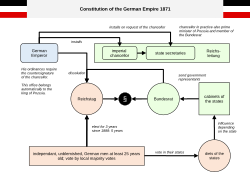
From the Empire to the Third Reich
Between 1867 and 1918, the chancellor was the sole responsible minister at the federal level, appointed by the Emperor. Following the revolution of 1918 and the establishment of the Weimar Republic, the role continued but faced significant instability. This culminated on January 30, 1933, when Adolf Hitler was appointed chancellor. Hitler eventually merged the offices of president and chancellor, styling himself as Führer und Reichskanzler (Leader and Chancellor of the Reich) after the death of President Paul von Hindenburg in 1934.
The Federal Republic (1949–Present)
Following World War II, the 1949 constitution (Basic Law) redesigned the office to prevent the concentration of power seen in previous eras. It strengthened the chancellor's executive authority relative to the president, ensuring a more stable parliamentary government.
Powers and Responsibilities
The Federal Chancellor is responsible for determining the composition of the Federal Cabinet. While the President formally appoints and dismisses ministers, they do so based on the chancellor's recommendations. The chancellor has the authority to set the number of ministers and define their specific duties.
The executive branch operates under three core principles defined in Article 65 of the Basic Law, which establish the chancellor's authority to set the general guidelines of government policy.
The Election Process
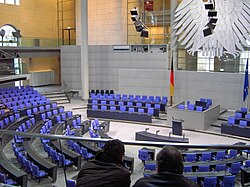
The election of the chancellor is a rigorous process requiring a Kanzlermehrheit (chancellor majority), meaning a candidate must receive a majority of all elected members of the Bundestag, not just those present for the vote. With the 2023 electoral reform, the Bundestag is set at 630 members, requiring 316 votes for election.
Phases of Election
- First Phase: The President nominates a candidate for election by the Bundestag.
- Second Phase: If the nominee fails, the Bundestag can nominate its own candidates (supported by at least 25% of MPs) over a 14-day period.
- Third Phase: If no candidate achieves a majority, the Bundestag may elect a chancellor with a simple majority of those present.
A unique feature of the German system is the constructive vote of no confidence, which allows the Bundestag to dismiss a chancellor only if they simultaneously elect a successor by a majority.
The Vice Chancellor
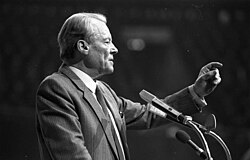
The Vice Chancellor serves as the deputy to the chancellor. In rare instances, such as the resignation of Willy Brandt in 1974 following the Guillaume espionage scandal, the Vice Chancellor (then Walter Scheel) may serve as acting chancellor until a new leader is elected.
Summary of Federal Chancellors (1949–Present)
| Chancellor | Term | Party | Notable Detail |
|---|---|---|---|
| Konrad Adenauer | 1949–1963 | CDU | First Chancellor of the FRG |
| Ludwig Erhard | 1963–1966 | CDU | Largest cabinet (22 ministers) |
| Kurt Georg Kiesinger | 1966–1969 | CDU | Served nearly 3 years |
| Willy Brandt | 1969–1974 | SPD | Resigned due to spy scandal |
| Helmut Schmidt | 1974–1982 | SPD | Served over 8 years |
| Helmut Kohl | 1982–1998 | CDU | Longest serving (16 years, 26 days) |
| Gerhard Schröder | 1998–2005 | SPD | Served over 7 years |
| Angela Merkel | 2005–2021 | CDU | First female chancellor |
| Olaf Scholz | 2021–2025 | SPD | Served nearly 4 years |
| Friedrich Merz | 2025–Present | CDU | Incumbent |
Frequently Asked Questions
How is the German Chancellor elected?
The chancellor is elected via secret ballot in the Bundestag. To be elected in the first two phases, the candidate must achieve a "chancellor majority," which is a majority of all elected members of the parliament.
What is a constructive vote of no confidence?
It is a constitutional mechanism that prevents government instability by requiring the Bundestag to elect a new chancellor before they can remove the sitting one.
Who appoints the Federal Chancellor?
The President of Germany formally appoints the chancellor after they have been elected by the Bundestag.
What happens if a chancellor resigns suddenly?
The President may ask the former chancellor to remain in an acting capacity. If that is not possible, the Vice Chancellor may be appointed as acting chancellor until a new election is held.
What is the role of the Vice Chancellor?
The Vice Chancellor acts as the deputy to the chancellor and typically holds a significant ministerial portfolio, such as Finance or Foreign Affairs.