Facundo: Civilization and Barbarism in Argentine History
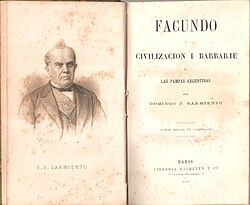
In the realm of Latin American literature, few works carry as much weight as Facundo: Civilización y barbarie. Written in 1845 by Domingo Faustino Sarmiento—a journalist, educator, and future president of Argentina—this work of creative non-fiction serves as a foundational analysis of the region's development. By contrasting the concepts of civilization and barbarism, Sarmiento sought to explain the political instability and cultural conflicts of 19th-century Argentina.
The book is widely regarded as a cornerstone of Hispanic literary history. Critic Roberto González Echevarría describes it as the most important book written by a Latin American in any discipline or genre, providing a blueprint for modernization that influenced the nation's trajectory for decades.
Key Facts
- Author: Domingo Faustino Sarmiento, the seventh president of Argentina.
- Original Publication: 1845, published in Chile while the author was in exile.
- Central Theme: The conflict between "civilization" (urban, European-influenced) and "barbarism" (rural, caudillo-led).
- Primary Targets: The book denounces the tyranny of dictator Juan Manuel de Rosas and analyzes the life of warlord Juan Facundo Quiroga.
- Literary Genre: A precursor to the "dictator novel," using literature as a tool of political resistance.
The Conflict of Civilization and Barbarism
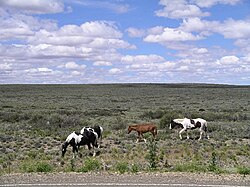
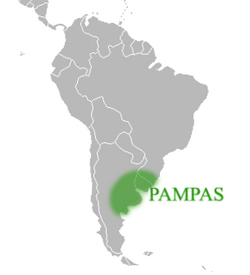
At the heart of Facundo is the tension between two opposing visions for Argentina. Sarmiento identifies civilization with the city—specifically Buenos Aires—which served as a gateway for European culture, trade, and fresh intellectual ideas. In contrast, he associates barbarism with the countryside and the pampas (the vast, fertile plains of Argentina, Uruguay, and southern Brazil).
Sarmiento argued that the bleak, featureless geography of the pampas contributed to the "failure" of Argentina to achieve civilization by the mid-19th century, fostering a rugged, lawless personality in those who inhabited the interior.
Unitarists vs. Federalists
This cultural divide manifested politically as a struggle between two factions: the Unitarists and the Federalists. Sarmiento aligned with the Unitarists, who advocated for a centralized government and the spread of European-style education. The Federalists, conversely, believed that provinces should maintain significant autonomy and were often inclined to reject European cultural imposition.
The Rise of the Caudillos
Sarmiento uses the figure of the caudillo—a regional strongman or warlord who operates above the law—to personify barbarism. The book focuses on two primary figures: Juan Facundo Quiroga and Juan Manuel de Rosas.
Juan Facundo Quiroga
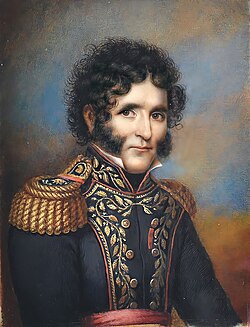
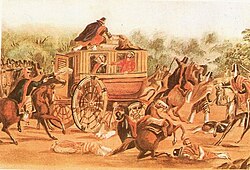
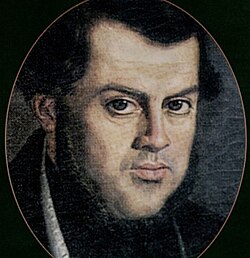
Juan Facundo Quiroga was a warlord from La Rioja who terrorized provincial Argentina during the 1820s and 1830s. Sarmiento portrays Quiroga as a product of the wild countryside. Despite early defeats by Unitarist General José María Paz, Quiroga eventually conquered the provinces of San Luis, Córdoba, and Mendoza before his eventual assassination at Barranca Yaco.
Juan Manuel de Rosas
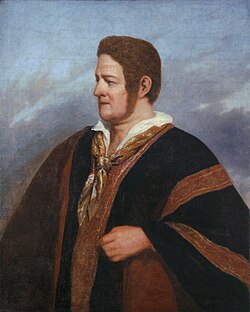
While Quiroga represented the raw nature of the countryside, Juan Manuel de Rosas is depicted as an opportunist who exploited that barbarism to maintain a dictatorship. Rosas ruled Buenos Aires from 1829 to 1832 and again from 1835 to 1852. He utilized a band of spies and thugs known as the mazorca to torture, murder, or exile his enemies.
Sarmiento, who was forced into exile in Chile due to Rosas's regime, viewed the dictator as the heir to Quiroga's legacy, treating his citizens with the same authoritarianism he once used to manage cattle on his estancia (ranch).
Sarmiento's Legacy and Political Influence
Sarmiento did not merely write about civilization; he sought to implement it. After the fall of Rosas, Sarmiento returned to politics, serving in the Senate and eventually as President of Argentina from 1868 to 1874. During his presidency, he focused on science, migration, and education, founding the nation's military and naval colleges to root Argentina's development in European intellectual traditions.
| Feature | Details |
|---|---|
| Original Title | Facundo: Civilización y barbarie |
| Author | Domingo Faustino Sarmiento |
| Publication Date | 1845 (First edition in installments) |
| Key Figures | Juan Facundo Quiroga, Juan Manuel de Rosas |
| Core Dichotomy | City (Civilization) vs. Countryside (Barbarism) |
| Major English Translations | Mary Mann (1868), Kathleen Ross (2003) |
Frequently Asked Questions
What is the main purpose of the book Facundo?
The book serves as both a critical analysis of Argentine national character and a political attack on the dictator Juan Manuel de Rosas. It aims to explain how the geography of the pampas fostered "barbarism" and argues for the necessity of European-style civilization and education.
Who were the caudillos mentioned in the text?
Caudillos were strongmen or regional warlords who did not submit to the law. The primary examples in the book are Juan Facundo Quiroga, a warlord from La Rioja, and Juan Manuel de Rosas, the dictator of Buenos Aires.
What was the difference between Unitarists and Federalists?
Unitarists favored a centralized government and European cultural influence, while Federalists advocated for provincial autonomy and were generally more resistant to Europeanization.
How did Sarmiento's views in the book affect his presidency?
Sarmiento applied the theories in Facundo during his presidency (1868–1874) by prioritizing education, science, and European immigration to move Argentina away from "barbarism" and toward "civilization."
Why are there different English translations of the work?
The 1868 translation by Mary Mann was influenced by her friendship with Sarmiento and aimed to present him as an admirer of U.S. institutions, often omitting his characteristic metaphors. The 2003 translation by Kathleen Ross provides a more complete and modern version of the original Spanish text.