The Evolution and Diversity of Land Plants
From the smallest mosses clinging to a damp rock to the towering canopy of a tropical rainforest, land plants—scientifically known as embryophytes—are the dominant autotrophs of Earth's terrestrial and wetland ecosystems. These complex multicellular eukaryotes have fundamentally reshaped our planet, altering the atmosphere, the soil, and the very climate we live in today.
The term "embryophyte" refers to a defining biological innovation: the ability to nurture embryonic sporophytes within the tissues of the parent gametophytes during early development. This adaptation allowed plants to move away from a total dependence on aquatic environments, leading to the vast diversity of vegetation seen across the globe.
Key Facts
- Temporal Range: Land plants emerged during the Mid Ordovician period and continue to the present.
- Primary Classification: Divided into non-vascular plants (bryophytes) and vascular plants (tracheophytes).
- Atmospheric Impact: Their proliferation contributed to a rise in atmospheric oxygen from roughly 2–11% in the Cambrian/Mid Ordovician to a peak of 35% during the late Carboniferous and Permian.
- Climate Influence: Massive carbon sequestration, particularly by Carboniferous coal forests, contributed to global cooling and the Late Paleozoic glaciations.
- Cellular Traits: Characterized by cellulose cell walls, chloroplasts with chlorophyll a and b, and the use of a phragmoplast during cell division.
The Biological Foundation of Land Plants
At a microscopic level, embryophytes share a common ancestry with freshwater green algae, specifically within the phragmoplastophyta clade of charophyte algae. One of the most critical distinctions between land plants and their algal relatives is the phragmoplast, a disc-like structure that forms during cell division to separate daughter nuclei. This trait is considered essential for the adaptation to terrestrial life.
Embryophytes are characterized by a haplodiplontic life cycle, meaning they alternate between two generations: a haploid gametophyte and a diploid sporophyte. They reproduce sexually using specialized organs called sporangia, dispersing their offspring via spores or seeds. Additionally, land plants utilize metamers—repeated units of development where each unit derives from a single cell, allowing the organism to be constructed from similar, repeating parts.
To maintain structure and survive on land, these plants developed cells with an enlarged central vacuole enclosed by a tonoplast (vacuolar membrane), which maintains cell turgor and keeps the plant rigid.
The Great Transition: From Water to Land
The transition to land occurred as streptophytes—freshwater algae—evolved to tolerate environmental stresses such as UV light, temperature fluctuations, and seasonal dehydration. This migration had profound effects on Earth's geochemistry. As plants spread during the mid-Paleozoic, they eroded the lithosphere to create an organic pedosphere (soil) and altered surface hydrology.
The oxygenation of the atmosphere followed a stepwise progression. Oxygen levels rose from 2–11% in the Cambrian to approximately 13% in the early Silurian, reaching near-modern levels (21%) in the Devonian, and peaking at 35% during the late Carboniferous and Permian periods. This surge was driven largely by the radiation of vascular plants.
Diversity of Land Plants
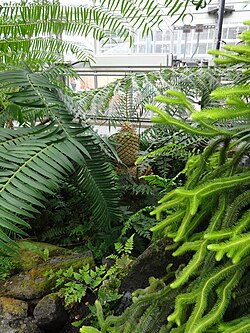
Land plants are broadly categorized based on their internal transport systems and structural complexity.
Non-Vascular Plants (Bryophytes)
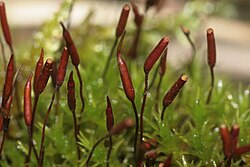
Bryophytes include liverworts (Marchantiophyta), mosses (Bryophyta), and hornworts (Anthocerotophyta). These are typically small, soft-bodied groundcovers that thrive in humid environments. Because they lack lignified vascular tissue, they cannot grow tall and rely on water to disperse their gametes.
In bryophytes, the life cycle is dominated by the haploid gametophyte. The diploid sporophyte is small and remains dependent on the parent gametophyte for its entire existence.
The Rise of Vascular Plants (Tracheophytes)
Appearing around 440 to 360 million years ago during the Silurian and Devonian periods, vascular plants evolved tracheids—cells with walls strengthened by lignin. This allowed plants to grow vertically and transport water efficiently. They also developed a waxy outer cuticle to prevent desiccation.
Unlike bryophytes, the sporophyte is the dominant generation in tracheophytes, developing the roots, stems, and leaves familiar to us today.

Lycophytes and Euphyllophytes
Vascular plants are further divided by the type of leaves they possess:
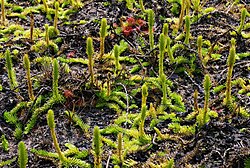
- Lycophytes: Including clubmosses, spikemosses, and quillworts, these plants possess microphylls (small leaves with a single vascular trace). While modern lycophytes are small, their ancestors in the Carboniferous period formed massive forests of tree-like plants such as Lepidodendron.
- Euphyllophytes: This group comprises over 99% of living vascular species and features megaphylls (true leaves). These are believed to have evolved from three-dimensional branching systems that flattened and "webbed" over time.
Ferns, Horsetails, and Seed Plants
The Polypodiophyta clade includes ferns and horsetails, which use spores for dispersal. Ferns are highly diverse, with approximately 12,000 species characterized by broad leaves that grow by unrolling.
The most advanced land plants are the spermatophytes (seed plants). This group includes gymnosperms (such as conifers, cycads, and ginkgo) and angiosperms (flowering plants). Angiosperms have been the dominant group of embryophytes since their boom during the mid-to-late Cretaceous period.
Comparison of Land Plant Groups
The following table summarizes the primary differences between the major divisions of land plants.
| Feature | Bryophytes (Non-Vascular) | Tracheophytes (Vascular) |
|---|---|---|
| Dominant Generation | Haploid Gametophyte | Diploid Sporophyte |
| Vascular Tissue | Absent (or non-lignified) | Present (Lignified tracheids) |
| Root System | Lacks true roots | True absorptive roots |
| Growth Habit | Low-growing groundcover | Vertical growth possible |
| Examples | Mosses, Liverworts, Hornworts | Ferns, Conifers, Flowering Plants |
Frequently Asked Questions
What makes a plant an "embryophyte"?
A plant is classified as an embryophyte if it nurtures its embryonic sporophyte within the tissues of the parent gametophyte during the early stages of development.
How did land plants affect the Earth's atmosphere?
Land plants significantly increased atmospheric oxygen levels and depleted carbon dioxide (a greenhouse gas) through carbon fixation. This process contributed to global cooling and the glaciations of the Late Paleozoic.
What is the difference between microphylls and megaphylls?
Microphylls are small leaves with a single vascular trace, found in lycophytes. Megaphylls are larger "true" leaves with complex branching veins, found in euphyllophytes (such as ferns and seed plants).
Why are bryophytes limited in size?
Bryophytes lack lignified vascular tissue, which is necessary for transporting water over long distances and providing the structural support needed to grow vertically.
What is the role of the phragmoplast in plant evolution?
The phragmoplast is a disc-like structure that forms during cell division. It is a key trait shared by land plants and certain streptophyte algae, and it is considered essential for the transition to a terrestrial lifestyle.