Eva Perón: The Life and Legacy of Argentina's Spiritual Leader
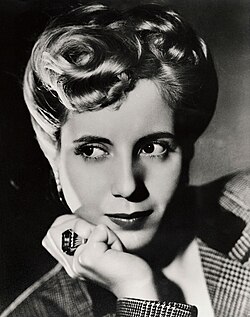
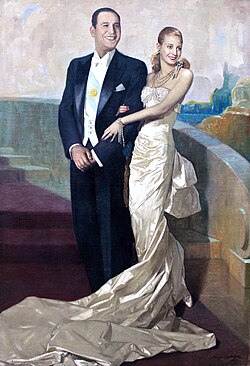
Eva Perón, affectionately known as "Evita," remains one of the most influential and polarizing figures in Argentine history. Serving as the First Lady of Argentina from 1946 until her death in 1952, she evolved from a struggling actress into a powerful political force. Her deep connection with the working class and her commitment to social welfare transformed her into a symbol of hope for millions, earning her the official title of "Spiritual Leader of the Nation."
Key Facts
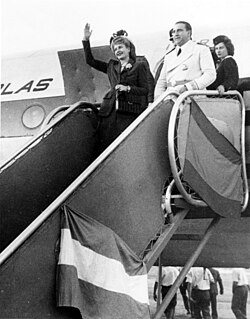
- Full Name: María Eva Duarte de Perón.
- Role: First Lady of Argentina (1946–1952).
- Major Achievements: Championed women's suffrage and founded the Eva Perón Foundation.
- Political Base: The descamisados ("shirtless ones"), representing the low-income and working class.
- Death: Died of cervical cancer on July 26, 1952, at the age of 33.
Early Life and Rise to Fame
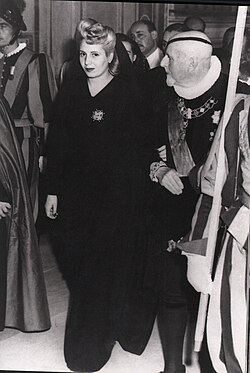
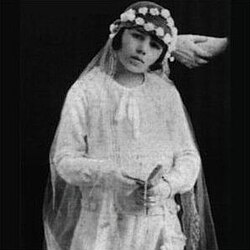
Born on May 7, 1919, in the rural province of Buenos Aires, Eva Duarte grew up in poverty as the youngest of five children. Her early life was marked by complexity; while her baptismal records list her birth in 1919, other civil registries suggest 1922, leading some historians to believe she forged documents later in life.
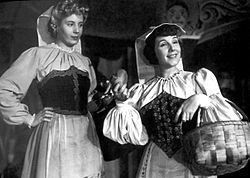
At age 15, Eva moved to Buenos Aires to pursue a career in the arts. She found success as a stage, radio, and film actress, a period that provided her with the public visibility that would later aid her political ascent.
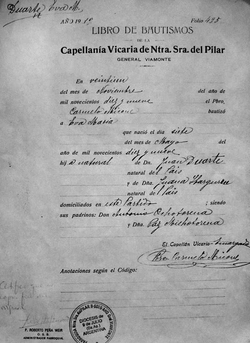
Meeting Juan Perón
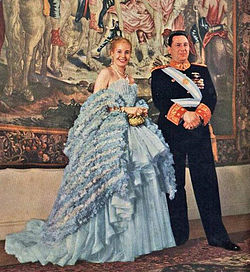
The trajectory of Eva's life changed on January 22, 1944, when she met Colonel Juan Perón at a charity gala at Luna Park Stadium. The event was organized to raise funds for victims of a devastating earthquake in San Juan. The two married in 1945, just as Juan Perón was ascending to the presidency.
Political Power and Social Impact
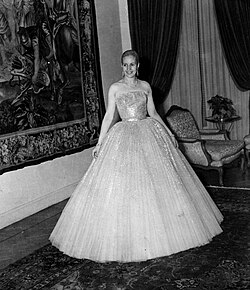
Upon Juan Perón's election in June 1946, Eva transitioned from a supportive spouse to a central figure of Peronism (the political movement based on the beliefs of Juan Perón). Unlike traditional First Ladies of the era, Eva took an active role in governance, overseeing the Ministries of Labor and Health.
The Eva Perón Foundation
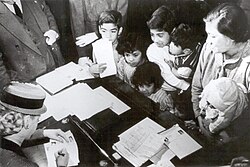
Eva established the Eva Perón Foundation, a charitable organization that provided massive social aid to the poor. This foundation replaced the older, society-led Sociedad de Beneficencia de Buenos Aires, shifting the focus of charity from elite patronage to state-driven social welfare.
Women's Suffrage and the Female Peronist Party
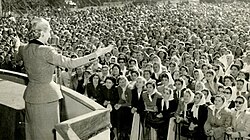
One of Eva's most enduring legacies was her fight for women's political rights. Following the passage of Law 13,010, which established universal suffrage in Argentina, Eva founded the Female Peronist Party. This was the nation's first large-scale female political party, boasting 500,000 members and 3,600 headquarters by 1951.
The Peak of Influence and Declining Health
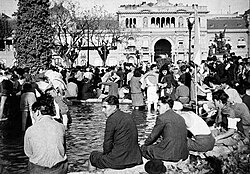
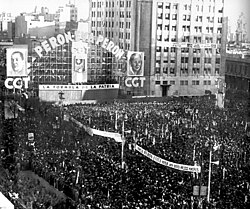
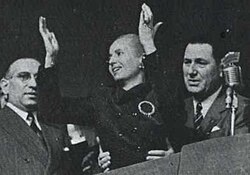
By 1951, Eva's popularity reached its zenith. During a massive rally known as the "Cabildo Abierto," millions gathered to support the Perón ticket. However, the military and the bourgeoisie strongly opposed her candidacy for Vice President. Combined with her rapidly failing health, these pressures forced her to withdraw from the race.
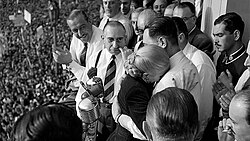
Eva suffered from cervical cancer that eventually metastasized. In a pioneering but grueling medical effort, she became the first Argentine to undergo chemotherapy. By June 1952, she was severely emaciated, weighing only 36 kg.
Death and the Odyssey of Her Body
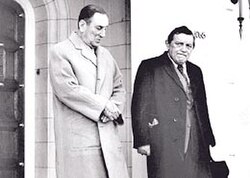
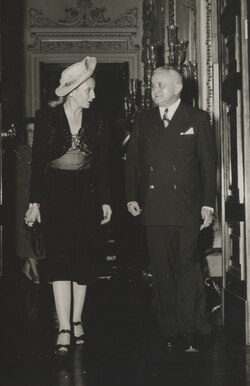
![On 9 April 1951, Golda Meir, then Labor Minister of Israel, met with Perón to thank her for the aid that the Eva Perón Foundation had given Israel.[83]](/images/35/7f/357f185c474edb4e081b268c4c34d2c5724303e8f983f5f2c1feb54bfbfcb58e.jpg)
Eva Perón passed away on July 26, 1952, at the Unzué Palace. Her death triggered a period of national mourning, and she was granted a state funeral—an honor typically reserved for heads of state.
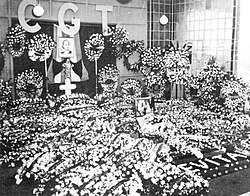
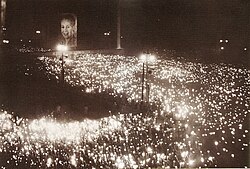
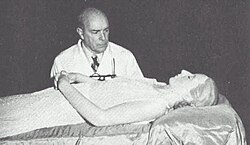
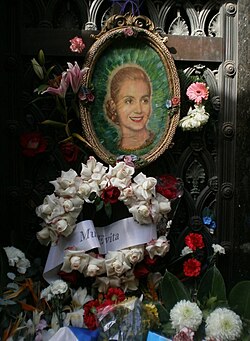
Following a military coup in 1955, her body was removed and disappeared for 16 years. It was eventually discovered in a crypt in Milan, Italy, under the alias "María Maggi de Magistris." After being kept in Spain by Juan Perón, her remains were finally repatriated to Argentina in 1974 and interred in the Duarte family tomb at La Recoleta Cemetery.
Summary of Eva Perón's Roles
| Role | Period | Primary Focus |
|---|---|---|
| First Lady of Argentina | 1946–1952 | Labor rights and social welfare |
| President of Eva Perón Foundation | 1948–1952 | Charitable aid for the poor |
| President of Female Peronist Party | 1949–1952 | Women's suffrage and political mobilization |
| Spiritual Leader of the Nation | 1952 | Symbolic national leadership |
Legacy and Cultural Impact
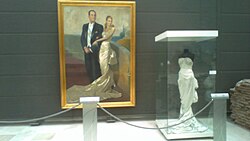
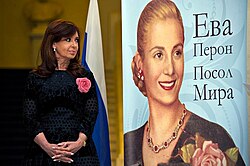
Eva Perón's influence persists in modern Argentina. Former President Cristina Fernández de Kirchner has cited Eva as an example of passion and combativeness. In 2002, the Museo Evita opened to preserve her clothing and portraits. Furthermore, in 2012, she became the first woman to appear on Argentine currency, featured on the 100 peso note.
![Liza Minnelli reading the plaque on Eva Perón's tomb, 1993. In the early 1980s, Minnelli was considered for the lead role in the movie version of the musical Evita.[90]](/images/9b/67/9b67a3f843d437e3c2916155d655b26c8ad7e6d1b2a7c1aba4196ba489887394.jpg)
Frequently Asked Questions
Who were the descamisados?
The descamisados, meaning "shirtless ones," were the low-income and working-class Argentines who formed the core of Eva Perón's political support base.
What was the purpose of the Eva Perón Foundation?
The foundation was a charitable organization designed to provide direct aid to the poor, orphans, and homeless, moving social welfare away from elite-run societies to a more systemic approach.
Did Eva Perón actually become Vice President?
No. Although she was nominated and had massive public support, she withdrew her candidacy due to opposition from the military and her declining health.
Why was her body missing for 16 years?
After the 1955 military coup, the new authorities removed her body to prevent it from becoming a shrine for Peronists. It was eventually found in Milan, Italy.
How did Eva Perón impact women's rights in Argentina?
She was instrumental in the passage of Law 13,010, which granted women the right to vote, and she organized the Female Peronist Party to integrate women into active political life.