Estes Park, Colorado: A Gateway to the Rockies
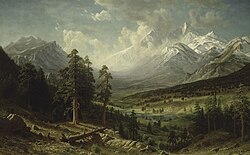
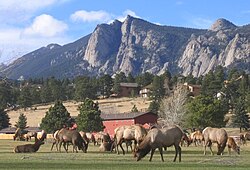
Nestled at an elevation of 7,743 feet in Larimer County, Estes Park is a statutory town that serves as a primary gateway to the breathtaking landscapes of the Rocky Mountains. From its early days as a seasonal retreat for Native Americans to its current status as a bustling tourist hub, the town blends a rich frontier history with a deep commitment to environmental conservation.
Key Facts
- Founded: 1859 by Joel Estes.
- Incorporated: April 17, 1917.
- Population: 5,904 (2020 Census).
- Primary Attraction: Proximity to Rocky Mountain National Park.
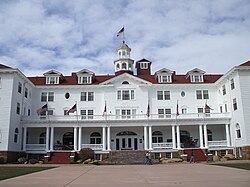
- Notable Landmark: The historic Stanley Hotel, opened in 1909.
- Geography: Total area of 4,414 acres, including 48 acres of water.
The History of the Estes Valley
Indigenous Roots and Early Settlement
Long before European arrival, the Arapaho Native Americans utilized the valley as a summer residence, referring to the area as "the Circle." The town's formal European history began in 1859 when Joel Estes, a native of Missouri, founded the community in what was then the Territory of Nebraska. By 1863, Estes had moved his family to the area permanently.
The region first gained wider publicity in 1864 through William Byers, a newspaper editor whose accounts of attempting to climb Longs Peak painted the valley as a pristine wilderness.
The Influence of Lord Dunraven and Early Pioneers
In 1872, the 4th Earl of Dunraven and Mount-Earl, an Anglo-Irish nobleman, arrived in the valley. While his initial attempt to establish a private hunting preserve failed, he eventually opened the area's first resort, the Estes Park Hotel, which operated until it was destroyed by fire in 1911.
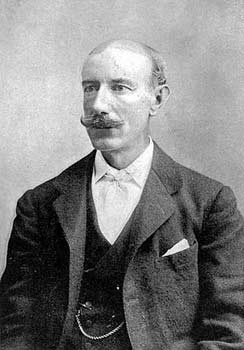
Other early pioneers included Alex and Clara MacGregor, who homesteaded at the foot of Lumpy Ridge. In 1874, MacGregor established a toll road from Lyons, Colorado, to Estes Park, which evolved into today's U.S. Highway 36. This infrastructure shift transformed the valley from a remote trail for pack horses into an accessible destination for travelers.
Conservation and the Birth of a National Park
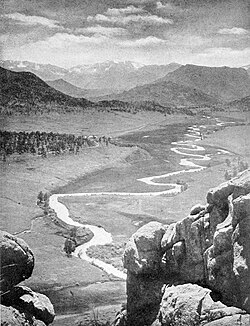
The trajectory of Estes Park was forever changed by Enos Mills, a naturalist and conservationist who arrived in 1884. Mills dedicated his life to the preservation of the surrounding wilderness, advocating for the protection of nearly a thousand square miles of land. His efforts culminated in the dedication of Rocky Mountain National Park in 1915.
Town Development and Infrastructure
As the town grew, so did its local institutions. The Estes Valley Library was founded in 1916 by the Estes Park Women's Club, starting with just 262 books in an old schoolhouse. By 1912, the town had a seasonal newspaper, the Estes Park Trail, which helped promote local businesses and hotels.
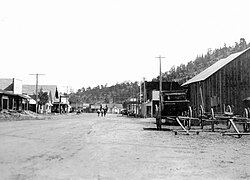
Infrastructure improvements continued into the mid-20th century. In 1949, the completion of the Olympus Dam created Lake Estes, providing the town with its primary source of drinking water.
Local Attractions and Landmarks
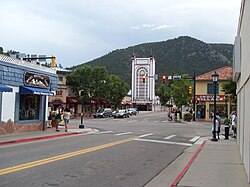
Estes Park is home to several iconic sites. The Stanley Hotel, opened in 1909 by inventor Freelan Oscar Stanley, remains one of the town's most famous landmarks. For those seeking views of the valley, the Estes Park Aerial Tramway has carried over 3 million passengers to the summit of Prospect Mountain since 1955.
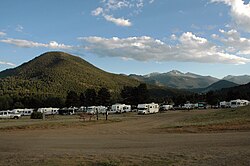
The town also offers recreational facilities, including the Estes Park Golf Course and various campgrounds that cater to the influx of tourists visiting the national park.
Geography and Climate
The town occupies a total area of 6.897 square miles. Its climate is characterized by significant seasonal variation, with cold winters and mild summers. The area experiences an average annual precipitation of 17.42 inches, with heavy snowfall typically occurring in November.
| Metric | Winter (Jan) | Summer (Jul) | Annual Average |
|---|---|---|---|
| Mean Maximum Temp | 50.6°F (10.3°C) | 88.3°F (31.3°C) | 89.4°F (Max) |
| Mean Minimum Temp | 16.1°F (-8.8°C) | 48.2°F (9.0°C) | 30.0°F (Mean) |
| Average Precipitation | 0.82 in (21 mm) | 2.55 in (65 mm) | 17.42 in (442 mm) |
| Average Snowfall | 9.8 in (25 cm) | 0.5 in (1.3 cm) | Variable |
Demographics and Community
According to the 2020 Census, the population of Estes Park was 5,904, with a median age of 55.5 years. The community is predominantly White (81.9%), with a significant Hispanic or Latino population (15.3%). The town has a high percentage of residents aged 65 or older (34.5%), reflecting its popularity as a retirement and vacation destination.
Frequently Asked Questions
Who founded Estes Park?
The town was founded in 1859 by Joel Estes, a native of Missouri, in what was then the Territory of Nebraska.
What is the significance of Enos Mills?
Enos Mills was a naturalist and conservationist whose lifelong advocacy led to the establishment and dedication of Rocky Mountain National Park in 1915.
What is the Stanley Hotel?
The Stanley Hotel is a historic landmark in Estes Park that opened in 1909; it was built by Freelan Oscar Stanley, the inventor of the Stanley Steamer.
How does the town get its drinking water?
The town's main source of drinking water is Lake Estes, which was created following the completion of the Olympus Dam in 1949.
What is the elevation of Estes Park?
Estes Park is situated at an elevation of 7,743 feet (2,360 meters).