Essen: The Industrial Heart and Green Transformation of the Ruhr
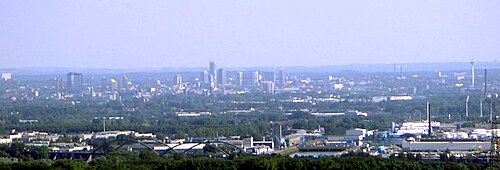
Located in the state of North Rhine-Westphalia, Essen is a city that embodies the dramatic evolution of Germany's industrial landscape. Once the epicenter of the coal and steel industries, Essen has transitioned from a smog-filled industrial hub into one of Germany's greenest cities, blending a rich heritage of heavy engineering with modern urban living and expansive natural spaces.
Today, Essen serves as a vital administrative and economic center within the Düsseldorf region, balancing its role as a corporate headquarters hub with a deep commitment to cultural preservation and environmental sustainability.
Key Facts
- Population: 574,682 (as of December 31, 2024).
- Area: 210.34 square kilometers.
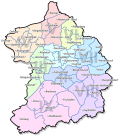
- Administration: Divided into 9 districts and 50 boroughs.
- Key Industries: Home to global headquarters including ThyssenKrupp, RWE AG, and E.ON.
- Climate: Temperate, with a record high of 40.0°C and a record low of -24.0°C.
- Governance: Led by Lord Mayor Thomas Kufen (CDU) for the 2025–2030 term.
Geography and Climate
Essen is situated in the heart of the Ruhr area, surrounded by neighboring cities such as Oberhausen, Bottrop, Gelsenkirchen, and Bochum. The city's topography is characterized by an elevation of approximately 116 meters above sea level.
The local climate is temperate, though it has seen extreme weather events in recent years. For instance, 2023 was recorded as the wettest year on record, with 1,372.1 mm of precipitation. While winters can be cold, with snowfall occurring as late as April in rare instances, the city is widely recognized for its significant green cover, particularly in areas like the borough of Kettwig.
![Borough of Kettwig, annexed in 1975. Despite its industrial history, Essen is generally regarded as one of Germany's greenest cities.[55]](/images/b3/b9/b3b94c0ecf518e91779a39627326040e306fdb990c7c9f0d4e904de17584d362.jpg)
Historical Evolution
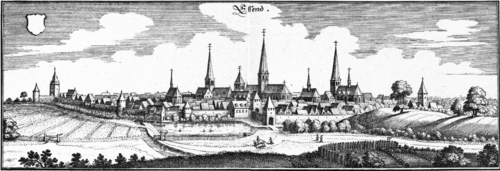
Essen's history is a journey from a religious center to an industrial powerhouse. Early records and engravings from 1647 show a city deeply rooted in tradition, centered around the Essen Minster.
The Rise of the Krupp Empire
The city's trajectory changed forever with the industrialization led by the Krupp family. Starting with Friedrich C. Krupp, the family built a steel and armaments empire that made Essen the "armory of the Reich." This era saw the construction of Villa Hügel, one of the largest private residences in Europe, and the massive expansion of factory complexes.
War and Recovery
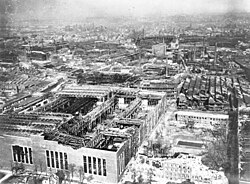
Due to its industrial importance, Essen was a primary target during World War II, leading to devastating destruction of its factories and urban center. Following the war, the city underwent a massive reconstruction phase, shifting its economic focus from heavy coal and steel toward services, energy, and technology.
Politics and Administration
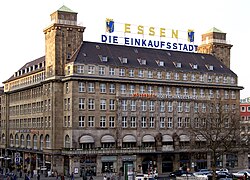
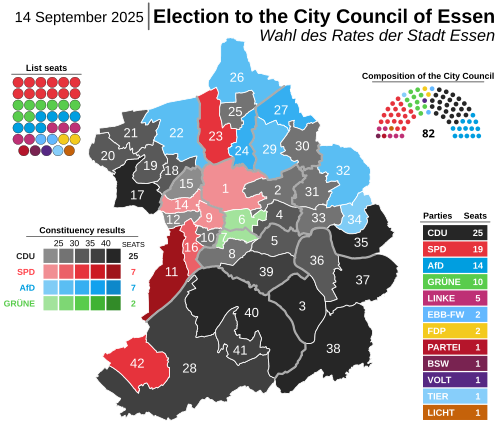
Essen is governed by a Lord Mayor and a city council. In the 2025 mayoral election, Thomas Kufen of the CDU secured victory in the second round with 57.1% of the vote. The city council reflects a diverse political landscape, with the CDU and SPD holding the majority of seats.
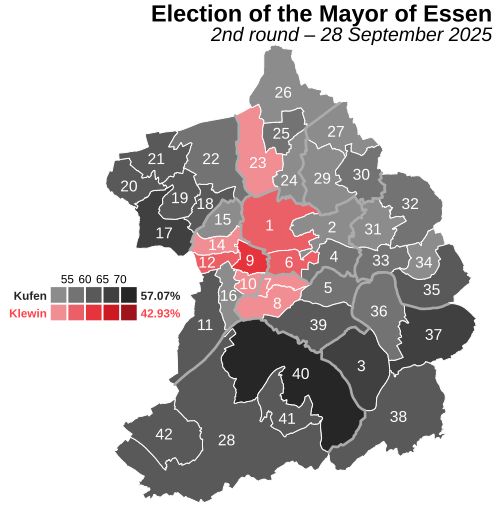
The city's administrative structure is designed to manage its dense population, utilizing a system of districts and boroughs to ensure efficient local governance.
Economy and Infrastructure
Modern Essen is a powerhouse of the German service economy. It hosts the headquarters of several DAX-listed companies and major energy providers. The Messe Essen serves as a premier international trade fair venue, attracting businesses from across the globe.
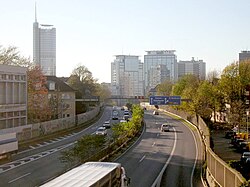
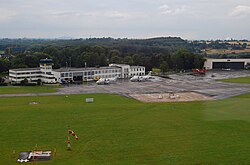
Infrastructure is highly developed, featuring the Ruhrschnellweg motorway and a comprehensive public transport network centered around the Essen Hauptbahnhof (main station). For air travel, the city is served by the Essen/Mülheim Airport.
Cultural Landmarks and Tourism
Essen offers a unique blend of industrial archaeology and classical art. The most prominent site is the Zollverein Industrial Complex, a former coal mine and coking plant that is now a UNESCO World Heritage site and home to the Ruhrmuseum.
Must-Visit Sites
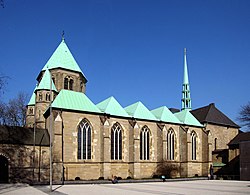
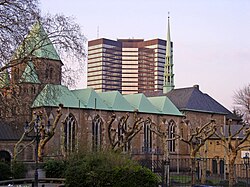
- Essen Minster: A historic cathedral and treasury that represents the city's early spiritual roots.
- Villa Hügel: The former residence of the Krupp family, showcasing the opulence of the industrial age.
- Grugapark: A massive botanical garden and park known for its sculptures and waterfalls.
- Margarethenhöhe: A historic garden city settlement known for its unique architecture.
City Overview Summary
| Category | Details |
|---|---|
| State | North Rhine-Westphalia |
| Population (2024) | 574,682 |
| Lord Mayor | Thomas Kufen (CDU) |
| Key Landmark | Zollverein Industrial Complex |
| Major Employers | ThyssenKrupp, RWE, E.ON |
| Sister Cities | Sunderland, Grenoble, Tel Aviv, Tampere, etc. |
Frequently Asked Questions
What is the significance of the Zollverein Industrial Complex?
Zollverein is a former coal mine and coking plant that represents the peak of industrial architecture. It is now a UNESCO World Heritage site and serves as a cultural hub housing the Ruhrmuseum.
Who are the most notable people from Essen?
Essen is the birthplace of many influential figures, including the industrialist Alfred Krupp, the actor Heinz Rühmann, and several professional footballers like Jens Lehmann and Leroy Sané.
Is Essen really one of Germany's greenest cities?
Yes, despite its industrial history, Essen has invested heavily in urban greening and parklands, such as the Grugapark, and is generally regarded as one of the greenest cities in Germany.
What is the current political leadership of the city?
As of 2025, the city is led by Lord Mayor Thomas Kufen of the Christian Democratic Union (CDU), who won the mayoral election with 57.1% of the vote in the second round.
Which major companies have their headquarters in Essen?
Essen is home to the global headquarters of ThyssenKrupp, RWE AG, and E.ON, making it a critical center for the steel and energy sectors.