Ensenada: Argentina's Strategic Port City and Historical Hub
Located in the heart of the Buenos Aires Province, Ensenada is a vital port city and the capital of the Ensenada Partido. Situated around the Ensenada de Barragán, this coastal city serves as a primary suburb of the Gran La Plata conurbation, positioned just 10 km from the provincial capital, La Plata. With a rich history spanning from early European exploration to its current role as a logistics powerhouse, Ensenada is a cornerstone of Argentina's maritime infrastructure.
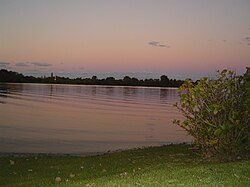
The city is defined by its relationship with the water, balancing its identity as a residential center and a critical industrial gateway for the nation's exports.
Key Facts
- Founded: January 2, 1801.
- Location: Buenos Aires Province, Argentina.
- Population: 54,463 (2010 census).
- Elevation: 4 meters (13 feet) above sea level.
- Primary Economy: Port operations focusing on grain, beef, and industrial shipments.
- Historical Landmark: Fort Barragán, a National Historical Monument.
Maritime Importance and Economic Growth
The port of Ensenada is a critical engine for the regional economy. It specializes in the export of grain and beef, alongside various industrial shipments. In recent years, the volume of trade in Ensenada has grown, partly absorbing traffic from the port of Buenos Aires, located 60 km to the northwest.
This growth trend is expected to accelerate. As authorities consider repurposing the port of Buenos Aires into a passenger-only facility, Ensenada—along with the ports of Campana and Bahía Blanca—is slated to handle an increasing share of Argentina's commercial maritime traffic.
A Journey Through History
The history of the Ensenada region is deeply intertwined with the colonial and defensive needs of Argentina. The area was first encountered by Europeans in 1520 during the expedition of Ferdinand Magellan. By 1629, Antonio Gutiérrez Barragán established an estancia (a large landed estate), and by the early 18th century, the land passed to the López Osornio family.
Defense and Development
Military strategy played a major role in the city's early years. A fort was constructed in 1731, which successfully resisted a Portuguese invasion in 1734, though it was later destroyed by a flood in 1789. Following a storm that damaged the Port of Buenos Aires, the town's creation was formalized on January 2, 1801. During the British invasions of the River Plate, Ensenada served as a vital defensive port.
Modernization and Autonomy
The 19th and 20th centuries brought rapid administrative and physical growth. Ensenada was declared the partido seat in 1856, and a rail line was approved in 1863. The 20th century saw the expansion of the port and the addition of essential infrastructure, including a shipyard, a bridge, and a hospital. A significant milestone occurred in 1957 when Ensenada became an autonomous city, separating from La Plata.
City Profile Summary
| Category | Detail |
|---|---|
| Coordinates | 34°51′52″S 57°54′37″W |
| Province | Buenos Aires |
| Area Code | + 54 221 |
| CPA Base | B 1925 |
| Population (2001) | 51,322 |
| Population (2010) | 54,463 |
Frequently Asked Questions
What is the primary economic activity in Ensenada?
The primary economic activity is centered around its port, which handles the export of beef, grain, and various industrial goods.
When was Ensenada officially founded?
The town's creation was formalized on January 2, 1801.
What is the significance of Fort Barragán?
Fort Barragán is a historical site that resisted a Portuguese invasion in 1734 and was designated as a National Historical Monument in 1942.
How does Ensenada relate to the city of La Plata?
Ensenada is located 10 km from La Plata and, together with Berisso, forms the main suburbs of the Gran La Plata conurbation. It became an autonomous city in 1957.
Why is the port of Ensenada expected to grow?
Growth is expected because Buenos Aires city authorities are considering converting the port of Buenos Aires into a passenger-only facility, shifting commercial volume to ports like Ensenada.