Emancipation Proclamation: The Presidential Decree That Changed American History
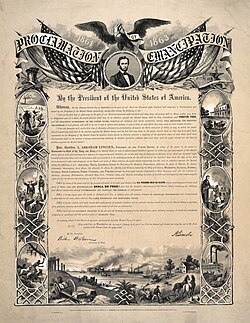
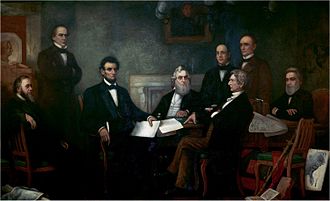
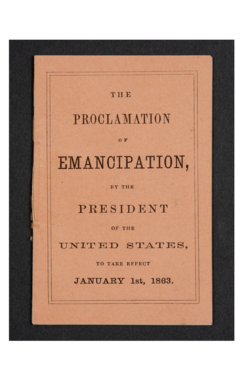
On January 1, 1863, President Abraham Lincoln issued the Final Emancipation Proclamation, a pivotal presidential proclamation that fundamentally altered the nature of the American Civil War. While often remembered as the moment slavery ended in the United States, the document was a complex legal and military instrument that freed slaves specifically in states still engaged in rebellion against the Union.
The original five-page document is currently held in the National Archives Building, having previously been bound with other proclamations in the Department of State until 1936.
Key Facts
- Signed: September 22, 1862.
- Effective Date: January 1, 1863.
- Primary Target: Slaves in Confederate states still in rebellion.
- Legal Status: It did not make slavery illegal nationwide; that was achieved later by the 13th Amendment.
- Military Impact: Encouraged the enlistment of men of color into the U.S. military.
The Scope and Coverage of the Proclamation
The Emancipation Proclamation did not result in the immediate, universal freeing of all enslaved people. Instead, it targeted specific geographic areas. Areas under Confederate control were the primary focus, while several states and regions were exempted.
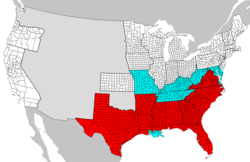
Exempted States and Border Regions
Maryland, Missouri, Tennessee, and West Virginia were among the states exempted from the Proclamation. However, these states moved toward abolition through separate actions before the war's end. For example, Maryland adopted a new state constitution abolishing slavery on November 1, 1864. West Virginia's admittance to the Union was conditioned on its constitution providing for gradual abolition, with immediate emancipation adopted in early 1865.
In Kentucky, where slavery remained legal until December 18, 1865, Union Army commanders used the Proclamation's offer of freedom to encourage slaves to enroll in the Army. This strategy, which extended freedom to the enrollee's entire family, contributed to a decline in the state's slave population by more than 70 percent during the war.
Reconstruction and State Adoption
In 1863, Lincoln proposed a moderate Reconstruction plan for Louisiana, requiring only 10 percent of the electorate to take a loyalty oath and mandating the abolition of slavery in its new constitution. By December 1864, similar plans abolishing slavery were enacted in Arkansas and Tennessee. Additionally, Union-occupied counties in eastern Virginia and pro-Union parishes in Louisiana adopted constitutions abolishing slavery in April 1864.
Implementation and Immediate Impact
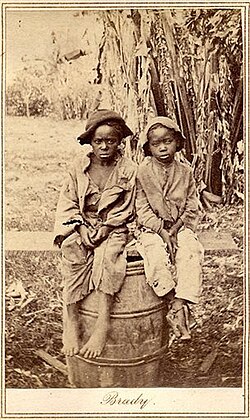
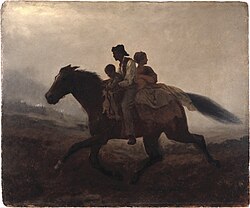
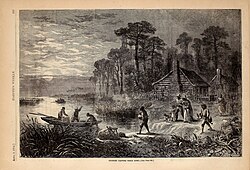
The Proclamation had a profound psychological and physical impact on the enslaved population. Many took the opportunity to flee toward Union lines, a movement often characterized by great risk and hope.
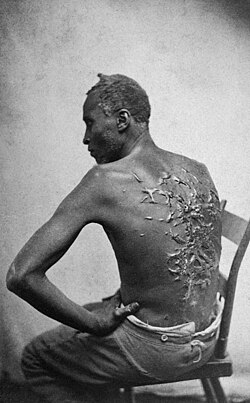
The decree also served as a powerful recruiting tool. The Union military began actively recruiting men of color to enlist, transforming the demographic makeup of the Union forces and providing a direct path to freedom for thousands.
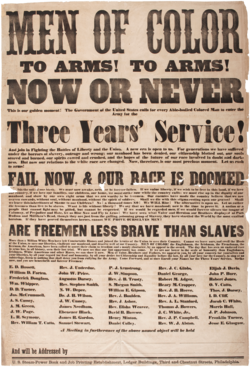
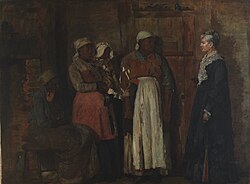
The human experience of this transition was varied. While some found immediate shelter under the Union flag, others faced tense encounters with former slaveholders as the social order of the South collapsed.
Political and International Significance
!["Scene Along the Route" from a Philadelphia Inquirer correspondent (possibly U.H. Painter[95]) embedded with the Army of the Potomac, The Indiana Progress, June 1, 1864](/images/3e/a7/3ea7964ef346cc4113b1abd5aaf54946c3a8152b532c3d658a017d941cf1089a.jpg)
Beyond the battlefield, the Proclamation was a strategic political move. It solidified Lincoln's support among the growing abolitionist wing of the Republican Party, ensuring his renomination in 1864. In his 1863 Gettysburg Address, Lincoln indirectly referenced the Proclamation's goals by calling for a "new birth of freedom."
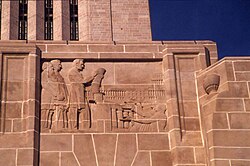
Internationally, the Proclamation shifted the war's purpose from a mere struggle for territorial unity to a moral crusade against slavery. This made it politically difficult for foreign powers, such as Great Britain or France, to intervene on behalf of the Confederacy.
!["Abe Lincoln's Last Card; Or, Rouge-et-Noir" (Red and Black), a cartoon by John Tenniel printed by Punch[112] after the London Times wrote in October 1862 that Lincoln had played his "last card" in issuing the Proclamation.[113][114] Lincoln's hair is in points, suggesting horns. The cartoon was reprinted often in the Copperhead press.[115][116][page needed]](/images/68/e9/68e9cc8bf309515b1c1e3dae7c3005abdcaa10c0d3c06fc7db6f91a66ef14ce5.jpg)
Summary of Emancipation Timeline and Legal Status
The transition from the Proclamation to total abolition involved several legal steps and state-level actions.
| Region/State | Method of Emancipation | Date/Period |
|---|---|---|
| Confederate States (Rebellion) | Emancipation Proclamation | January 1, 1863 |
| Maryland | State Constitution | November 1, 1864 |
| Louisiana, Arkansas, Tennessee | Lincoln's Reconstruction Plans | By December 1864 |
| West Virginia | State Constitution/Immediate Action | Early 1865 |
| Delaware and Kentucky | 13th Amendment | December 18, 1865 |
Legacy and Civil Rights
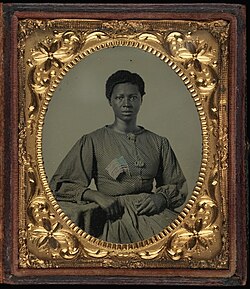
The Emancipation Proclamation remains a cornerstone of American civil rights. In the 20th century, Presidents John F. Kennedy and Lyndon B. Johnson invoked its legacy to frame the ongoing struggle for racial equality as a moral imperative.
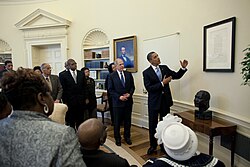
From the commemorative stamps of 1963 to its portrayal in popular culture, the document symbolizes the transition of millions of people from property to citizens.
![U.S. commemorative stamp, 1963 [162]](/images/d0/cd/d0cd7ce93226737e56fafe73ee96964953410fea28fde481d614d3aaa644cf3b.jpg)
Frequently Asked Questions
Did the Emancipation Proclamation free all slaves immediately?
No. It only applied to slaves in states that were in rebellion against the United States. It did not apply to border states like Delaware and Kentucky, nor to Union-occupied areas of the South.
Was the Emancipation Proclamation the same as the 13th Amendment?
No. The Proclamation was a wartime executive order that freed slaves in specific regions. The 13th Amendment, ratified in 1865, constitutionally abolished slavery throughout the entire United States.
How did the Proclamation affect the Union Army?
It allowed for the recruitment of men of color into the U.S. military, providing them with a path to freedom and increasing the Union's manpower.
Why were some states exempted from the Proclamation?
Lincoln exempted certain border states and Union-occupied areas to prevent them from seceding and joining the Confederacy, maintaining their loyalty to the Union while pursuing a more gradual path to abolition.
What was the international impact of the decree?
By making the abolition of slavery a central war goal, the Proclamation made it diplomatically impossible for European nations to support the Confederacy without appearing to support slavery.