Edward Lhuyd: The Polymath Who Defined Celtic Identity and Early Paleontology
Edward Lhuyd (1660–1709) was a towering figure of the late 17th century, embodying the spirit of the Enlightenment as a scientist, geographer, historian, and antiquary. While his name may not be as widely recognized today as some of his contemporaries, his contributions to the fields of historical linguistics—the study of language change over time—and paleontology were foundational. From managing one of England's most prestigious museums to mapping the linguistic landscape of the British Isles, Lhuyd's intellectual curiosity left an indelible mark on how we understand Celtic heritage and the prehistoric world.
Early Life and Academic Journey
Born in 1660 in Loppington, Shropshire, Lhuyd was the illegitimate son of Edward Llwyd of Llanforda and Bridget Pryse. His family belonged to the gentry of southwest Wales, though they were not wealthy. His father's interest in agricultural and industrial experimentation likely sparked Edward's own passion for the emerging sciences of the era.
Lhuyd's education began at Oswestry Grammar School, where he eventually served as a teacher. In 1682, he entered Jesus College, Oxford. Although he left before graduating, his aptitude for natural history led him to a pivotal appointment in 1684, assisting Robert Plot, the Keeper of the Ashmolean Museum. By 1690, Lhuyd became the second Keeper of the museum, a position he held until his death.
Pioneering Contributions to Paleontology
During his tenure at the Ashmolean, Lhuyd became a pioneer in the study of fossils. With funding provided by his friend Isaac Newton, he published the Lithophylacii Britannici Ichnographia in 1699. This work is recognized as the first ever catalogue of fossils, featuring specimens collected primarily around Oxford.
Lhuyd's observations often preceded formal scientific classification by over a century. He provided the first scientific description and naming of a dinosaur—specifically a sauropod tooth known as Rutellum impicatum. He also recorded the first written mention of a trilobite in 1688, though at the time he modestly described the specimen as the "skeleton of some flat fish." This fossil is now identified as the Ordovician trilobite Ogygiocarella debuchii.
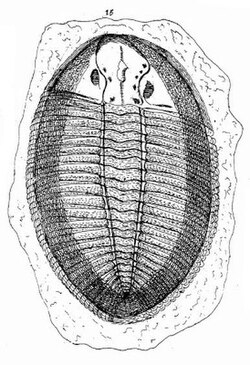
Key Paleontological Milestones
- First Fossil Catalogue: Published the Lithophylacii Britannici Ichnographia in 1699.
- Dinosaur Identification: Described the sauropod tooth Rutellum impicatum.
- Trilobite Record: Provided the first written record of a trilobite (now O. debuchii) in 1688.
The Architect of Celtic Linguistics
Beyond the natural sciences, Lhuyd was a visionary linguist. In the late 17th century, he was invited by scholars like John Keigwin to study the Cornish language. His research into Early Modern Cornish, published in 1702, highlighted a simpler structure and grammar compared to its medieval predecessor.
In 1707, Lhuyd published the first volume of Archæologia Britannica. In this seminal work, he applied sophisticated methods of historical linguistics to identify similarities between two major language families:
- Brythonic (P–Celtic): Including Breton, Cornish, and Welsh.
- Goidelic (Q–Celtic): Including Irish, Manx, and Scottish Gaelic.
Lhuyd argued that the Brythonic languages descended from Gaulish (spoken in Pre-Roman France) and the Goidelic languages from Celtiberian (spoken in the Pre-Roman Iberian Peninsula). By linking these languages to a common Celtic origin, he helped establish the modern concept of the "Celtic nations."
Key Facts
- Role: Second Keeper of the Ashmolean Museum at Oxford.
- Major Work: Author of Lithophylacii Britannici Ichnographia (first fossil catalogue).
- Linguistic Legacy: Defined the P-Celtic and Q-Celtic language divisions.
- Scientific Firsts: First to describe a dinosaur tooth and record a trilobite.
- Honors: Fellow of the Royal Society (1708) and MA honoris causa from Oxford (1701).
Summary of Edward Lhuyd's Legacy
| Field | Key Achievement | Significance |
|---|---|---|
| Paleontology | Lithophylacii Britannici Ichnographia | First systematic catalogue of British fossils. |
| Linguistics | Archæologia Britannica | Established the relationship between Celtic language families. |
| Botany | Flora of Snowdonia | Contributed local flora lists to John Ray's work. |
| Antiquarianism | Pillar of Eliseg Transcription | Preserved a 9th-century Latin inscription before it weathered. |
Death and Lasting Influence
Lhuyd's extensive travels took a toll on his health, and he developed asthma. He died of pleurisy in 1709 at the age of 49, passing away in his room at the Ashmolean Museum. He was buried in the Welsh aisle of the church of St Michael at the Northgate in Oxford.
His name lives on in the scientific community through the Cretaceous bryozoan species Charixa lhuydi and the National Naturalists' Society of Wales (Cymdeithas Edward Llwyd). A bronze bust of Lhuyd now stands outside the University of Wales Centre for Advanced Welsh and Celtic Studies in Aberystwyth, commemorating him as a linguist, antiquary, and naturalist.
Frequently Asked Questions
What was Edward Lhuyd's most significant scientific publication?
His most significant scientific work was the Lithophylacii Britannici Ichnographia (1699), which served as the first ever catalogue of fossils.
How did Lhuyd contribute to our understanding of Celtic languages?
Lhuyd identified the division between Brythonic (P-Celtic) and Goidelic (Q-Celtic) languages and argued they both originated from Continental Celtic languages, effectively defining the modern concept of Celtic nations.
Did Edward Lhuyd discover dinosaurs?
While he didn't "discover" dinosaurs in the modern sense, he provided the first scientific description and naming of a sauropod tooth, which he called Rutellum impicatum.
What is the "flat fish" mentioned in Lhuyd's writings?
The "flat fish" was Lhuyd's early description of a fossil that is now identified as the trilobite Ogygiocarella debuchii.
What was Lhuyd's role at the University of Oxford?
Lhuyd served as the second Keeper of the Ashmolean Museum from 1690 until his death in 1709.