Ecdysis: The Biological Process of Moulting in Invertebrates
In the animal kingdom, growth is not always a gradual expansion. For many invertebrates within the clade Ecdysozoa, growth requires a dramatic physical transformation known as ecdysis. Because these animals possess a rigid, inelastic exoskeleton (a hard outer shell), they cannot simply grow larger; instead, they must periodically shed their entire outer covering to make room for a new, larger one.
The remnants of the old, empty exoskeleton left behind after this process are called exuviae. This cycle of shedding and regrowth is essential not only for increasing size but also for the regeneration of damaged tissues or missing limbs, which can be substantially re-formed over a series of successive moults.
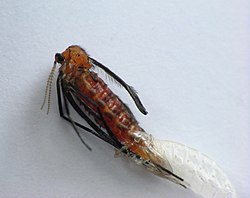
Key Facts
- Definition: Ecdysis is the process of shedding the cuticle (exoskeleton) to allow for growth.
- Teneral State: Immediately after moulting, an animal is considered teneral (or a callow), meaning it is soft-bodied, pale, and vulnerable.
- Regeneration: The process allows for the regrowth of lost limbs over multiple moulting cycles.
- Hormonal Control: In insects, the process is triggered by ecdysteroid hormones like ecdysone.
- Exuviae: The discarded shell is referred to as the exuviae.
The Biological Process of Moulting
The term ecdysis is derived from the Ancient Greek ekduo, meaning "to take off" or "strip off." The process is a complex physiological sequence that begins long before the shell actually cracks.
Preparation and Apolysis
Before the physical shed, the organism enters a period of inactivity. It undergoes apolysis, which is the separation of the old exoskeleton from the underlying epidermal cells. During this resting phase, moulting glands secrete fluids to loosen the cuticle. A digesting fluid is then released into the space between the old shell and the epidermis, though it remains inactive until the upper layer of the new cuticle has formed to protect the animal.
Emergence and Expansion
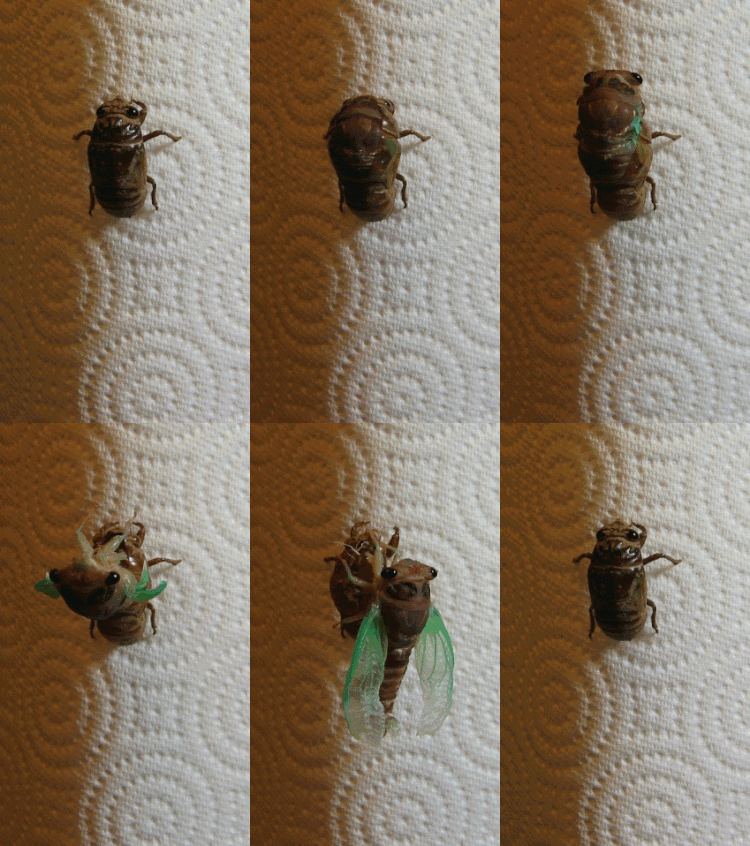
Once the new layer is ready, the organism uses crawling movements and internal pressure—often created by increasing the pressure of hemolymph (the invertebrate equivalent of blood)—to force the old shell to split, typically down the back. The animal then extricates itself from the old integumentary shell.
Because the new cuticle is soft, the animal can expand its body. This growth is achieved by transferring body fluids from soft parts to the limbs or, in the case of large insects with tracheal respiration, by swallowing air to inflate the exoskeleton.
Ecdysis Across Different Species
Insects
In insects, the timing and stages of growth are specifically categorized. For Endopterygota (insects with complete metamorphosis), the stage between moults is called an instar, and the time elapsed is called a stadium. These insects typically have four or five instars. In contrast, Exopterygota (insects with gradual metamorphosis) have stages called nymphs, which can number up to 15.
The process is driven by ecdysteroid hormones (such as 20-hydroxyecdysone), which trigger apolysis, the secretion of new materials, and the degradation of the old cuticle. An insect that has undergone apolysis but has not yet shed its skin is known as a pharate.
Spiders
Spiders typically undergo their first moult inside the egg sac. Depending on the species and sex, they may moult between five and nine times before reaching maturity. Males generally mature faster and moult fewer times than females. Some long-lived species, such as those in the infraorder Mygalomorphae, continue to moult annually even after reaching maturity.
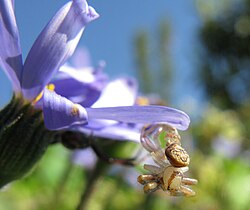
Spiders often hang from silk threads during ecdysis. To break the shell, they contract their opisthosoma (abdomen) to pump fluid into the prosoma (cephalothorax), cracking the carapace open like a helmet. During the subsequent teneral phase, the spider is highly vulnerable. In some species, such as the crab spider Synema decens, mating occurs while the female is still callow and unable to eat the male.
Eurypterids
The extinct Eurypterids (sea scorpions) followed a similar process to modern chelicerates. Paleontologists believe that many of the fossils attributed to these creatures are actually exuviae rather than the remains of the animals themselves.
Summary of Ecdysis Terminology
| Term | Definition | Context |
|---|---|---|
| Apolysis | Separation of the old cuticle from the epidermis | Initial phase |
| Exuviae | The cast-off empty exoskeleton | Post-moult |
| Teneral | The soft, pale state of a newly moulted animal | Immediate post-moult |
| Instar | The developmental stage between moults | Endopterygota insects |
| Pharate | An insect that has undergone apolysis but not yet ecdysis | Intermediate phase |
Frequently Asked Questions
Why do invertebrates need to undergo ecdysis?
Because their exoskeleton is made of a largely inelastic material, it cannot grow with the animal. Ecdysis allows them to shed the restrictive shell and form a larger one to accommodate their growth.
What happens during the teneral stage?
During the teneral stage, the animal is soft-bodied and pale. Over the course of one to two hours, the cuticle undergoes a tanning process—similar to leather production—which hardens and darkens the exoskeleton.
Can a spider regrow a lost leg through ecdysis?
Yes. Ecdysis allows damaged tissues and missing limbs to be regenerated. While a limb may not return to full size in one moult, it typically grows larger with each subsequent moult until it is near normal size.
How do spiders physically exit their old shell?
Spiders contract their abdomen to pump fluid into the front part of their body (the prosoma). This creates enough pressure to crack the carapace open, allowing the spider to pull its limbs free and emerge.
What hormones trigger the moulting process in insects?
Moulting is initiated by an increase in ecdysteroid hormones, including ecdysone, 20-hydroxyecdysone, and turkesterone.