Crustaceans: Biology, Classification, and Diversity of the Pancrustacea
Crustaceans are a vast and diverse group of arthropods that have inhabited the Earth for millions of years, with a temporal range spanning from 511 to 0 million years ago. From the microscopic depths of the ocean to freshwater streams and coastal shores, these creatures play a pivotal role in global ecosystems. While many people immediately think of crabs and lobsters, the subphylum Crustacea encompasses a staggering array of forms, including seed shrimp, barnacles, and copepods.
With approximately 67,000 described species, scientists estimate that this number represents only 1% to 10% of the actual species in existence, as the majority remain undiscovered. Their physical diversity is unmatched in the arthropod world; they range from the tiny Stygotantulus stocki, measuring just 0.1 mm, to the massive Japanese spider crab, which can reach a leg span of 3.8 meters and weigh up to 20 kg.
Key Facts
- Defining Feature: Distinguished by biramous (two-parted) limbs and a unique larval stage called the nauplius.
- Growth Process: Like all arthropods, they possess a hard exoskeleton that must be moulted to allow for growth.
- Size Range: Spans from 0.1 mm (Stygotantulus stocki) to 3.8 m (Japanese spider crab).
- Economic Impact: Decapods (shrimp, prawns, crabs, lobsters) dominate the global seafood market, with Asia producing nearly 80% of the catch.
- Phylogeny: Modern science recognizes a close relationship between crustaceans and Hexapoda (insects), grouping them under the clade Pancrustacea.
Anatomy and Biological Characteristics
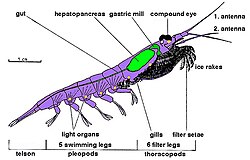
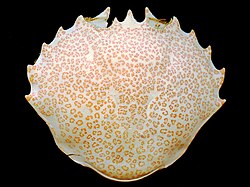
The fundamental architecture of a crustacean is defined by its exoskeleton, a rigid outer shell that provides protection and structural support. Because this shell cannot expand, crustaceans undergo moulting, a process of shedding the old carapace to grow a larger one.
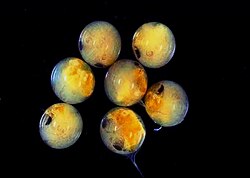
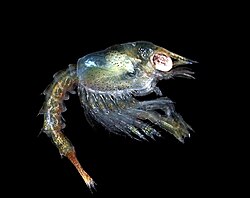
Unlike insects or chelicerates, crustaceans are characterized by their biramous limbs. These two-branched appendages are adapted for various functions, including swimming, feeding, and sensing the environment. Their life cycle is equally distinct, typically beginning with a nauplius, a specialized larval form found in groups such as branchiopods and copepods.
Classification and Phylogeny
The classification of crustaceans has evolved significantly as scientists moved from observing physical morphology to analyzing DNA. Traditionally, the group was divided into four to six classes. However, recent phylogenetic studies have revealed that some traditional groups, such as Maxillopoda, were non-monophyletic (meaning they did not share a single common ancestor).
Modern classifications now recognize between ten and twelve classes. This shift has also highlighted the paraphyletic nature of Crustacea, leading to the inclusion of Hexapoda (insects and their relatives) within the broader clade Pancrustacea.
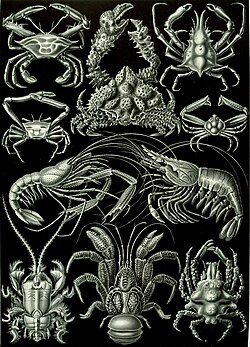
Major Crustacean Groups
| Class | Common Members | Examples/Orders |
|---|---|---|
| Malacostraca | Crabs, Lobsters, Shrimp | Decapoda |
| Copepoda | Copepods | Calanoida |
| Branchiopoda | Fairy shrimp, Water fleas | Notostraca |
| Ostracoda | Seed shrimp | Myodocopida |
| Thecostraca | Barnacles | Cirripedia |
| Cephalocarida | Horseshoe shrimp | Brachypoda |
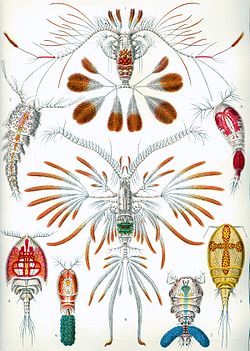
Ecological and Economic Importance
Crustaceans are vital components of the global food web. While some, like the amphipod Abludomelita obtusata, occupy specific niches, others like krill represent one of the greatest biomasses on the planet, serving as a primary food source for whales and other marine giants.
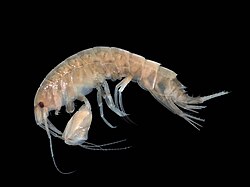
From a human perspective, crustaceans are a major global commodity. In 2007, approximately 10.7 million tons were harvested. The vast majority of this production consists of decapods—crabs, lobsters, shrimp, crawfish, and prawns. Shrimp and prawns alone account for over 60% of the total weight of crustaceans caught for consumption.
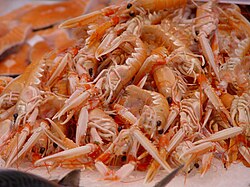
The Fossil Record
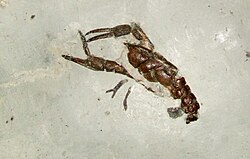
The evolutionary history of crustaceans is documented through a rich fossil record. Examples include Eryma mandelslohi, a decapod from the Jurassic period found in Germany, which helps scientists understand how these organisms adapted over millions of years.
Frequently Asked Questions
What makes a crustacean different from an insect?
While both are arthropods, crustaceans are distinguished by their biramous (two-parted) limbs and their specific larval stages, such as the nauplius. Insects typically have uniramous (single-parted) limbs.
What is the smallest and largest crustacean?
The smallest described species is Stygotantulus stocki at 0.1 mm, while the largest is the Japanese spider crab, which can reach a leg span of 3.8 meters.
What is the nauplius stage?
The nauplius is a specialized larval form that is a unifying characteristic among many crustacean groups, including copepods and branchiopods.
Which crustaceans are most commonly eaten by humans?
Decapod crustaceans are the most consumed, specifically shrimp, prawns, crabs, lobsters, and crawfish. Shrimp and prawns make up more than 60% of the total harvest by weight.
What is the relationship between crustaceans and insects?
Modern phylogenetic research suggests that crustaceans and insects are closely related enough to be grouped together in a larger clade called Pancrustacea.