East African Federation: The History and Future of Regional Integration
The vision of a unified East African state has persisted for over a century, evolving from colonial-era blueprints to modern diplomatic efforts. The goal of creating an East African Federation—a single sovereign state comprising multiple nations—aims to unlock economic potential and enhance political stability in one of the world's most dynamic regions.
Key Facts
- Early Origins: Initial attempts in the 1920s were driven by British colonial interests for a white-ruled dominion.
- 1960s Efforts: Post-independence leaders from Kenya, Tanganyika, Uganda, and Zanzibar attempted a merger that ultimately failed.
- Modern Framework: The current East African Community (EAC) seeks a phased approach: Common Market, then a Confederation, and finally a Federation.
- Current Membership: The EAC has expanded to eight members, including recent additions like the Democratic Republic of the Congo (DRC) and Somalia.
- Key Obstacles: Integration has been hindered by civil war, diplomatic disputes, and concerns over national autonomy.
Colonial Roots and the 1960s Ambitions
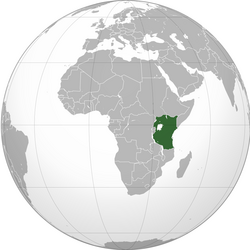
The concept of a unified East Africa first appeared in the 1920s when Colonial Secretary Leo Amery proposed a white-ruled East African Dominion consisting of Kenya, Uganda, and Tanganyika. This plan faced significant opposition from nonwhite populations and the Permanent Mandates Commission, which oversaw Tanganyika as a mandated territory.
As independence neared in the early 1960s, the narrative shifted toward indigenous leadership. Julius Nyerere, leader of Tanganyika, was so committed to a collective start that in 1960, he offered to delay Tanganyika's independence (scheduled for 1961) so that all East African territories could enter sovereignty together as a federation.
In June 1963, a pivotal meeting in Nairobi brought together Jomo Kenyatta (Kenya), Julius Nyerere (Tanganyika), and Milton Obote (Uganda). The leaders discussed merging their nations and Zanzibar into a single federation by the end of the year. However, the momentum quickly stalled.
Why the Early Federation Failed
By 1964, the dream of a broad federation collapsed due to several internal and ideological conflicts:
- Political Reluctance: Jomo Kenyatta grew hesitant, eventually claiming the federation talks were merely a ruse to accelerate Kenyan independence.
- Domestic Pressure: In Uganda, the semi-autonomous kingdom of Buganda opposed joining a federation, preferring to remain a distinct unit.
- Ideological Clashes: Political scientist Joseph Nye noted that some viewed the federation as a "neo-colonial" plot that would obstruct broader continental African unity.
- Structural Issues: There was a lack of clarity regarding the federation's form and an uneven distribution of economic benefits.
While the wider union failed, Tanganyika and Zanzibar successfully merged in April 1964 to form Tanzania.
The Modern Push for Integration (2010s–2020s)
Interest in a political union resurfaced in the early 2010s through the East African Community (EAC). The roadmap was ambitious: a common market by 2010, a common currency by 2013, and full political federation by 2015.
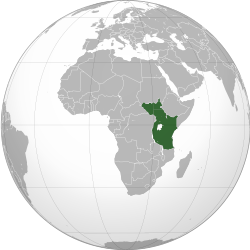
Despite these goals, timelines were repeatedly pushed back. In 2016, the EAC Council of Ministers adopted a more gradual strategy, agreeing to establish an East African Confederation—a looser union—as a stepping stone toward the final Federation.
Constitutional Progress and Challenges
In September 2018, a committee of constitutional experts, led by retired Ugandan Chief Justice Benjamin Odoki and former Kenyan Attorney General Amos Wako, began drafting a regional constitution. This process involved consultations with civil society, academia, and political leaders across member states.
However, the path to a constitution has been disrupted by the COVID-19 pandemic and the complexities of expanding membership. While President Yoweri Museveni of Uganda has consistently championed the federation for its economic and political benefits, practical implementation remains slow.
Expansion of the East African Community
The EAC has grown significantly in recent years, though expansion has brought new diplomatic tensions.
| Member State | Accession Date | Key Notes |
|---|---|---|
| South Sudan | September 2016 | Joined during the South Sudanese Civil War. |
| DR Congo (DRC) | July 2022 | Joined for economic and security reasons; faces issues with dues and legal alignment. |
| Somalia | December 2023 | Integrating into Customs Union; promoting Swahili in schools. |
The inclusion of the DRC has been particularly complex. The DRC joined partly to address security concerns regarding the M23 militia, which UN reports link to support from Rwanda and Uganda. Tensions peaked in December 2023 when the DRC recalled its ambassador to Kenya following President William Ruto's comments on the M23 offensive.
Future Prospects and Potential Members
The EAC continues to look outward. While Kenyan leaders have suggested the inclusion of Ethiopia and Comoros, these proposals have met with mixed results. In 2024, the Ethiopian Ministry of Foreign Affairs dismissed claims that it was in final negotiations to join the bloc, calling the information "baseless." Meanwhile, Somalia continues its integration, with President Hassan Sheikh Mohamud advocating for Swahili to replace English as the primary language of communication and trade in future conferences.
Frequently Asked Questions
What is the difference between the East African Confederation and the Federation?
The Confederation is intended as an intermediate step—a looser union of states—that precedes the Federation, which would be a single, fully integrated sovereign state with a central government.
Why did the 1960s attempt at a federation fail?
It failed due to a combination of Jomo Kenyatta's reluctance, Bugandan concerns over autonomy, ideological disagreements regarding pan-Africanism, and a lack of popular engagement.
Which countries are currently part of the EAC?
The EAC currently consists of eight member states, including the original partners and more recent additions such as South Sudan, the Democratic Republic of the Congo, and Somalia.
What role does language play in the current integration process?
Language is being used as a tool for unity; for example, Somalia is incorporating Swahili into its school system to facilitate better communication and trade within the EAC.
Is Ethiopia joining the East African Community?
While some Kenyan officials have suggested Ethiopia is in the final stages of joining, the Ethiopian Ministry of Foreign Affairs has officially denied making any request to join the bloc.