Earthshine: The Science Behind the Moon's Ashen Glow
Have you ever looked at a thin crescent Moon and noticed that the dark portion of the lunar disk isn't entirely black, but instead glows with a ghostly, dim light? This captivating phenomenon is known as earthshine. Also referred to as the "Moon's ashen glow" or poetically as "the new Moon with the old Moon in her arm," earthshine provides a unique window into the relationship between our planet and its only natural satellite.
At its simplest, earthshine is sunlight that reflects off the Earth, travels to the Moon, illuminates the lunar night side, and then reflects back to our eyes here on Earth.

How Earthshine Works
Earthshine is most prominent during the waxing or waning crescent phases, occurring a few nights before and after a new moon. During a new moon, the side of the Moon facing Earth is turned away from the Sun. However, because the Earth is positioned between the Sun and the Moon during this phase, the Earth appears nearly fully sunlit from the Moon's perspective.
The Earth acts like a giant mirror, bouncing sunlight toward the Moon. This reflected light illuminates the lunar night side, allowing us to see the entire disk of the Moon dimly, even though only a small sliver is receiving direct sunlight.

Historical Observations
While the glow has been observed for millennia, Leonardo da Vinci provided a scientific explanation in the early 16th century. He recognized that both the Earth and the Moon reflect sunlight simultaneously, correctly identifying that light travels from the Earth to the Moon and back again.
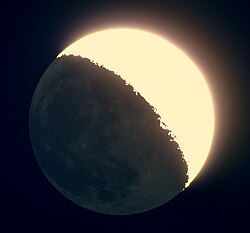
Measuring Earth's Albedo
Beyond its beauty, earthshine is a critical tool for scientists to determine the Earth's albedo—the measure of how much solar radiation a surface reflects without absorbing it. By analyzing the brightness of the earthshine on the Moon, researchers can estimate the reflectivity of the portion of Earth currently facing the Moon.
Different surfaces on our planet reflect light at vastly different rates:
- Oceans: Reflect the least amount of light, roughly 10%.
- Land: Reflects between 10% and 25% of sunlight.
- Clouds: Reflect approximately 50% of sunlight.
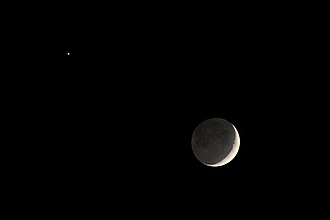
Implications for Climate Research
Because clouds have the highest albedo, earthshine data is used to analyze global cloud cover, a significant factor in climate science. For example, preliminary studies observed a 6.5% decrease in cloud cover between 1985 and 1997, followed by an increase between 1997 and 2003.
This data is vital for understanding global warming. While an increase in albedo generally reflects more radiation away from the planet, the effect of clouds is complex. Some clouds provide a net cooling effect by reflecting radiation, while others have a net warming effect by trapping heat. Consequently, while the Earth's overall albedo is measurably increasing, the exact impact on global temperatures remains a subject of scientific uncertainty.
Key Facts
- Definition: Sunlight reflected from Earth to the Moon's night side and back to Earth.
- Visibility: Most visible during the crescent Moon phases.
- Albedo Values: Oceans (~10%), Land (10–25%), and Clouds (~50%).
- Scientific Use: Used to monitor global cloud cover and study climate change.
- Historical Credit: Explained by Leonardo da Vinci in the early 1500s.
| Surface Type | Approximate Reflectivity |
|---|---|
| Oceans | ~10% |
| Land | 10% – 25% |
| Clouds | ~50% |
Frequently Asked Questions
What is the difference between moonlight and earthshine?
Moonlight is direct sunlight reflecting off the Moon's surface. Earthshine is sunlight that reflects off the Earth first, then hits the Moon, and finally reflects back to Earth.
When is the best time to see earthshine?
The best time to observe this phenomenon is a few nights before or after a new moon, when the Moon is in a thin crescent phase.
How does earthshine help scientists study the climate?
By measuring the brightness of earthshine, scientists can determine the Earth's albedo and track changes in global cloud cover over time, which influences how much heat the planet retains.
Why is the effect of clouds on temperature unclear?
Clouds have a dual role: they cool the Earth by reflecting sunlight (increasing albedo) but can warm the Earth by trapping heat in the atmosphere. The balance between these two effects determines the overall temperature impact.