Dubai: The Evolution of a Global Metropolis
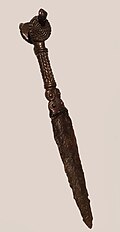
Dubai, often referred to as the Pearl of the Gulf or the City of Gold, is a dazzling city-state in the United Arab Emirates (UAE) that has transformed from a small fishing and pearling village into one of the world's most influential hubs of commerce, tourism, and architecture. Situated on the coast of the Persian Gulf, Dubai is a study in contrast, where traditional Middle Eastern heritage meets futuristic urban planning.
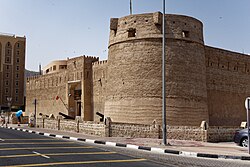
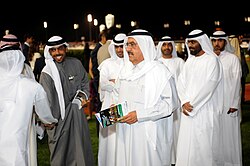
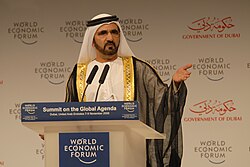
From its first mention in 1095 to its formal establishment in 1822 by Obeid bin Said and Maktoum bin Butti Al Maktoum, the city has consistently pushed the boundaries of possibility. Today, it serves as the capital of the Emirate of Dubai and is governed as an absolute monarchy under the leadership of the Ruler of Dubai, Mohammed bin Rashid Al Maktoum.
Key Facts
- Population: Approximately 3.94 million in the city and 6.36 million in the metropolitan area (2025).
- Economy: A nominal city GDP of US$156.3 billion (2024).
- Landmarks: Home to the Burj Khalifa, the world's tallest building.
- Transport: Features the world's busiest airport by international passenger traffic.
- Climate: Characterized as a hot desert climate (BWh).
Historical Journey: From Creek to Cosmopolis
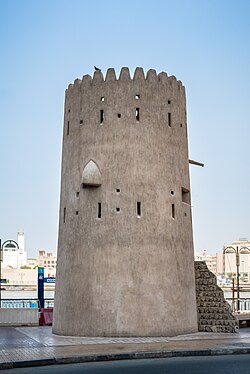
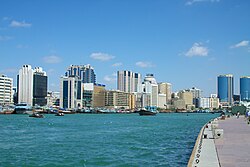
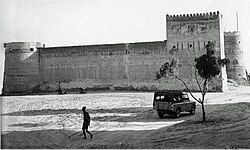
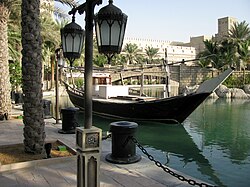
The foundation of modern Dubai is inextricably linked to Dubai Creek, the natural waterway that separates Deira from Bur Dubai. In the pre-oil era, the Creek was the lifeblood of the city, facilitating trade and the pearling industry.
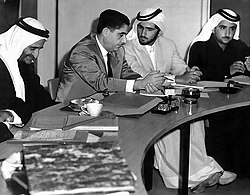
The mid-20th century marked a pivotal shift with the discovery of oil, which provided the capital necessary for rapid infrastructure development. However, Dubai's leadership strategically diversified the economy early on, moving away from oil dependency toward tourism, real estate, and financial services. This transition was solidified as Dubai joined the UAE's Act of Union, integrating into a larger national framework while maintaining its unique entrepreneurial spirit.
Geography and Climate
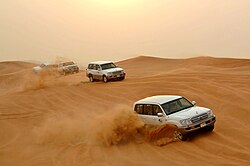
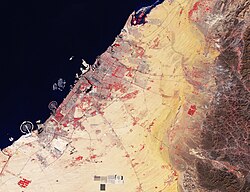
Dubai is located at coordinates 25°12′17″N 55°16′15″E. The region experiences a hot desert climate, characterized by extreme summer temperatures and mild winters. Precipitation is scarce, with the highest average rainfall occurring in December.
| Month | Mean Max Temp (°C) | Mean Min Temp (°C) | Avg Precipitation (mm) | Sunshine Hours (Daily) |
|---|---|---|---|---|
| January | 23.9 | 14.3 | 20.8 | 8.1 |
| July | 40.9 | 30.0 | 1.1 | 10.7 |
| October | 35.4 | 24.1 | 1.5 | 9.9 |
| December | 26.2 | 16.3 | 14.8 | 8.2 |
Architectural Marvels and Urban Planning
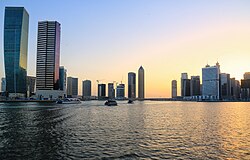
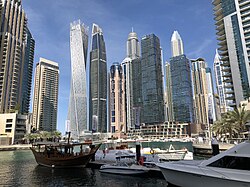
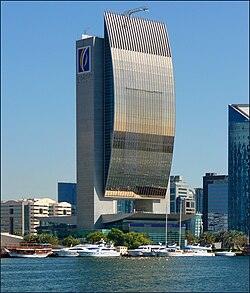
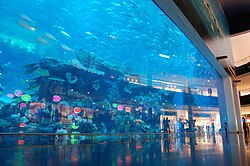
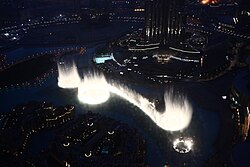
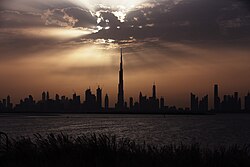
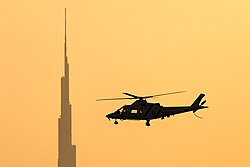
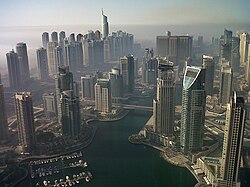
Dubai is globally recognized for its ambitious architecture. The city's skyline is dominated by the Burj Khalifa, a masterpiece of engineering that stands as the tallest building in the world. Surrounding it is Downtown Dubai, featuring the Dubai Mall and the Dubai Fountain.
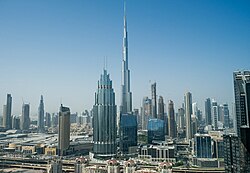
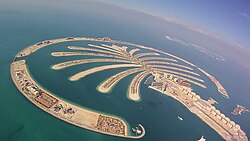
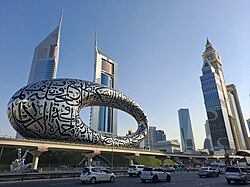
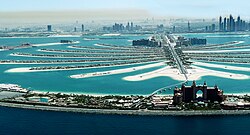
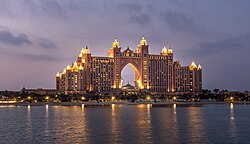
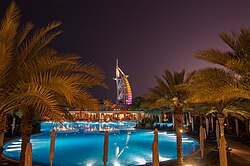
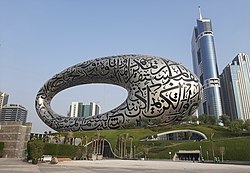
Beyond the skyscrapers, Dubai has reshaped its coastline with massive land reclamation projects. The Palm Jumeirah, a tree-shaped artificial archipelago, and The World Islands are prime examples of this engineering prowess. Other notable structures include the sail-shaped Burj Al Arab and the futuristic Museum of the Future.
Infrastructure and Transportation
To support its booming population and tourism, Dubai has invested heavily in a multi-modal transport network:
- Air: Dubai International Airport is a global aviation hub and the busiest in the world for international passengers.
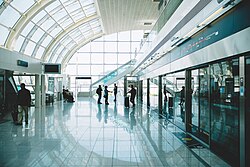
- Rail: The Dubai Metro, the Arabian Peninsula's first urban train network, provides fully automated transport across the city.
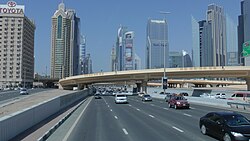
- Road: The E 11 Road (Sheikh Zayed Road) serves as the primary artery connecting the city's districts.
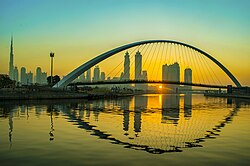
- Water: Traditional abras (small motorized boats) and dhows continue to operate on the Creek, preserving the city's maritime heritage.
![Dubai International Airport is the busiest airport in the world by international passenger traffic.[232]](/images/74/50/7450243d5090ebbb014e66f0f9dbd91715db0eb32c97adbe2e6f7be60512af40.jpg)
![Dubai Metro is the first kind of rail transportation in the UAE, and is the Arabian Peninsula's first urban train network.[240]](/images/e4/ac/e4ac671bbc43f1438f5b831aa51aeac711b4344f9a6cecb6588849114d7d6ba4.jpg)
Society, Culture, and Economy
Dubai is a multicultural melting pot. While Islam is the primary religion (56%), the city hosts significant Christian (25%) and Hindu (16%) populations. This diversity is reflected in the city's cuisine, arts, and the presence of international educational institutions like the University of Wollongong in Dubai.
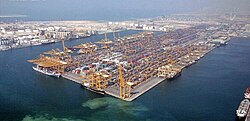
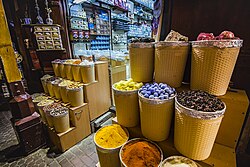
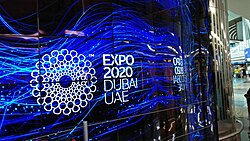
The economy is driven by a mix of retail, tourism, and logistics. The Port of Jebel Ali is one of the largest ports in the world, while the Dubai Spice Souk in Deira maintains the city's tradition as a trading center. The city also hosts major global events, most notably Expo 2020 Dubai.
Frequently Asked Questions
![Dubai Tram is one of the first completely ground-level power supply-based tram networks in the world.[241]](/images/b0/b2/b0b207e661c65e4007dea0cfd68678a52d6bd5a336ed5a17b6d7e8c14cfd6ec1.jpg)
Who founded modern Dubai?
Modern Dubai was founded in 1822 by Obeid bin Said and Maktoum bin Butti Al Maktoum.
What is the tallest building in Dubai?
The Burj Khalifa is the tallest building in Dubai and the entire world.
How does Dubai manage its transportation?
Dubai utilizes a comprehensive system including the Dubai Metro (the region's first urban rail), the Dubai Tram, a vast road network centered on the E 11, and traditional water transport like abras on Dubai Creek.
What is the climate like in Dubai?
Dubai has a hot desert climate (BWh), with very high temperatures in the summer (reaching record highs of 49.0°C) and mild, pleasant weather in the winter.
What are the main economic drivers of the city?
While oil played a role in its early growth, Dubai's economy is now diversified across tourism, real estate, international trade (via Jebel Ali Port), and financial services.