Understanding Drizzle: Characteristics, Occurrence, and Climate Impact
To the casual observer, drizzle might seem like nothing more than a minor weather nuisance. However, beneath its light and sporadic appearance lies a complex meteorological phenomenon that plays a significant role in our planet's atmospheric processes. From the vast oceans to the potential for treacherous road conditions, understanding drizzle is essential for both meteorology and climate science.
What is Drizzle?
Drizzle is defined as a light form of precipitation consisting of liquid water droplets that are significantly smaller than those found in normal rain. Specifically, these droplets generally have a diameter of less than 0.5 mm (0.02 in). Because these drops are so tiny, they often evaporate before they even reach the ground, meaning drizzle can sometimes go undetected by people standing below.
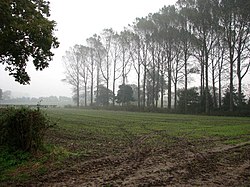
Meteorologically, drizzle is typically produced by low stratiform clouds (clouds that are thin and layered) and stratocumulus clouds. The rate of precipitation at the ground is quite low, usually measuring at 1 millimeter (0.04 in) per day or less.
Meteorological Coding
In aviation and professional weather reporting, specific codes are used to identify different types of drizzle. The METAR (Meteorological Aerodrome Report) code for standard drizzle is DZ, while the code for freezing drizzle is FZDZ.
The Dangers of Freezing Drizzle
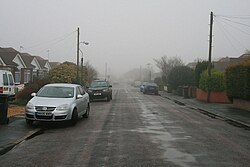
While most drizzle has a negligible impact on daily human activity, a specific variation known as freezing drizzle can be extremely hazardous. This occurs when supercooled water droplets—liquid water that remains in a liquid state even below the freezing point—land on a surface that is below freezing.
Upon impact, these droplets freeze instantly. This process leads to the rapid buildup of sheet ice, commonly referred to as black ice, which creates treacherous conditions for drivers and pedestrians.
Where and How Drizzle Occurs
Drizzle is most frequent over the world's oceans, particularly within the colder regions of the subtropics. In these areas, the weather is dominated by shallow marine stratocumulus and trade wind cumulus clouds. These clouds exist entirely within the marine boundary layer, which is the lowest part of the atmosphere in contact with the ocean surface.
Scientific Research and Detection
Despite the low amount of water that reaches the surface, drizzle is a major factor in determining the structure, coverage, and radiative properties (how clouds reflect and absorb energy) of clouds in these regions. To study this, scientists use sophisticated tools like high-frequency radars capable of detecting these tiny droplets.
Research has indicated that the amount of drizzle is closely linked to cloud morphology (the shape and structure of clouds) and is often associated with updrafts within the marine boundary layer. Interestingly, higher amounts of drizzle are often found in marine clouds that form in "clean" air masses, which have low concentrations of cloud droplets.
The Role of Aerosols and Climate Change
One of the most intriguing areas of modern atmospheric study involves the relationship between aerosols—tiny particles suspended in the air—and drizzle. Scientists at Texas A&M University have hypothesized that human-caused particulates in the atmosphere may actually suppress drizzle.
The logic behind this hypothesis is as follows:
- Drizzle is an effective way for clouds to remove moisture.
- If aerosols suppress drizzle, clouds may retain more moisture.
- This suppression could increase the thickness, coverage, and longevity of marine stratocumulus clouds.
- Increased cloud coverage leads to higher cloud albedo (the ability of clouds to reflect sunlight), which could have a cooling effect on the atmosphere.
Some complex global climate models suggest that this cooling effect might be partially masking the warming effects caused by increases in greenhouse gases. However, as of 2005, researchers noted that current climate models may not yet fully capture the complex chemical and physical interactions between aerosols, clouds, and drizzle required to confirm these global impacts.
Key Facts
- Droplet Size: Generally smaller than 0.5 mm in diameter.
- Precipitation Rate: Typically 1 mm (0.04 in) per day or less.
- Primary Cloud Types: Stratiform and stratocumulus clouds.
- METAR Codes: DZ (Drizzle) and FZDZ (Freezing Drizzle).
- Major Hazard: Freezing drizzle can create dangerous "black ice."
- Oceanic Impact: Drizzle is a dominant precipitation type in subtropical marine boundary layers.
Summary of Drizzle Characteristics
| Feature | Standard Drizzle | Freezing Drizzle |
|---|---|---|
| METAR Code | DZ | FZDZ |
| Droplet State | Liquid | Supercooled Liquid |
| Primary Risk | Minimal immediate impact | Sheet ice / Black ice formation |
| Typical Diameter | < 0.5 mm | < 0.5 mm |
Frequently Asked Questions
How is drizzle different from regular rain?
The primary difference is the size of the water droplets. Drizzle consists of much smaller droplets, generally less than 0.5 mm in diameter, whereas rain droplets are larger.
What causes freezing drizzle?
Freezing drizzle occurs when supercooled liquid droplets fall from clouds and land on a surface that is below the freezing temperature, causing them to freeze instantly upon impact.
Can drizzle be invisible?
Yes. Because the droplets are so small, they are prone to evaporating before they reach the ground, which can make the precipitation undetected by observers.
How do aerosols affect drizzle?
It is hypothesized that human-made aerosols may suppress drizzle. By preventing moisture from leaving the cloud through drizzle, these particles may help clouds stay thicker and cover more area, potentially reflecting more sunlight and cooling the Earth.
Where is drizzle most common?
Drizzle is most frequently observed over large areas of the world's oceans, especially in the colder regions of the subtropics where marine stratocumulus clouds are prevalent.