Cloud Condensation Nuclei: The Tiny Particles Shaping Our Atmosphere
In the vast expanse of Earth's atmosphere, a silent and microscopic process dictates the formation of clouds and the regulation of our climate. At the heart of this process are Cloud Condensation Nuclei (CCNs), often referred to as cloud seeds. These tiny particles serve as the essential foundation upon which water vapour can transition from a gas into liquid droplets through a process known as condensation.
Without these microscopic surfaces, water vapour would require extreme conditions to form droplets. In the absence of CCNs, water vapour can remain in a supercooled state—remaining liquid even below freezing—at approximately −13 °C (9 °F) for up to 5–6 hours before droplets spontaneously form. This unique physical property is even utilized in cloud chambers to detect subatomic particles.
Key Facts
- Size: Typical CCNs are approximately 0.1 μm to 0.2 μm in diameter, making them significantly smaller than cloud droplets.
- Function: They provide the non-gaseous surface required for water vapour to condense into liquid.
- Composition: CCNs can be made of sea salt, dust, soot, volcanic sulfate, or organic matter.
- Climate Impact: The abundance and type of CCNs influence cloud reflectivity, precipitation, and global temperature.
- Natural Sources: Major sources include volcanic eruptions, ocean spray, and biological activity from phytoplankton.
Physical Properties and Composition
To understand the scale of these particles, it is helpful to compare them to the weather phenomena they create. While a typical raindrop is about 2 mm in diameter and a cloud droplet is roughly 0.02 mm, a CCN is a mere 0.0001 mm or larger. In the air, concentrations of these nuclei typically range from 100 to 1,000 particles per cubic centimeter.
The chemical makeup of CCNs determines how effectively they attract water. This property is known as hygroscopicity. For example, substances like sulfate and sea salt are highly hygroscopic and readily absorb water. In contrast, soot, organic carbon, and mineral particles are less efficient at absorbing water, though they often serve as ice nuclei in the colder regions of the atmosphere.
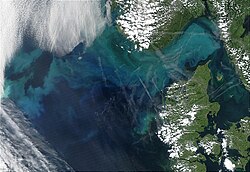
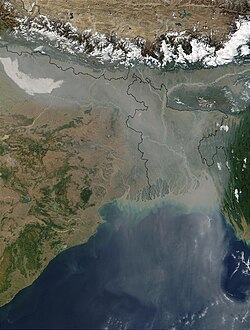
Diverse Sources of Aerosols
CCNs originate from a wide variety of natural and anthropogenic (human-caused) sources, including:
- Mineral Dust: Clay and dust particles lifted from the earth.
- Combustion Byproducts: Soot and black carbon from forest fires, grasslands, factory smokestacks, or vehicle engines.
- Marine Aerosols: Sea salt generated by ocean wave spray.
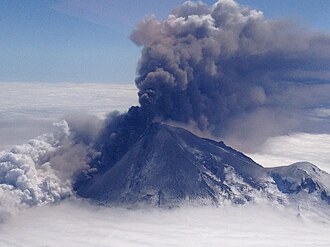
- Volcanic Emissions: Sulfates released during volcanic activity.
- Biological Matter: Phytoplankton and secondary organic matter formed through the oxidation of volatile organic compounds.
Human Applications and Climate Engineering
Because CCNs play such a critical role in weather, humans have attempted to manipulate them through various technologies.
Cloud Seeding
Cloud seeding is the practice of adding particulates to the atmosphere to encourage cloud formation and induce precipitation. This is often achieved by dispersing salts via aircraft or ground-based methods. More recent research has explored using laser pulses or even electric charge emissions from drones to achieve similar results, though the effectiveness of these methods remains a subject of scientific debate, with inconsistent results in precipitation increases.
Marine Cloud Brightening
As a form of climate engineering, marine cloud brightening seeks to increase the albedo (reflectivity) of clouds. By injecting small particles, such as seawater droplets containing sea salt, into clouds over the ocean, scientists hope to reflect more sunlight back into space. This could potentially lower ocean surface temperatures through radiative forcing. However, complications exist; for instance, reactive chlorine and bromine from sea salt could potentially reduce atmospheric ozone or affect the longevity of methane, a potent greenhouse gas.
Natural Feedback Loops and the Climate
The relationship between CCNs and the climate is often governed by complex feedback loops involving the ocean and the atmosphere.
The CLAW Hypothesis
Proposed in 1987, the CLAW hypothesis suggests a biological feedback loop. Marine phytoplankton produce dimethyl sulfide (DMS), which oxidizes into sulfate aerosols—a common type of CCN. Large algal blooms can increase DMS levels, leading to more cloud formation. Since cloud formation can regulate temperature, and phytoplankton activity is temperature-dependent, this acts as a natural climate regulation mechanism.
The Anti-CLAW Hypothesis
An alternative perspective, known as the anti-CLAW hypothesis, suggests a positive feedback loop. In this scenario, rising ocean temperatures cause stratification, trapping nutrient-rich cold water beneath warmer surface layers. This inhibits phytoplankton growth, reducing the production of sulfate CCNs. Fewer CCNs lead to lower cloud albedo, allowing more solar radiation to reach the ocean, which further increases temperatures.
The Role of Volcanic Activity
Volcanoes are massive natural contributors to atmospheric aerosols. When a volcano erupts, it releases gases such as carbon dioxide, water vapour, and sulfur dioxide. While the first two are naturally abundant, the injection of sulfur dioxide (SO₂) is particularly impactful. Approximately 9.2 Tg of SO₂ is emitted by volcanoes annually.
Once in the atmosphere, SO₂ transforms into sulfuric acid, which condenses into fine sulfate aerosols in the stratosphere. These aerosols increase the atmosphere's ability to reflect solar radiation, which can lead to a cooling effect in the troposphere.
Summary of CCN Characteristics
| Particle Type | Common Source | Hygroscopic Ability | Primary Role |
|---|---|---|---|
| Sea Salt | Ocean spray | High | Cloud condensation |
| Sulfate | Volcanoes / SO₂ oxidation | High | Cloud condensation & cooling |
| Soot / Black Carbon | Fires / Combustion | Low | Ice nuclei / Warming |
| Mineral Dust | Wind erosion | Low | Ice nuclei |
Frequently Asked Questions
What is the difference between a CCN and a condensation nucleus (CN)?
While the terms are related, CCN specifically refers to the subset of aerosols that are capable of forming cloud droplets under specific supersaturation ratios, whereas CN is a broader term for particles that act as nuclei.
How do CCNs affect the weather?
CCNs influence the number, size, and lifetime of cloud droplets. This directly affects how much rain a cloud produces and how much sunlight the clouds reflect back into space.
Can humans successfully control rainfall?
Through cloud seeding, humans attempt to induce precipitation by adding salts or other particles to clouds. However, scientific studies show inconsistent results, and its effectiveness is still being researched.
Why do volcanic eruptions cause cooling?
Volcanic eruptions release sulfur dioxide, which converts into sulfate aerosols in the stratosphere. These aerosols reflect incoming solar radiation away from Earth, leading to a cooling effect in the lower atmosphere.
What is the relationship between phytoplankton and clouds?
Phytoplankton produce dimethyl sulfide (DMS), which turns into sulfate aerosols in the atmosphere. These aerosols act as CCNs, helping to form clouds that can regulate global temperatures.