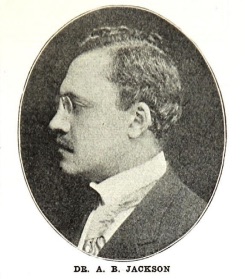
Dr. Algernon B. Jackson: Public Health, Race, and Class Perspectives
Dr. Algernon B. Jackson was a medical professional and writer who viewed public health education as a critical tool for racial advancement. He operated on the belief that improving the health and hygiene of the African American community would create a symbiotic benefit, lifting both the marginalized population and the white society with which they interacted.
Through his various writings, Jackson advocated for a structured approach to health education, though his perspectives were often shaped by the social hierarchies of his time.
Key Facts
- Mutual Benefit: Jackson believed that educating African Americans in public health would reduce mortality rates and benefit the broader society.
- Class Divide: He frequently distinguished between the health outcomes of cosmopolitan Northern blacks and poor Southern blacks.
- Preventative Focus: Through his "Afro Health Talk" column, he provided wide-ranging advice on preventative medicine.
- Systemic Critique: He attributed high mortality rates not only to individual behavior but to "slimy race prejudice" and socioeconomic maladjustment.
- Interest in Chemical Analysis: He expressed interest in the possibility of determining racial identity through chemical blood analysis.
The Intersection of Health and Class
While Jackson championed the overall improvement of his race, his writings often reflected classism—prejudice against people based on their social or economic status—and elitism. He viewed the responsibility for poor health outcomes unevenly, often placing the blame for ignorance of public health on poor Southern blacks.
In his work "Week-End Mosaics," Jackson sought to distance educated Northern African Americans from the high mortality rates seen elsewhere, claiming their health statistics were comparable to those of Northern whites. Conversely, he described Southern blacks as having little appreciation for life, comparing them to "dumb animals." He urged the educated black elite and medical professionals to mentor the "neglected members" of the race to achieve a state of being "unafraid and unconquerable."
Scientific Interests and Racial Identity
In 1928, writing for The Philadelphia Tribune, Jackson reported on a German study analyzing the blood of Russians, Ukrainians, and Jews. The study noted differences in how blood reacted with chemicals, a process attributed to oxidation (the chemical reaction where a substance combines with oxygen).
Jackson was intrigued by the suggestion that different ethnicities are "chemically different" and speculated that racial identity might one day be fixed by chemical analysis. He suggested that such objective measures could potentially reveal chemical superiority in blacks or less pure bloodlines in whites, which he believed might be unpopular with white populations.
Preventative Medicine and Societal Barriers
Despite his elitist leanings, Jackson provided hygiene and health guidance to all African Americans, regardless of class, through his "Afro Health Talk" column. Although he was recognized as a "Health Authority and Stomach Specialist," his advice spanned the entire field of preventative medicine—medical practices designed to prevent diseases rather than treat them.
When addressing tuberculosis, Jackson identified a complex mix of causes. He cited individual failures such as "ignorance, carelessness, indifference, immorality, vicious living and unwillingness to accept advice." However, he also acknowledged the systemic roots of these issues, blaming the "social and economic maladjustment" caused by deep-seated American race prejudice for preventing equal terms of life and death for all citizens.
| Focus Area | View on Northern/Educated Blacks | View on Southern/Poor Blacks |
|---|---|---|
| Health Responsibility | Seen as having health rates similar to Northern whites. | Blamed for ignorance of public health issues. |
| Social Role | Expected to lead and educate the "neglected." | Viewed as needing to be "saved" by medical leaders. |
| Medical Advice | Received preventative hygiene guidance. | Received preventative hygiene guidance. |
Frequently Asked Questions
What was Dr. Jackson's primary goal in health education?
His goal was to reduce mortality and illness within the African American community, believing that lifting up his own race would simultaneously benefit white society.
How did Dr. Jackson view the difference between Northern and Southern blacks?
He exhibited classist views, suggesting that educated Northern blacks were not responsible for high racial mortality rates, while blaming poor Southern blacks for a lack of appreciation for life and health.
What were his thoughts on chemical blood analysis?
He was interested in the idea that racial identity could be determined through chemical analysis, suggesting it might reveal chemical superiority in blacks or impure bloodlines in whites.
How did he explain the prevalence of tuberculosis in the black community?
He attributed it to a combination of individual factors (such as carelessness and ignorance) and systemic factors (such as socioeconomic maladjustment and race prejudice).
What was the purpose of his "Afro Health Talk" column?
The column served as a platform for providing preventative medicine advice and discussing how societal stereotypes and prejudices impacted the health of African Americans.