Nordicism in Germany: The Ideological Roots of Nazi Racial Theory
In the early 20th century, a powerful ideological current known as Nordicism—or Nordischer Gedanke (Nordic thought)—took hold in Germany. This belief system posited that the Nordic race was the pinnacle of human evolution, possessing innate superiority in intellect, will-power, and leadership. What began as a blend of philosophical speculation and early anthropological study eventually became the pseudo-scientific foundation for the Third Reich's most oppressive policies.
The Foundations of Nordic Thought
The term "Nordic thought" was popularized by German eugenicists Erwin Baur, Eugen Fischer, and Fritz Lenz in their 1921 work Human Heredity. These theorists combined the philosophy of Arthur Schopenhauer with Darwinian theory, arguing that the harsh climates of Northern Europe had acted as a catalyst for natural selection. They claimed that the struggle against "need, want and misery" in the north had eliminated weaker individuals, leaving behind a race characterized by initiative and strength.
This perspective was not unique to Germany. In the United States, eugenicist Madison Grant published The Passing of the Great Race in 1916, which argued that the Nordic race was responsible for humanity's greatest achievements. Grant warned that racial admixture—the mixing of different races—amounted to "race suicide." He suggested that individuals with Nordic physical traits (such as blonde hair and blue eyes) were suitable for Aryanization, regardless of their specific Germanic origin.
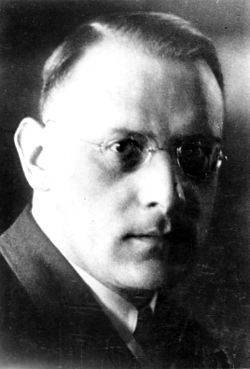
The Role of Hans F. K. Günther
While the Völkisch movement promoted a romanticized, blood-based nationalism popular among the lower classes, Nordicism attracted the academic elite. Hans F. K. Günther became the pre-eminent figure in this field. In his 1922 work Rassenkunde des deutschen Volkes (Race-Lore of the German Volk), Günther expanded existing racial categories to identify five principal European races, including the East Baltic and Dinaric races.
Interestingly, Günther challenged the Völkisch notion that Germans were a racially unified people, arguing instead that they were among the most racially diverse in Europe. Despite this, his work was widely adopted by the Nazi education system to categorize and rank human value based on physical and mental attributes.
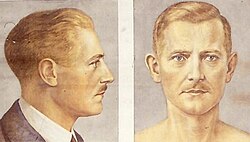
Nazi Nordicism and the "Master Race"
The Nazi Party synthesized these theories into a rigid hierarchy of Aryanism. They viewed the Nordic subtype as the apex of the Aryan race, which they termed the "master race." Conversely, they labeled Jews, Slavs, and Romani as Untermenschen (subhumans), associating them with "cultural sterility."
To maintain this perceived purity, the regime implemented the Nuremberg Laws in 1935. These laws forbade marriage and sexual relations between Germans and Jews, and later extended these prohibitions to Black and Romani people. This ideology was supported by a state-sponsored eugenics program focused on "racial hygiene," which utilized compulsory sterilization and mass extermination, culminating in the Holocaust.
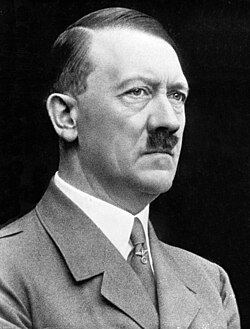
International Influences: France and the United States
The development of Nazi racial theory was heavily influenced by international sources. French aristocrat Arthur de Gobineau argued that racial intermixing had caused the decline of the French ancien régime. Although Gobineau was a pessimist who believed racial degeneration was inevitable, the Nazis adapted his theories to justify their active "purification" efforts.
From the United States, the Nazis drew inspiration from Lothrop Stoddard, whose work The Revolt Against Civilization: The Menace of the Under-man provided the term Untermensch. Adolf Hitler expressed explicit admiration for U.S. immigration laws that excluded "physically unhealthy elements" and specific races. Nazi lawyers specifically modeled the Nuremberg Laws' citizenship and blood restrictions on American anti-miscegenation laws.
The Evolution of the Theory under Hitler
As the Third Reich expanded, the application of Nordicism shifted. While Alfred Rosenberg promoted a mythical "Nordic-Atlantean" origin for the master race, Hitler eventually downplayed strict Nordicist rhetoric in public. This was partly because many Germans did not fit the ideal Nordic physical type (falling instead into the "Alpine" category).
By 1939, Hitler pivoted toward a belief in the "spiritual" qualities of the German people. However, in private, he remained obsessed with "Nordic blood." He viewed the SS as a racial elite intended to "regenerate" Europe by planting Nordic seeds in populations he deemed inferior.
Key Facts
- Nordischer Gedanke: A term coined by Baur, Fischer, and Lenz to describe the innate superiority of the Nordic race.
- The Nuremberg Laws (1935): Legislation designed to preserve "Aryan purity" by banning intermarriage between Germans and non-Aryans.
- Hans F. K. Günther: The primary racial theorist whose works were promoted by the Nazi education system.
- International Influence: Nazi laws were directly inspired by U.S. anti-miscegenation laws and the theories of Madison Grant and Arthur de Gobineau.
- Racial Hierarchy: The Nazis placed Nordics at the top, followed by other Aryans, while labeling Jews, Romani, and Slavs as Untermenschen.
| Figure | Origin | Key Contribution/Influence |
|---|---|---|
| Hans F. K. Günther | Germany | Defined "Nordic thought" and categorized five European races. |
| Madison Grant | USA | Authored The Passing of the Great Race; influenced Hitler's "Bible." |
| Arthur de Gobineau | France | Argued that racial mixing leads to societal degeneracy. |
| Lothrop Stoddard | USA | Introduced the concept of the "Under-man" (Untermensch). |
| Alfred Rosenberg | Germany | Chief Nazi theorist; proposed the Nordic-Atlantean master race. |
Frequently Asked Questions
What was the "Nordic thought" (Nordischer Gedanke)?
It was a pseudo-scientific belief that the Nordic race was naturally superior due to evolutionary pressures in the harsh Northern European climate, which supposedly fostered traits like will-power and initiative.
How did U.S. laws influence Nazi Germany?
Adolf Hitler admired the U.S. immigration system's exclusion of certain races. Furthermore, the Nuremberg Laws were directly inspired by American race-based citizenship and anti-miscegenation laws.
Did all Nazis believe Germans were purely Nordic?
No. Theorists like Hans F. K. Günther argued that Germans were racially diverse. This led Hitler to eventually shift his public rhetoric from strict physical Nordicism to a more general "spiritual" German identity.
What was the purpose of the SS in relation to Nordicism?
The SS was envisioned as a racial elite chosen for their "pure" Nordic qualities. Hitler and Himmler planned to use the SS to "regenerate" the population of Europe through the spread of Nordic blood.
Who were the "Untermenschen"?
The term "subhumans" was used by the Nazis to describe those they deemed racially inferior, specifically targeting Jews, Romani, and Slavs, to justify discrimination and extermination.