Discipline Global Mobile: Redefining Music Industry Ethics
For decades, the music industry has been characterized by complex contracts and a power imbalance between labels and creators. However, Discipline Global Mobile (DGM) was established to challenge these norms. Founded in 1992, DGM represents a radical departure from traditional business models, prioritizing artist autonomy and ethical transparency over corporate control.
The Origins of DGM
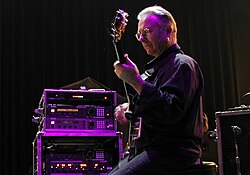
The catalyst for DGM's creation was a prolonged legal and financial conflict. Robert Fripp, a professional musician since the mid-1960s and guitarist for King Crimson since 1969, spent seven years in a dispute with E.G. Records and E.G. Management over unpaid royalties owed to himself and his bandmates. While the conflict eventually ended in a settlement, the experience left Fripp determined to secure control over his own financial affairs and creative output.
During this period, Fripp partnered with producer and online developer David Singleton. Their collaboration began in 1990 during a Guitar Craft tour and expanded through the production of albums for the League of Crafty Guitarists and the group Sunday All Over the World. Their partnership, which continues today under the name TonProb, was further solidified by the production of two King Crimson boxed sets: Frame by Frame (1991) and The Great Deceiver (1992).
In 1992, Fripp and Singleton established DGM as an independent music label based on a fifty-fifty partnership.
The Five Business Aims of DGM
DGM operates under a specific mission statement designed to counteract what Fripp describes as an industry fueled by greed and deceit. The label's five core business aims are:
- Bringing music to the world that would otherwise be unlikely to be released, or would be released under conditions prejudicial to the music and musicians.
- Operating within the marketplace while remaining free from the values typically associated with that marketplace.
- Supporting artists and staff in achieving their personal and professional goals.
- Finding its audience through organic and direct means.
- Serving as a model of ethical business in an industry often characterized by exploitation and theft.
Industry observers, such as Bill Martin, have noted that these exemplary aims have created favorable conditions for King Crimson and expanded the possibilities for experimental music.
A New Approach to Copyright and Contracts
Since the early 1960s, it has been standard practice for recording companies to require artists to sign over their copyrights (the legal right to reproduce and distribute work) and moral rights (the right to be credited and protect the integrity of the work) regarding their music, lyrics, and cover art. DGM explicitly rejects this practice.
At DGM, artists retain full ownership of their copyrights and moral rights. The label operates the phonographic copyright on behalf of the artists rather than owning it. This commitment to ownership extends even to the company's visual identity; the copyright for the DGM knotwork logo is owned by its designer, Steve Ball, rather than the company itself.
Furthermore, DGM does not require artists to sign written contracts, relying instead on a system of mutual trust. This approach has attracted high-profile musicians and bands who seek an alternative to corporate constraints.
Case Studies in Trust
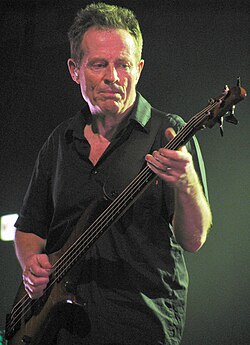
- John Paul Jones: The former Led Zeppelin bassist recorded with DGM without a contract, citing a relationship based on "pure trust" and integrity.
- The Rosenbergs: After conflicts with Universal Records—which had attempted to claim control of the band's domain name—the alternative rock group joined DGM. The label encouraged them to keep their master recordings and provided funding for promotion and touring.
Financial Structure and Artist Responsibilities
DGM offers royalty payments that exceed the prevailing industry rates. In exchange for this financial advantage and the retention of their rights, artists take on a more active role in the success of their work, assuming responsibility for promoting their albums through interviews and concert tours.
| Feature | Traditional Labels | Discipline Global Mobile (DGM) |
|---|---|---|
| Copyright Ownership | Usually owned by the label | Retained by the artist |
| Contractual Basis | Strict written contracts | Based on trust; no written contracts required |
| Royalties | Standard industry rates | Above prevailing rates |
| Moral Rights | Often signed away | Retained by the artist |
| Promotion | Label-driven marketing | Artist-led tours and interviews |
Frequently Asked Questions
Who founded Discipline Global Mobile?
DGM was founded in 1992 as a fifty-fifty partnership between musician Robert Fripp and producer David Singleton.
How does DGM handle music copyrights differently than other labels?
Unlike most labels that require artists to sign over their rights, DGM ensures that artists retain the copyrights and moral rights to their musical and visual works.
Do artists have to sign contracts to work with DGM?
No, DGM does not require written contracts, operating instead on a foundation of trust and integrity between the label and the artist.
What are the responsibilities of an artist signed to DGM?
While they receive higher-than-average royalties, DGM artists are responsible for promoting their own albums through interviews and concert tours.
What inspired the creation of DGM?
The label was inspired by Robert Fripp's negative experiences with E.G. Records and E.G. Management, specifically regarding disputes over unpaid royalties.