Post-Progressive Rock: Evolution Beyond the 1970s
While the 1970s defined the golden era of progressive rock, the music did not stop evolving once that decade ended. Post-progressive emerged as a distinct approach to rock music, distancing itself from the rigid conventions of vintage prog to rediscover the genre's original spirit of experimentation. Rather than simply imitating the past, post-progressive artists integrated modern developments in popular music and the avant-garde to push sonic boundaries.
Key Facts
- Definition: Rock music that seeks a return to the original principles of progressive music by drawing from sources other than 1970s prog.
- Origins: Emerged around 1978, influenced by the transition from progressive rock to new wave and punk.
- Core Influences: Incorporates minimalism, ethnic music, ambient sounds, and electronic technology.
- Distinction: Unlike neo-prog, which pastiches 1970s styles, post-progressive focuses on new stylistic developments.
- Key Figures: Brian Eno is cited as a primary catalyst, with Robert Fripp and Radiohead as pivotal figures in its evolution.
Defining the Post-Progressive Sound
To understand post-progressive, one must first understand the philosophy of "progressiveness." Robert Fripp of King Crimson argued that progressive music is an attitude rather than a specific style. In his view, music is only truly progressive when it pushes conceptual and stylistic boundaries—often by borrowing techniques from jazz or classical music. Once the hallmarks of 1970s prog became a set of repeatable conventions, the music ceased to be progressive in the truest sense.
Post-progressive music acknowledges the advancements in avant-garde and popular music since the mid-1970s. It explicitly embraces new computer technologies and sounds, often blending them with influences from Jimi Hendrix, Frank Zappa, the Beatles, and King Crimson. While some artists may selectively use elements of vintage prog, they do so while actively distancing themselves from the clichés of the era.
Unlike traditional prog, which grew out of psychedelia, folk, and jazz, post-progressive draws from a different set of reference points, including Krautrock (experimental German rock), minimalism (music based on the repetition of small melodic or rhythmic cells), and New York art rock.
Historical Evolution and Key Influences
The roots of the movement can be traced back to approximately 1978. Author Bill Martin identifies Brian Eno as the foremost catalyst in this transition. Eno's solo work between 1973 and 1977 merged warped progressive elements with early approximations of new wave and a premonition of punk, bridging the gap between the two eras.

Other transitional figures include Robert Fripp, Bill Laswell, and Peter Gabriel. Additionally, the band Talking Heads expanded the boundaries of new wave by blending the urgency of punk with progressive sophistication, creating a blueprint for much of the interesting rock music that followed.
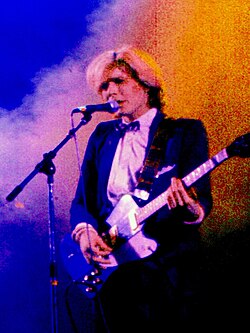
A major turning point occurred with King Crimson's 1981 album Discipline, which introduced ethnic musics and minimalism to the rock palette. Later, artists like David Sylvian and Talk Talk exemplified a return to progressive ideals without simply copying the 1970s sound.
In more recent history, Radiohead is credited with sparking a "new wave of progressiveness." By reintegrating rock into a post-progressive context, they demonstrated that authentic progressive music could be created without referring back to the specific sounds of the 1970s.
Comparing Progressive Subgenres
The landscape of experimental rock can be confusing due to overlapping terminology. Academic Kevin Holm-Hudson categorizes post-progressive as a subgenre of progressive rock, whereas post-rock is viewed as a subgenre of alternative rock. Meanwhile, some artists, such as Nosound's Giancarlo Erra, suggest that "post-prog" represents a hybrid mixture of both progressive rock and post-rock.
| Style | Primary Characteristic | Relationship to 1970s Prog |
|---|---|---|
| Vintage Prog | Complex structures, symphonic elements | The original 1970s foundation |
| Neo-Prog | Pastiche of 1970s sounds | Imitates and repeats vintage styles |
| Post-Progressive | Integration of minimalism and electronics | Returns to original principles via new sources |
| Post-Rock | Alternative rock focus, textural use of instruments | Distinct subgenre of alternative rock |
Frequently Asked Questions
How does post-progressive differ from neo-prog?
Neo-prog is essentially a pastiche that imitates the styles and sounds of 1970s progressive rock. In contrast, post-progressive identifies music that stems from sources other than prog—such as minimalism and electronic music—to return to the genre's original spirit of innovation.
Who are the most influential artists in post-progressive music?
Key figures include Brian Eno, who acted as a catalyst for the transition; Robert Fripp and King Crimson, who introduced minimalism; and more contemporary acts like Radiohead, David Sylvian, and Talk Talk.
What are the primary musical influences of post-progressive rock?
Post-progressive draws heavily from ambient music, folk rock, Krautrock, electronic music, and the minimalism associated with New York art rock, as well as ethnic musical traditions.
Is post-progressive the same as post-rock?
No. While they share some similarities, academic perspectives generally categorize post-progressive as a subgenre of progressive rock, while post-rock is considered a subgenre of alternative rock.
When did post-progressive music begin?
The emergence of post-progressive is generally located after 1978, following a transitional period where artists began blending progressive rock with punk and new wave influences.