Diplostraca: The Biology and Evolution of Water Fleas
Commonly known as water fleas, the Diplostraca (also referred to as Cladocera) are a superorder of small crustaceans that play a vital role in aquatic ecosystems. While most are found in freshwater environments, these versatile organisms have adapted to various habitats, from leaf litter to the open ocean. Most species survive by feeding on bacteria and microscopic chunks of organic matter, though some have evolved into predatory hunters.
With over 1,000 recognized species and many more yet to be described, the group is characterized by its unique reproductive strategies and specialized anatomy. From the tiny 0.2 mm varieties to the unusually large Leptodora, water fleas represent a diverse branch of the class Branchiopoda.
Key Facts
- Common Name: Water fleas.
- Size Range: Typically 0.2–6.0 mm, though Leptodora can reach 18 mm.
- Habitat: Primarily freshwater, with a few specialized marine species.
- Reproduction: Primarily through cyclical parthenogenesis (alternating asexual and sexual reproduction).
- Diet: Mostly organic detritus and bacteria; some are predatory.
- Evolution: Confirmed fossils date to the Jurassic, though they likely originated in the Paleozoic.
Anatomy and Physical Characteristics
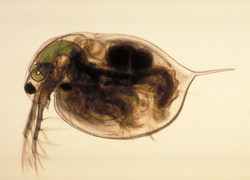
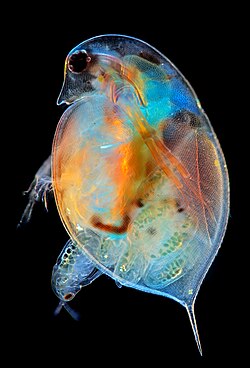
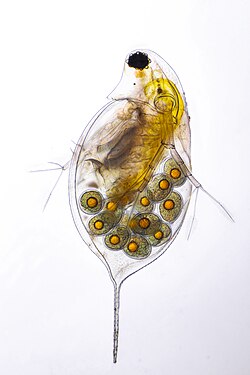
The body of a diplostracan is characterized by a folded carapace—a protective shell that covers the thorax and abdomen, which appear unsegmented. Their heads are angled downwards and are often separated from the body by a notch known as a cervical sinus.
Most species possess a single black compound eye located on the midline of the head, sometimes accompanied by a single ocellus (a simple eye). The head also features a rostrum, or "beak," projecting in front of the antennae. They possess two pairs of antennae: the first are small and used for smelling via olfactory setae, while the second are large, branched, and powered by strong muscles for swimming.
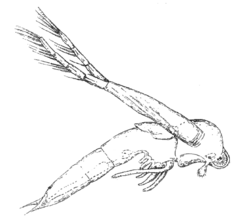
Their mouthparts are small and specialized for consuming organic detritus. The thorax contains five or six pairs of leaf-like appendages covered in hairs (setae). Unlike many other animals, they do not have complex respiratory organs; instead, oxygen is absorbed and carbon dioxide is released directly through the body surface.
Lifecycle and Reproduction
The most striking feature of diplostracan biology is cyclical parthenogenesis. This is a reproductive strategy where the species alternates between asexual and sexual phases based on environmental conditions.
Asexual Phase
When environmental conditions are favorable, reproduction is dominated by parthenogenesis. During this time, females produce clones of themselves, allowing the population to grow rapidly without the need for mates.
Sexual Phase and Dormancy
As conditions deteriorate (such as during winter or drought), the population begins to produce males. Sexual reproduction then occurs, resulting in the creation of ephippia. These are specialized, thick-shelled resting eggs that protect embryos with arrested development from harsh conditions.
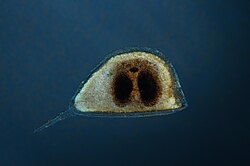
Ephippia can remain dormant in soil or dried ponds for many years, hatching only when a specific stimulus indicates that favorable conditions have returned. This mechanism allows water fleas to disperse over vast distances via wind and maintain cosmopolitan distributions.
Evolutionary History and Ecology
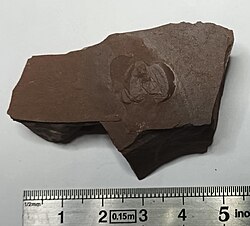
Diplostraca are closely related to the order Cyclestherida. While some Paleozoic fossils have been suggested as ancestors, the oldest unequivocally confirmed records date back to the Early Jurassic of Asia. However, their modern morphology suggests they likely radiated during the late Paleozoic.
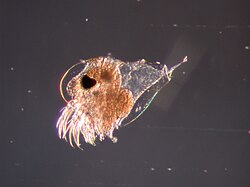
Ecologically, the vast majority of species are freshwater inhabitants. Interestingly, they are the only members of the class Branchiopoda to have successfully adapted to the ocean, though only eight species are truly oceanic (mostly within the family Podonidae and the genus Penilia).
Taxonomy and Classification
The superorder Diplostraca is a monophyletic group consisting of seven orders and approximately 24 families. The genus Daphnia is one of the most prominent, containing around 150 species. The name "Cladocera" is derived from the Ancient Greek kládos (branch) and kéras (horn).
| Rank | Name |
|---|---|
| Kingdom | Animalia |
| Phylum | Arthropoda |
| Class | Branchiopoda |
| Superorder | Diplostraca (Cladocera) |
| Key Orders | Anomopoda, Ctenopoda, Cyclestherida, Haplopoda, Laevicaudata, Onychopoda, Spinicaudata |
Frequently Asked Questions
What are water fleas?
Water fleas are small crustaceans belonging to the superorder Diplostraca. They are primarily freshwater zooplankton that feed on organic matter and bacteria.
How do water fleas survive harsh winters or droughts?
They produce ephippia, which are protective, thick-shelled resting eggs containing embryos. These eggs can remain dormant for years until favorable conditions trigger hatching.
Do all water fleas live in freshwater?
Most do, but there are eight known species that are truly oceanic, making them unique among the Branchiopoda.
What is cyclical parthenogenesis?
It is a reproductive cycle where females produce asexual clones during favorable conditions and switch to sexual reproduction to produce dormant eggs when conditions worsen.
How large can water fleas grow?
Most species are between 0.2 and 6.0 mm, but the genus Leptodora is an exception, reaching lengths of up to 18 mm.