Developing Countries: Classifications, Characteristics, and Global Challenges
A developing country is generally defined as a nation with a less-developed industrial base and a lower Human Development Index (HDI)—a composite statistic of life expectancy, education, and per capita income—relative to developed countries. However, this definition is not universally agreed upon, and there is often debate regarding which specific nations fit into this category.
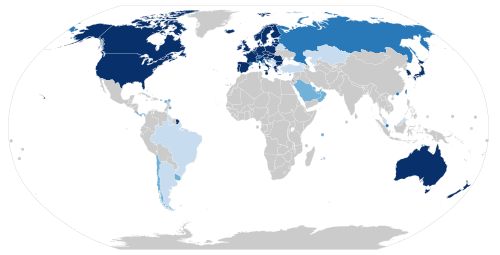
In recent years, terminology has shifted to avoid outdated "us versus them" narratives. In 2015, the World Bank announced it would phase out the "developing/developed world" descriptor in favor of data aggregations based on regions and income groups. Consequently, terms like Global South, low-and middle-income country (LMIC), and newly emerging economy (NEE) are frequently used as alternatives.
Key Facts
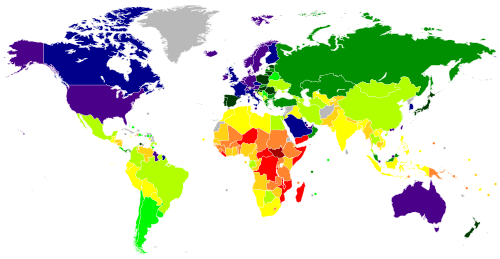
- Diverse Metrics: Countries are classified using various criteria, including gross national income (GNI), financial stability, and social development.
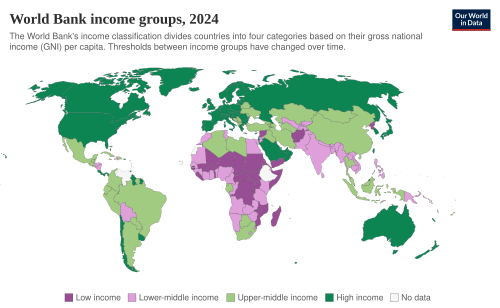
- World Bank Groups: Economies are divided into four main income groups: high, upper-middle, lower-middle, and low-income.
- IMF Focus: The International Monetary Fund (IMF) prioritizes financial integration and stability over social development metrics.
- Common Hurdles: Many developing nations face shared challenges such as urban slums, inadequate sanitation, and high vulnerability to climate change.
- Sub-groupings: Specific categories include Least Developed Countries (LDCs), Landlocked Developing Countries, and Small Island Developing States.
Frameworks for Classifying Economies
Different international organizations use distinct methodologies to categorize the world's economies, leading to overlapping or sometimes conflicting lists.
By Income Level (World Bank)
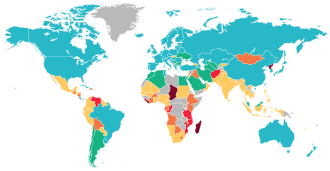
The World Bank classifies economies based on gross national income per capita. This system provides a snapshot of economic capacity across four tiers: high-income, upper-middle-income, lower-middle-income, and low-income countries.
By Market Growth and Industrialization
Economies are also categorized by their stage of industrialization and the size of their capital markets. This hierarchy typically includes:
- Newly Industrialized Countries: Nations experiencing rapid industrial growth.
- Emerging Markets: Economies becoming more integrated into global markets.
- Frontier Markets: Smaller, less liquid markets than emerging ones.
- Least Developed Countries: Nations with the lowest indicators of socioeconomic development.
![Least developed economies according to ECOSOC Least developed economies out of scope of the ECOSOC Graduated to developing economy [when?][citation needed]](/images/98/dd/98dd07397a24b4ed2501a7dc8a7387225376c01a972c3faf382e514782b55d50.png)
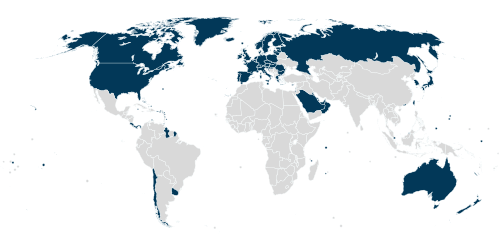
By Financial Integration (IMF)
The IMF focuses on financial stability and integration. Notably, the adoption of the Euro has led the IMF to upgrade several European countries to "developed economy" status based on financial integration, regardless of other social development factors.
![The latest classifications sorted by the IMF[32] and the UN[33]](/images/d9/4e/d94edff91104f617893745eda63ff5a602c6f8b77a25211defe862ded8d920ce.png)
Geographic and Special Designations
Geography often dictates economic opportunity. Landlocked Developing Countries often face inherent economic disadvantages due to a lack of direct sea access. Additionally, the UNCTAD uses the terms "North" (developed) and "South" (developing/least developed) for statistical convenience, though these do not necessarily reflect a judgment on a country's specific stage of development.
![Economic classification of the world's countries and territories by the UNCTAD in 2023: "North" refers to the developed economies, highlighted in blue; and "South" to the developing and least developed economies, highlighted in red. UNCTAD notes that "the designations "developing" and "developed" are intended for statistical convenience and do not necessarily express a judgement about the stage reached by a particular economy in the development process".[48][49][50]](/images/e7/c3/e7c3ea3f847040fc6db065372255563e25af2f40a2eaa531c813ab97092e9d2e.png)
Common Characteristics and Challenges
While every nation is unique, many developing countries share systemic challenges rooted in history, geography, or governance.
Public Health and Sanitation
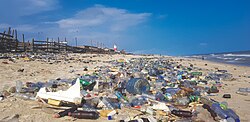
Healthcare systems in developing regions often struggle with a dual burden: the persistence of neglected tropical diseases and the rise of non-communicable diseases. Poor WASH (Water, Sanitation, and Hygiene) infrastructure leads to unsafe drinking water and poor hygiene, further compromising public health.
Environmental and Climate Risks
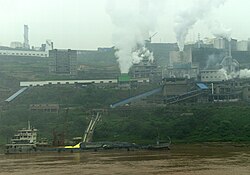
Developing nations are often disproportionately vulnerable to climate change. Challenges include severe air and water pollution, as well as the reliance on inefficient energy sources. Indoor air pollution remains a significant health risk in these regions.
![Surface air temperature change over the past 50 years.[120]](/images/93/0d/930dd963e3a21e4768f7d8c6f4f9e6b1fdce4ee083a37be19f846ab0c3194e73.webp)
Social and Political Issues
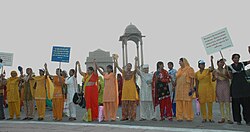
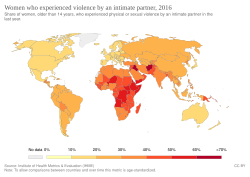
Many developing countries face systemic social hurdles, including the prevalence of urban slums and high rates of violence against women. Governance issues, particularly corruption, can hinder economic progress, necessitating special laws and increased transparency to protect the national economy.
Demographics and Human Capital
Population growth rates and fertility rates vary widely across the Global South, impacting the demand for education and healthcare. However, these regions also possess significant Human Capital opportunities through investments in education and workforce development.
![Global rates of population growth and decline (2021); population growth rate takes birth, death, and migration rates into account. Future projections are based on the United Nations World Population Prospects (from 1950 until 2100).[138]](/images/6d/d7/6dd72589e778c1a2e251ec6db555b1c22ae41f7c0d2210e167844676c1406a8f.png)
![Map of countries by total fertility rate (2022–2023), referring to the average number of children that are born to a woman over her lifetime, according to the Population Reference Bureau.[139]](/images/2b/97/2b972652609ce615ab5a4e29f32b0fc6eaf5f675aa070ca4fcbeb3a7770c7ccc.webp)
Summary of Classification Systems
The following table summarizes the primary ways countries are categorized globally.
| Organization/Term | Primary Criteria | Key Categories |
|---|---|---|
| World Bank | Gross National Income (GNI) per capita | Low, Lower-Middle, Upper-Middle, High Income |
| IMF | Financial integration and stability | Advanced vs. Emerging and Developing Economies |
| UN/ECOSOC | Socioeconomic indicators | Least Developed Countries (LDCs) |
| UNCTAD | Statistical convenience/Geography | Global North vs. Global South |
Frequently Asked Questions
What is the difference between a developing country and an emerging market?
While often used interchangeably, "developing country" is a broad term encompassing social and industrial development, whereas "emerging market" refers specifically to the economy's growth and its integration into global capital markets.
Why is the World Bank phasing out the term "developing world"?
The World Bank believes the categorization has become less relevant and can perpetuate outdated stereotypes. They now prefer to use data aggregations based on specific income groups and regions.
What is the Human Development Index (HDI)?
The HDI is a composite measure used to rank countries by looking at life expectancy, education (mean and expected years of schooling), and per capita income.
How does being landlocked affect a developing country?
Landlocked Developing Countries often face higher trade costs and economic disadvantages because they lack direct access to maritime trade routes, making them dependent on neighboring countries for port access.
What are the BRICS countries?
BRICS is an organization consisting of ten countries that belong to the "emerging markets" group, representing some of the fastest-growing economies in the developing world.