Cristina Fernández de Kirchner: The Presidency of Argentina (2007–2015)
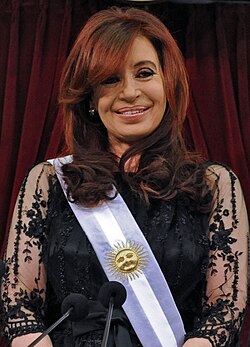
From December 10, 2007, to December 10, 2015, Cristina Fernández de Kirchner served as the President of Argentina. Operating from the Casa Rosada, she led the nation through two consecutive terms, representing the Justicialist Party and the Front for Victory. Her tenure was marked by a complex blend of domestic social policies, assertive foreign diplomacy, and significant political shifts within the South American landscape.
Throughout her presidency, she was formally addressed as "Her Excellency Madam President of the Argentine Nation" (Su Excelencia Señora Presidente de la Nación Argentina), though she was commonly referred to as "Madam President" (Señora Presidente) or simply the "President of the Nation."
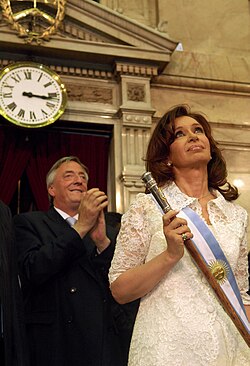
Key Facts
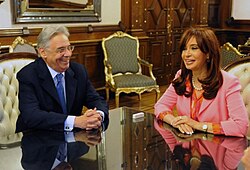
- Term of Office: December 10, 2007 – December 10, 2015.
- Political Affiliation: Justicialist Party / Front for Victory.
- Vice Presidents: Julio Cobos (2007–2011) and Amado Boudou (2011–2015).
- Predecessor: Néstor Kirchner.
- Successor: Mauricio Macri.
- Key Focus Areas: Nationalization of pensions, foreign relations with China and Russia, and claims over the Falkland Islands.
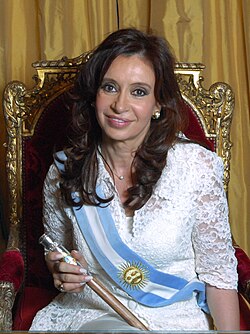
The First Term (2007–2011)
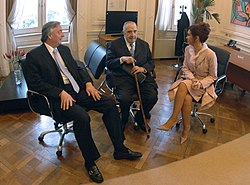
Fernández de Kirchner's first term began in late 2007. Her early administration focused on establishing a distinct presidential style while managing the economic legacy of her predecessor and husband, Néstor Kirchner. During this period, the government pursued several high-profile initiatives, including the nationalization of private pensions in 2008.
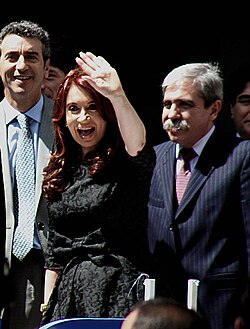
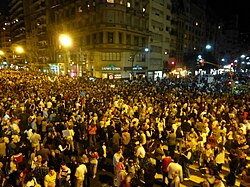
The first term was not without conflict. In 2008, a significant political crisis emerged following a surprise vote by Vice President Julio Cobos. Additionally, the administration faced public protests, including a cacerolazo (a form of protest involving the banging of pots and pans) involving approximately 200,000 people.
The Death of Néstor Kirchner
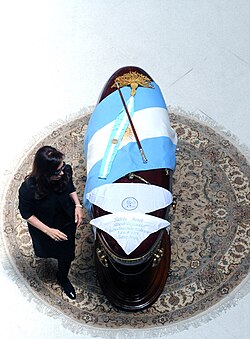
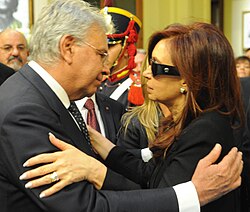
A pivotal moment in her first term occurred in 2010 with the death of former President Néstor Kirchner. This event had a profound impact on the political landscape and the President's personal life, as she navigated the state funeral and the subsequent transition of power within the party.
The Second Term (2011–2015)
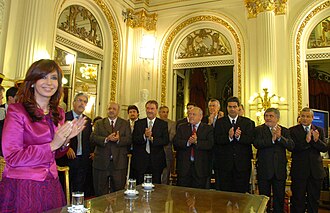
Following her reelection in 2011, Fernández de Kirchner began her second term with Amado Boudou as Vice President. This period saw a continued emphasis on state intervention in the economy and a strengthening of ties with other left-leaning governments in Latin America.
Her second term was characterized by increased tension with the judiciary and international financial bodies. The IMF (International Monetary Fund) issued a "red card" to Argentina in 2012, and the administration faced legal challenges regarding bond disputes in U.S. courts. Toward the end of her term, she faced criminal complaints and indictments related to corruption cases.
Foreign Policy and Global Relations
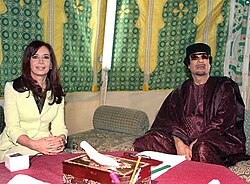
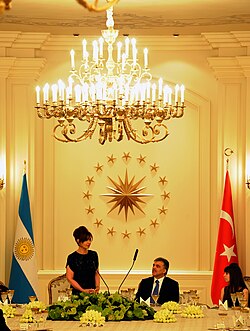
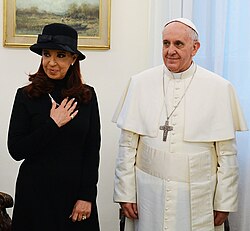
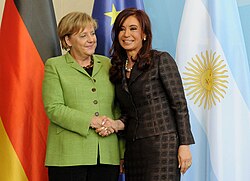
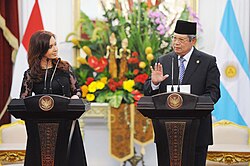
President Fernández de Kirchner maintained an active and often assertive presence on the world stage. She focused heavily on South-South cooperation, strengthening ties with Brazil, Venezuela, and China.
Regional and Global Diplomacy
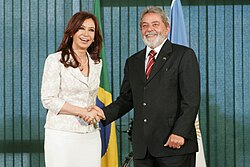
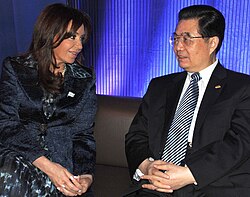
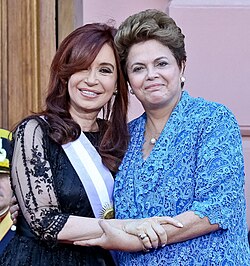
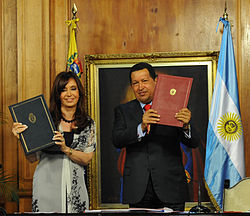
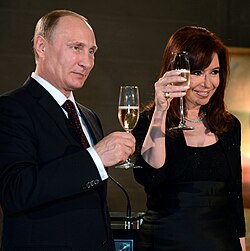
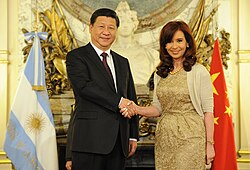
She maintained close relationships with Brazilian leaders, including Lula da Silva and Dilma Rousseff, and Venezuelan President Hugo Chávez. Her administration also sought strategic partnerships with Russia and China, the latter of which involved various commercial agreements and arms supply discussions.
The Falkland Islands and the UK
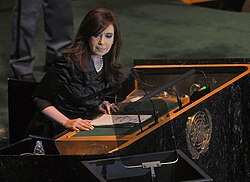
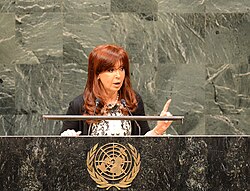
A cornerstone of her foreign policy was the persistent claim over the Falkland Islands. She frequently used international forums, including the United Nations General Assembly, to advocate for Argentine sovereignty over the islands, leading to strained relations with the United Kingdom.
Administrative Structure and Cabinet
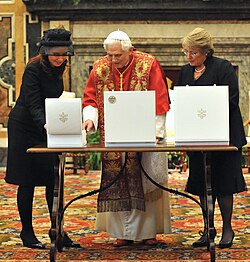
The presidency was supported by a rotating cabinet of ministers and secretaries. The role of Cabinet Chief saw several changes, with figures such as Alberto Fernández, Sergio Massa, and Aníbal Fernández serving in the position. The administration also created the Ministry of Security in December 2010 to address internal safety and intelligence.
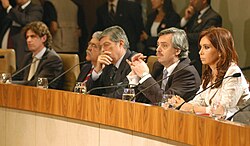
Below is a summary of the key leadership roles during her presidency:
| Role | Person | Period | Party |
|---|---|---|---|
| President | Cristina Fernández de Kirchner | 2007–2015 | Justicialist / Front for Victory |
| Vice President (1st Term) | Julio Cobos | 2007–2011 | Justicialist |
| Vice President (2nd Term) | Amado Boudou | 2011–2015 | Independent |
| Cabinet Chief (Notable) | Aníbal Fernández | Various Terms | Justicialist |
| Minister of Economy (Notable) | Axel Kicillof | 2013–2015 | Independent |
Frequently Asked Questions

Who succeeded Cristina Fernández de Kirchner as President?
Mauricio Macri succeeded her after the 2015 elections.
Which political parties did she represent?
She represented the Justicialist Party and the Front for Victory.
What was her stance on the Falkland Islands?
She strongly advocated for Argentine sovereignty over the islands and frequently raised the issue at the United Nations.
Who were her Vice Presidents during her two terms?
Her first Vice President was Julio Cobos (2007–2011), and her second was Amado Boudou (2011–2015).
What was the significance of the Ministry of Security?
The Ministry of Security was created by the President in December 2010 to centralize and manage the nation's security apparatus.