Cowpunk: The High-Energy Fusion of Country and Punk Rock
Cowpunk, also known as country punk, is a spirited subgenre that bridges the gap between the raw energy of punk rock and the storytelling traditions of country music. Emerging in the late 1970s and early 1980s across the United Kingdom and Southern California, this style blends punk rock or new wave with folk, blues, and country in its sound, attitude, and lyrical themes.
From its beginnings as a rebellious reaction to mainstream music, cowpunk has evolved into a foundational influence for modern alternative country and Americana. It represents a collision of two seemingly opposite worlds: the anti-establishment fire of punk and the rural heritage of the American West.
Key Facts
- Origins: Developed in the late 1970s (UK) and early 1980s (Southern California).
- Core Sound: A blend of punk rock, new wave, country, folk, and blues.
- Etymology: A portmanteau of "cowboy" and "punk," first recorded in 1979.
- Key Artists: Includes X, Social Distortion, The Blasters, and Jason and the Scorchers.
- Legacy: Paved the way for alternative country (alt-country) and roots rock.
The Evolution of the Cowpunk Sound
Stylistic Origins and Characteristics
Cowpunk is characterized by high-tempo arrangements and a rejection of "slick" commercial production. In the early 1980s, many punk and new wave bands began collecting classic country records, leading them to perform fast-paced cover versions of traditional songs. This movement was less about mainstream country and more about "classic" country—music that felt authentic yet distant enough to remain non-mainstream.
By 1984, critics noted that cowpunk served as a catch-all term for various bands personalizing country music for the MTV generation. While some critics argued the term was a misnomer due to the diversity of styles involved, the label stuck as a way to describe the intersection of twang and distortion.
Overcoming the Culture Gap
The relationship between punk and country was initially fraught. In the early 1980s, country music was often perceived by youth as being aligned with conservative political values and overly produced commercialism, such as the "countrypolitan" sound of artists like Kenny Rogers and Dolly Parton. However, punk musicians discovered the exuberant, rebellious roots of early "hillbilly music," which resonated with their own anti-establishment ethos.
This fusion allowed for greater experimentation. Some cowpunk bands explored androgynous appearances or queer themes in their lyrics, making the genre appealing to non-mainstream youth who felt alienated by both traditional country and corporate rock.
Historical Timeline and Key Figures
The Early Wave (1970s - 1980s)
The late 1970s saw early precursors like Rosie and the Screamers and T. Tex Edwards. By the early 1980s, the Los Angeles scene became a hub for the genre. The band X began leaning into a "twangy" sound, while other "blitzkrieg" punk bands, such as the Dils, morphed into cowpunk acts like Rank and File.
In the United States, the scene expanded with bands like The Blasters, Meat Puppets, and Jason and the Scorchers. In the UK, groups like Boothill Foot Tappers and Yip Yip Coyote brought a country-tinged pop and new wave sensibility to the movement.
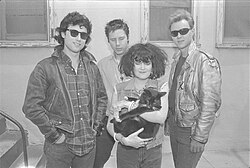
Other notable contributions include the Del-Lords in New York City, who blended 1960s garage rock with folk and blues, and Nine Pound Hammer from Kentucky, who introduced a rural, blue-collar hardcore punk sound focusing on themes of poverty and alcoholism.
Social Distortion also made a significant stylistic shift during the recording of Prison Bound (1986–1988), incorporating honky-tonk influences and references to country legend Johnny Cash.
Expansion and Mainstream Moments (1990s - Present)
The 1990s saw the genre evolve through artists like Dan Baird (of the Georgia Satellites) and the humor-driven indie rock of Goober & the Peas. The influence of cowpunk continued through the Damn Band, the backing group for Hank Williams III, and the Grammy-nominated Nashville Pussy, which blended cowpunk with psychobilly and Southern rock.
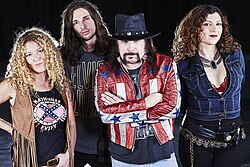
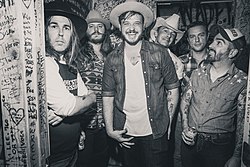
In the 21st century, the genre has seen various resurgences. The Vandoliers, formed in 2015, are credited with ushering in a modern cowpunk revival with their album The Native. Other contemporary artists associated with the country-punk sound include Lydia Loveless, Sarah Shook's band, and the Danish "hellbilly" group Volbeat.
Cowpunk Fashion and Aesthetic
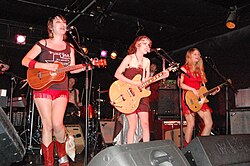
The visual identity of cowpunk is a blend of U.S. rural working-class wear and punk rebellion. This aesthetic typically falls into two categories:
- Vintage Western: Checked shirts, bib overalls, worn jeans, and cowboy boots.
- Industrial Rural: Trucker hats, work boots, and simple undershirts (wifebeaters).
Grooming varies widely, ranging from crew cuts and long hair to the exaggerated quiff pompadour and various styles of facial hair.
Summary of Cowpunk Influence
| Genre | Primary Influence | Key Characteristic |
|---|---|---|
| Cowpunk | Punk + Classic Country | High-tempo, raw, anti-commercial |
| Psychobilly | Punk + Rockabilly | Upright bass, fast rhythms, horror themes |
| Alt-Country | Country + Indie Rock | More melodic, focused on songwriting |
| Roots Rock | Rock + Americana | Emphasis on traditional American music |
Frequently Asked Questions
What is the difference between cowpunk and alternative country?
Cowpunk is generally more aggressive, faster, and rooted in the punk rock and new wave movements of the late 70s and early 80s. Alternative country (alt-country) is often a more melodic evolution that blends indie rock with country, focusing more on songwriting than raw energy.
Where did the term "cowpunk" come from?
The term is a blend of "cowboy" and "punk." It first appeared in 1979 to describe the emerging trend of punk bands incorporating country music elements into their sound.
Which bands are considered pioneers of cowpunk?
Early pioneers include X, The Blasters, Rosie and the Screamers, and Jason and the Scorchers. Social Distortion is also highly influential, particularly with their later shift toward a country-western flavor.
Is cowpunk still popular today?
While not a mainstream chart-topping genre, cowpunk persists through a dedicated underground scene and periodic resurgences, with bands like The Vandoliers and artists on Bloodshot Records keeping the spirit alive.
What instruments are typically used in cowpunk?
In addition to standard punk instruments (electric guitar, bass, drums), cowpunk often incorporates traditional country instruments such as the fiddle, banjo, steel guitar, and occasionally the jew's harp.