Counties of Scotland: A History of Shires and Local Governance
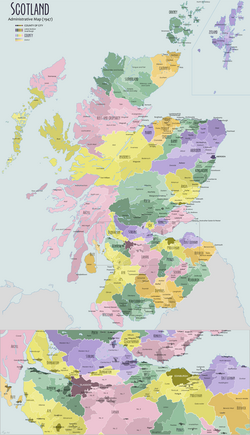
The counties, or shires (Scottish Gaelic: Siorrachdan na h-Alba), represent the historic administrative subdivisions of Scotland. Originally established in the Middle Ages, these territories were defined by the jurisdiction of a sheriff. While they began as judicial districts, they evolved over centuries into the primary units of local government, taxation, and military organization.
Unlike the older provinces of Scotland—such as mormaerdoms and earldoms—the shires gradually expanded their functions. By the 16th century, they served as constituencies for electing commissioners to the Parliament of Scotland. This transition from traditional provincial power to a structured shire system laid the groundwork for the modern administrative landscape of the country.
Key Facts
- Origin: Established in the Middle Ages for judicial purposes under the authority of a sheriff.
- Evolution: Transitioned from judicial districts to administrative hubs for taxes (via Commissioners of Supply) and militia organization.
- Major Reform: Elected county councils were introduced in 1890 and remained until 1975.
- Current Status: Scotland is now divided into 32 council areas, though historic counties still serve as registration counties.
- Terminology: The term "county" became interchangeable with "shire" following the Acts of Union 1707.
The Evolution of the Shire System
Early Shires and Expansion
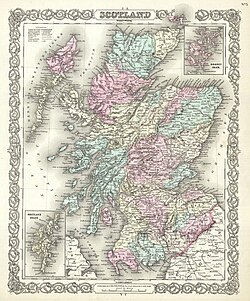
By 1305, a significant number of shires were already extant, including Aberdeen, Fife, Stirling, and Lanark. Some areas, such as Ayr, were further divided into bailieries (Carrick, Cunninghame, and Kyle). Other regions took longer to formalize; for instance, Orkney and Shetland were absorbed into the Kingdom of Scotland in 1472, eventually adopting Scottish general laws by 1612.
The formation of northern shires was often a complex process. Ross-shire and Caithness both experienced periods of separation and reunification with Inverness-shire before finally establishing their own permanent status in the 17th century.
The Shift to Centralized Control
The Jacobite Rising of 1745 prompted a massive overhaul of Scottish governance. The Heritable Jurisdictions (Scotland) Act 1746 abolished hereditary sheriffs, returning the power of appointment to the crown. This effectively ended the functional power of the old provinces and solidified the shires as the main administrative divisions.
During this era, the role of the sheriff principal became largely ceremonial, with the actual legal work handled by a sheriff depute or substitute. To increase efficiency, smaller counties were grouped into larger sheriffdoms, meaning the boundaries for judicial administration began to differ from the boundaries of the shires themselves.
Administrative Governance and County Councils
Commissioners of Supply and Local Tax
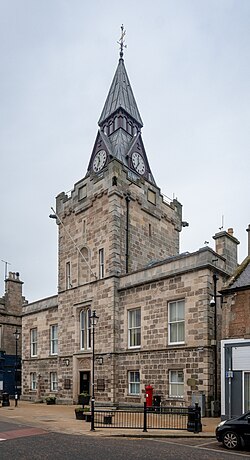
From 1667, each shire was managed by commissioners of supply. These officials were primarily responsible for collecting local taxes but eventually took on broader local government duties. This system remained the primary form of local administration until the late 19th century.
The Rise of Elected Councils
The Local Government (Scotland) Act 1889 introduced elected county councils in 1890, absorbing most functions of the commissioners of supply. This act also refined the map of Scotland, merging Ross-shire and Cromartyshire into Ross and Cromarty and formally recognizing Orkney and Shetland as separate counties, bringing the total to 33.
While most smaller burghs (chartered towns) fell under county council authority, 26 larger burghs remained independent. Over time, major cities like Glasgow, Dundee, and Aberdeen gained full independence from their host counties for various functions.

Modern Reorganisation and Legacy
The 20th century brought significant changes to how Scotland is governed. County councils were abolished in 1975, and a subsequent reorganisation in 1996 replaced regions and districts with 32 single-tier council areas.
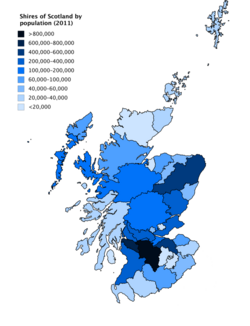
While some modern council areas share names with historic counties, their boundaries often differ. For example, the modern Aberdeenshire council area is larger than the historic county, incorporating parts of Banffshire and Kincardineshire. In contrast, Fife has maintained consistent boundaries through both the 1975 and 1996 reforms.
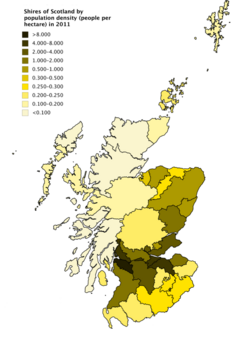
Summary of Scottish County Evolution
| Period | Primary Division | Governing Authority | Key Characteristic |
|---|---|---|---|
| Middle Ages | Shires / Provinces | Sheriffs / Earls | Judicial focus; hereditary power. |
| 1667 – 1889 | Counties (Shires) | Commissioners of Supply | Tax collection and local administration. |
| 1890 – 1975 | Counties | Elected County Councils | Democratic local government. |
| 1996 – Present | Council Areas | Unitary Authorities | 32 single-tier administrative zones. |
Frequently Asked Questions
What is the difference between a shire and a county in Scotland?
Historically, there is no difference. "Shire" is the older term, while "county" became common after the Acts of Union 1707. The two terms were used interchangeably to describe the same administrative territories.
Do the historic counties still exist today?
They no longer serve as primary units of local government, but they are still used for limited functions, such as serving as registration counties and forming the basis for lieutenancy areas.
How many counties were there before the 1975 reforms?
Following the 1889 Act and subsequent adjustments, there were 33 counties, including the separate counties of Orkney and Shetland.
Why do modern council area boundaries differ from historic counties?
The 1996 reorganisation aimed to create 32 efficient, single-tier authorities. This required redrawing boundaries to better suit modern population densities and urban growth, leading to the amalgamation or splitting of historic county lines.
What were the Commissioners of Supply?
Established in 1667, they were local officials responsible for collecting taxes within each shire and performing various early local government functions before the creation of elected county councils in 1890.