Commuter Rail Systems: Connecting Suburbs to the City
Commuter rail serves as a vital artery for metropolitan areas, bridging the gap between low-density suburban residential zones and high-density city centers. Unlike urban metros designed for short, frequent hops, commuter rail is engineered for longer distances, providing a reliable means for millions of people to reach their workplaces and services daily.
Key Facts
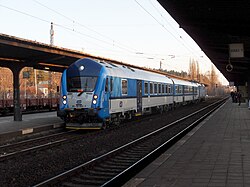
- Travel Distance: Typically ranges between 15 and 200 km (9.3 to 124.3 mi).
- Capacity: Designed for more seating and less standing room than urban rail due to longer trip durations.
- Scheduling: Generally operates on fixed schedules rather than high-frequency intervals.
- Infrastructure: Often shares tracks with freight or intercity trains and may include at-grade crossings.
- Operational Flexibility: Driver-controlled systems often allow trains to skip stations as express services.
Defining Characteristics of Commuter Rail
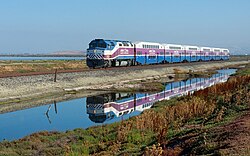
Commuter rail is distinguished from other rail modes by its specific operational goals. While a metro system focuses on high-frequency movement within a city core, commuter rail focuses on the periphery. These systems typically serve lower-density areas and connect them to a central hub.
Because passengers spend more time on board, these trains prioritize seating capacity. Furthermore, they are often not fully grade-separated, meaning they may feature crossing gates where the tracks intersect with roads.
The Intersection of Commuter and High-Speed Rail
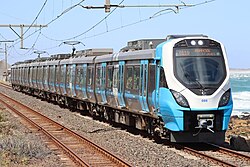
In many regions, the line between commuter, regional, and intercity rail is blurred. In Europe, short distances between major cities often result in intercity trains functioning as de facto commuter services. For example, the Nederlandse Spoorwegen operates numerous daily trains between Amsterdam and The Hague that serve primarily as commuter routes.
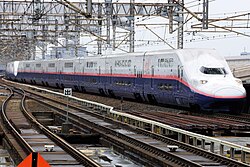
High-speed rail (HSR) has also evolved to meet commuting needs. In Japan, the Shinkansen is used by commuters traveling 100 to 200 km. To support this, JR previously operated 16-car bilevel E4 Series trains during rush hour, offering 1,600 seats.
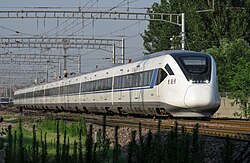
Similar trends are seen in China with the Beijing–Tianjin and Shanghai–Nanjing lines. In Switzerland, high-speed links between Zürich, Bern, and Basel have reduced travel times to under one hour, sparking a surge in commuter demand for these services.
Global Commuter Rail Networks
Asia
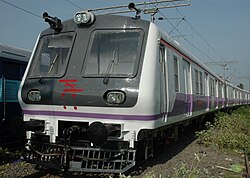
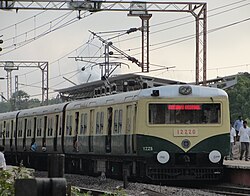
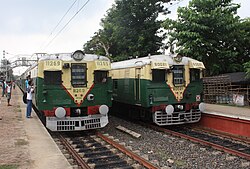
Asia hosts some of the world's most heavily used systems. India's Mumbai Suburban Railway is the oldest in Asia, transporting over 7.24 million commuters daily. Kolkata and Chennai also operate massive networks, with Kolkata serving over 3.5 million passengers per day.
In East Asia, Hong Kong's MTR (including the East Rail and Tuen Ma lines) connects new towns in the New Territories to Kowloon. These trains utilize longitudinal seating and multiple doors to maximize capacity despite their longer stop spacing.
Indonesia's KRL Commuterline is the largest in its country, serving Greater Jakarta and connecting the city center to provinces like Banten and West Java.
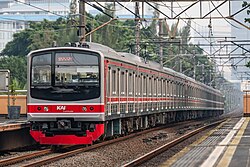
Europe
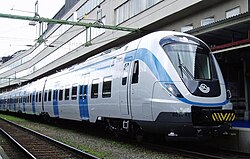
European systems vary by region. In Sweden, the Pendeltåg systems in Stockholm and Gothenburg transport passengers from suburban areas into the city center, with Stockholm's system sharing some tracks with freight and intercity trains.
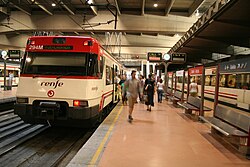
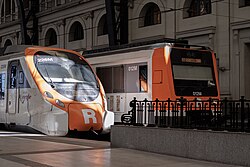
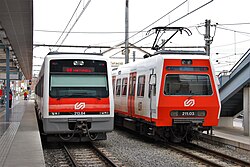
Spain's Cercanías network is a primary example of suburban rail, with major hubs like Atocha in Madrid. In Catalonia, services are split between Rodalies de Catalunya (operated by Renfe) and the Ferrocarrils de la Generalitat de Catalunya (FGC), which manages various metre-gauge and Iberian-gauge lines.
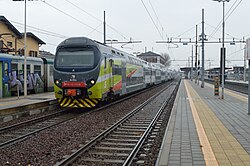
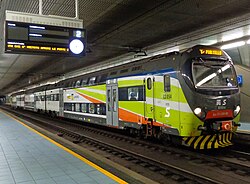
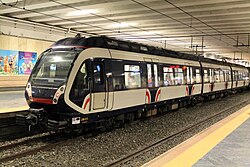
Italy also maintains extensive networks across fifteen cities, including Milan and Rome, utilizing various electric multiple units (EMUs) to move suburban populations.
The Americas
In North America, the Long Island Rail Road (LIRR) stands as the busiest commuter railroad. Other major US systems include NJ Transit, SEPTA in Philadelphia, and Metra in Chicago.
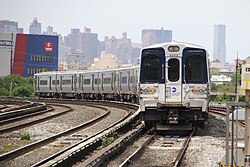
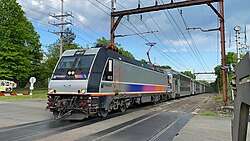
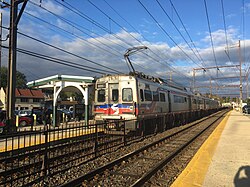
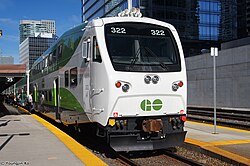
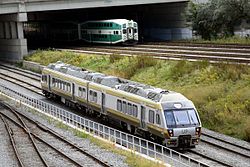
Canada utilizes systems like GO Transit in Toronto, which is transitioning toward a Regional Express Network, and the West Coast Express in Vancouver.
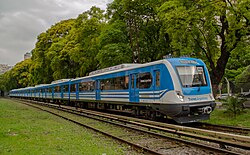
In South America, Brazil's CPTM in São Paulo operates seven lines across 273 kilometers, while Argentina's Buenos Aires metropolitan system includes the extensive Mitre Line.
Oceania
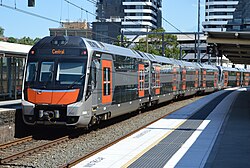
Australia's suburban rail is prominent in cities like Perth, where services are integrated into the Transperth network, and New South Wales, which utilizes high-capacity double-decker trains.
Summary of Global Commuter Rail Examples
| Region | System/Network | Key Feature |
|---|---|---|
| India | Mumbai Suburban Railway | Over 7.24 million daily commuters |
| USA | Long Island Rail Road | Busiest commuter railroad in North America |
| Japan | Shinkansen (Commuter use) | High-speed commuting (100-200 km) |
| Brazil | CPTM (São Paulo) | 273 km network with 94 stations |
| Spain | Cercanías / Rodalies | Extensive suburban networks in major cities |
Frequently Asked Questions
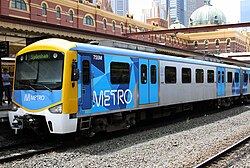
How does commuter rail differ from a metro system?
Commuter rail typically covers longer distances (15-200 km), serves lower-density suburban areas, and offers more seating with less standing room. Metros are generally designed for high-frequency, short-distance travel within a city center.
Can high-speed rail be used for daily commuting?
Yes. In Japan, the Shinkansen is used for commutes of 100 to 200 km, and in Switzerland, high-speed links between Zürich, Bern, and Basel have created high demand for daily commuter trips.
What is an Electric Multiple Unit (EMU)?
An EMU is a train where the propulsion is distributed across several carriages rather than being hauled by a single separate locomotive, allowing for faster acceleration and deceleration.
Do commuter trains always stop at every station?
No. Because they are typically driver-controlled, commuter trains can operate as express services, skipping certain stations to reduce travel time for passengers coming from further distances.
What is the role of the S-Bahn in Europe?
The S-Bahn is a combined city center and suburban railway system found in countries like Germany, Austria, Switzerland, and Denmark, blending the characteristics of a metro and a commuter rail.