Communal Roosting: Why Animals Gather in Massive Groups
In the natural world, many animals exhibit a fascinating behavior known as communal roosting. This occurs when a group of individuals, typically of the same species, congregate in a specific area for several hours in response to an external signal—such as nightfall, rainfall, or high tide—and return to that same site whenever the signal reappears. While this behavior is most common in birds, it is also observed in bats, primates, and insects.
Unlike cooperative breeding, communal roosting does not involve the care of chicks. These gatherings can vary wildly in scale, ranging from a few individuals to massive assemblages of thousands or even millions of animals.
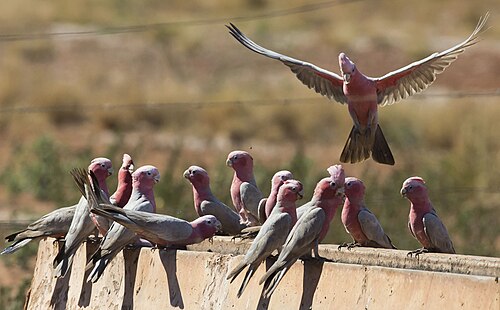
Key Facts
- Triggers: Environmental signals like sunset, high tide, or rain often initiate roosting.
- Benefits: Key advantages include improved foraging, reduced heat loss (thermoregulation), and lower predation risk.
- Diversity: Observed across various taxa, including birds, bats, and butterflies.
- Scale: Roost sizes can reach millions of individuals in some avian species.
- Fidelity: Many species exhibit high roost fidelity, returning to the same location night after night.
Evolutionary Theories of Communal Roosting
Scientists have proposed several hypotheses to explain why animals evolve to roost together, as no single theory is universally accepted by the entire scientific community.
The Information Center Hypothesis (ICH)
Proposed by Peter Ward and Amotz Zahavi in 1973, the Information Center Hypothesis suggests that roosts act as hubs for distributing knowledge about food. In this model, "clueless" individuals follow more experienced foragers to productive feeding locations, allowing the group to efficiently exploit food sources that are unevenly distributed across the landscape.
The Two Strategies Hypothesis (TSH)
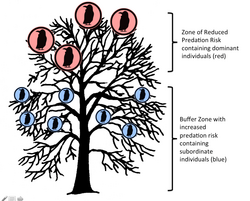
Introduced by Patrick Weatherhead in 1983, the Two Strategies Hypothesis argues that individuals join roosts for different reasons based on their social rank. While experienced foragers may use the roost to maintain status, they gain a primary advantage: the safest spots. Dominant individuals typically occupy the highest or most central positions, using less dominant individuals as a physical predation buffer—a concept similar to the "selfish herd theory."
Lower-ranking individuals still benefit through the dilution effect (reducing the individual probability of being targeted by a predator) and the opportunity to learn from experienced peers.
The Recruitment Center Hypothesis (RCH)
Proposed by Heinz Richner and Philipp Heeb in 1996, the Recruitment Center Hypothesis links roosting to group foraging. This theory assumes that food is found in abundant but short-lived, patchy areas. It explains behaviors like aerial displays and the role of leaders in guiding the group to food. While supported by studies on ravens, research on Common Mynas has shown that this hypothesis does not apply to all species.
Benefits and Costs of Grouping
Beyond foraging and safety, communal roosting offers several biological advantages:
- Thermoregulation: Sharing body heat reduces the energy required to stay warm during cold nights.
- Mating Opportunities: In species like the red-billed chough, "sub roosts" provide a space for individuals without mates or territories to find partners.
- Predation Reduction: Larger groups can deter predators or provide a physical shield for dominant members.
| Hypothesis | Primary Driver | Key Mechanism | Main Benefit |
|---|---|---|---|
| Information Center (ICH) | Food Location | Following knowledgeable peers | Efficient foraging |
| Two Strategies (TSH) | Social Status | Hierarchical positioning | Safety/Predation buffer |
| Recruitment Center (RCH) | Group Foraging | Recruitment to patchy food | Collective resource access |
Examples Across the Animal Kingdom
Avian Species
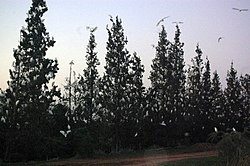
Birds provide the most prominent examples of this behavior. Rooks form nocturnal roosts of hundreds to thousands, triggered by specific light intensities at sunset.

Other examples include Acorn Woodpeckers and Green Woodhoopoes, which roost in small groups to share body heat during winter. Tree Swallows and Eurasian Crag Martins show high roost fidelity, often returning to the same sites for years. In some cases, different species roost together; for instance, in Mexico, various egret and heron species form interspecies roosts where the snowy egret often determines the location due to its superior foraging skills.
Insects
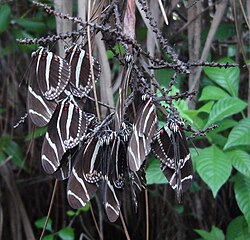
Butterflies also engage in this behavior. The passion-vine butterfly forms small groups to deter predators, while the zebra longwing butterfly in Costa Rica may roost in response to heavy rainfall.
Additionally, tiger beetles in Peru roost in treetops at night to avoid ground-based predators.
Mammals
Among mammals, bats are the primary practitioners. The little brown bat gathers in groups of up to 37 on cold nights to reduce thermoregulatory demands. Similarly, hoary bats and big brown bats use communal maternal colonies to protect and warm juveniles and lactating mothers.
Frequently Asked Questions
What is the difference between communal roosting and cooperative breeding?
The primary distinction is the absence of chicks in communal roosts; communal roosting is about grouping for survival and information, not for raising offspring.
How does the "dilution effect" help less dominant animals?
The dilution effect reduces the statistical likelihood of any single individual being preyed upon simply because they are part of a larger crowd.
Do animals always return to the same roost?
Not always, but many species exhibit "roost fidelity," meaning they have a strong tendency to return to the same location night after night or year after year.
Why do dominant birds occupy the highest perches?
Higher perches generally offer better protection from terrestrial predators, though they may require more energy to stay warm due to exposure.
Can different species roost together?
Yes, interspecies roosts occur. In these cases, one species often acts as the leader or determines the location based on its ability to find food.