Commonweal Magazine: A Legacy of Faith and Public Good
In a media landscape often defined by polarization, Commonweal stands as a dedicated forum for the intersection of faith, politics, and culture. Originally founded with a vision to promote the public good, the publication has evolved from a print-centric journal into a multi-platform resource for reasoned civil debate.
The magazine's name is an archaic form of "commonwealth," specifically meaning "the public good." This choice was intentional by founding editor Michael Williams, who wanted the title to reflect the publication's social outlook. It is believed that the decision may have been influenced by an earlier newspaper of the same name established by William Morris. While it began as The Commonweal, the publication dropped the definite article in 1965.
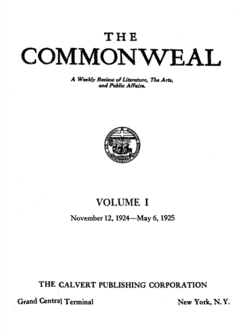
The Foundations of the Calvert Ideals
From its earliest days, the organization sought to reach people beyond the pages of its magazine. The initial board, composed primarily of laypeople, identified themselves as the "Calvert Associates." This group aimed to propagate "Calvert ideals," named after the Baron of Baltimore, a historical figure known for advocating religious liberty for Catholics within the English colonies.
This commitment to open inquiry persists today. Commonweal continues to facilitate community discussion groups designed to foster civil and reasoned debate regarding how faith interacts with contemporary culture and political systems.
Editorial Scope and Operations
Commonweal serves as a comprehensive intellectual hub, publishing a diverse array of content. Its pages feature editorials, columns, essays, and poetry, alongside critical reviews of books, films, and theater productions.
The publication operates as a not-for-profit enterprise, managed by a board of directors to ensure its mission remains central to its operations. To complement its written work, the magazine has hosted a weekly or biweekly podcast since 2018, which typically features interviews that expand upon recent articles.
| Feature | Details |
|---|---|
| Annual Frequency | 11 issues per year |
| Approximate Circulation | 20,000 |
| Legal Status | Not-for-profit enterprise |
| Digital Extensions | Weekly/biweekly podcast (since 2018) |
Key Facts
- Meaning: The name "commonweal" refers to the public good.
- Founding Influence: The Calvert Associates named their ideals after the Baron of Baltimore, a proponent of religious liberty.
- Content: Publishes a mix of essays, poetry, editorials, and arts reviews.
- Governance: Managed by a board of directors as a non-profit.
- Reach: Maintains a circulation of roughly 20,000 readers.
Frequently Asked Questions
What does the name Commonweal mean?
Commonweal is an archaic term for commonwealth, which translates to "the public good."
Who were the Calvert Associates?
The Calvert Associates were the first board of the organization, consisting mainly of laypeople who sought to spread ideals of religious liberty inspired by the Baron of Baltimore.
How often is the magazine published?
Commonweal releases eleven issues every year.
Does Commonweal offer content other than print?
Yes, since 2018, the magazine has produced a weekly or biweekly podcast featuring interviews that supplement its written content.
How is the organization managed?
The journal is run as a not-for-profit enterprise and is overseen by a board of directors.