Comet Hale–Bopp: The Story of the Great Comet of 1997
In the late 1990s, the night sky was graced by one of the most spectacular celestial events in modern history. Known as the Great Comet of 1997, Comet Hale–Bopp (officially designated C/1995 O1) captured the global imagination, becoming one of the most-viewed comets ever recorded. Its brilliance was staggering, appearing 1,000 times brighter than Comet Halley did at the same distance, and marking the brightest comet seen since Comet West in 1976.
The Simultaneous Discovery
The discovery of the comet is a unique tale of two independent observers spotting the same object on the same night. On July 22–23, 1995, Alan Hale was observing the sky from his home in Cloudcroft, New Mexico, a location prized for its exceptionally dark skies. While waiting for the periodic Comet d'Arrest to rise, Hale used his Meade DS-16 telescope to observe M70, a globular cluster (a dense group of stars) in the constellation Sagittarius.
Hale noticed a "fuzzy object" that had not been there during his observations two weeks prior. After confirming the object moved against the background stars, he sent detailed reports and positions to Brian Marsden and Dan Green at the Central Bureau.
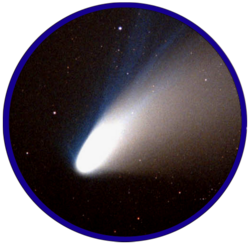
Unbeknownst to Hale, Thomas Bopp was conducting his own observations near Stanfield, Arizona, on that same night. Around 11:00 p.m., while viewing M70, Bopp also spotted a faint, fuzzy object entering his field of view. After confirming it was a comet, Bopp independently notified the Central Bureau.
Official Recognition and Orbital Path
On July 23, the International Astronomical Union (IAU) issued Circular 6187, officially announcing the joint discovery of the comet. Scientific calculations revealed that Hale–Bopp is a long-period comet with a massive orbital cycle. It is estimated that the comet last visited the inner Solar System approximately 4,000 years ago, though no ancient records have been positively identified to confirm this previous encounter.
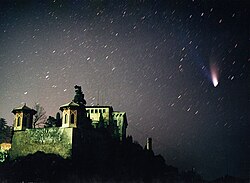
The comet's journey is far from over, but it will not be a frequent visitor. Astronomers have determined that Comet Hale–Bopp will not return to the inner Solar System until approximately the year 4385.
Key Facts
- Official Designation: C/1995 O1.
- Discovery Date: July 22–23, 1995.
- Discoverers: Alan Hale (New Mexico) and Thomas Bopp (Arizona).
- Brightness: 1,000 times brighter than Comet Halley at the same distance.
- Next Return: Approximately 4385.
- Last Appearance: Estimated 4,000 years ago.
Summary of Comet Hale–Bopp
| Attribute | Detail |
|---|---|
| Common Name | Comet Hale–Bopp / The Great Comet of 1997 |
| Scientific Label | C/1995 O1 |
| Observation Target | Globular cluster M70 in Sagittarius |
| Comparative Brightness | Brightest since Comet West (1976) |
| Return Interval | Thousands of years |
Media Coverage and Misunderstandings
As the comet reached its peak brightness, it became a media sensation. Alan Hale noted a stark difference in the quality of reporting. While he praised John Fleck of the Albuquerque Journal for accurate science reporting, he expressed frustration with other outlets that repeatedly misrepresented the facts.
In one notable instance, a reporter from USA Today questioned Hale about a supposed UFO following the comet. In a moment of sarcasm, Hale joked that he would meet the aliens at Roswell to confront them for following "his" comet. However, the resulting article reported the joke as a serious statement, claiming Hale intended to go to Roswell to meet a spacecraft, ignoring the rest of the 45-minute interview.
Frequently Asked Questions
Who discovered Comet Hale–Bopp?
The comet was discovered jointly and independently by Alan Hale in New Mexico and Thomas Bopp in Arizona on the night of July 22–23, 1995.
How bright was Comet Hale–Bopp compared to other comets?
It was the brightest comet seen since Comet West in 1976 and was approximately 1,000 times brighter than Comet Halley was at the same distance.
When will Comet Hale–Bopp return to the inner Solar System?
Calculations indicate that the comet will not return to the inner Solar System until approximately the year 4385.
What is the official scientific designation of the comet?
The comet is officially labeled as C/1995 O1.
Where was the comet first spotted in the sky?
Both discoverers spotted the comet while observing the globular cluster M70 in the constellation Sagittarius.