College Football: The Evolution of an American Sporting Tradition
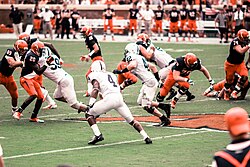
College football stands as one of the most culturally significant sports in the United States, blending athletic prowess with deep-seated institutional loyalty. From its humble beginnings in 1869 to the massive commercial spectacles of the modern era, the sport has evolved from a chaotic regional pastime into a highly organized national phenomenon governed by bodies such as the NCAA (National Collegiate Athletic Association).
Key Facts
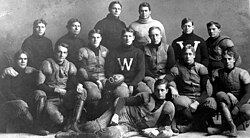
- First Played: 1869.
- Governing Bodies: Primarily the NCAA, but also includes NAIA, NCCAA, NJCAA, USCAA, 3C2A, and U Sports.
- Highest Attendance: 156,990 spectators (Tennessee vs. Virginia Tech, September 10, 2016).
- National Championship: Currently determined by the College Football Playoff (CFP), which expanded to 12 teams in 2024.
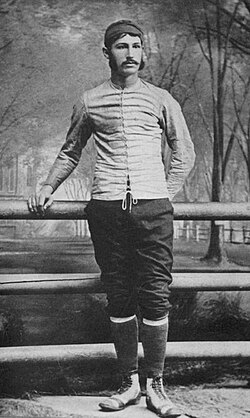
- Key Figure: Walter Camp is widely recognized as the "Father of American Football."
The Early Era and the Influence of Walter Camp
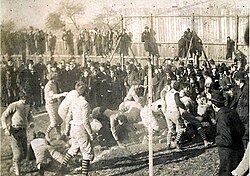
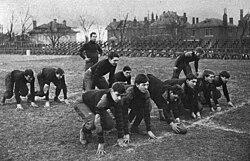
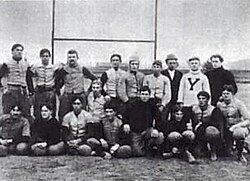
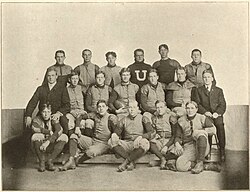
The early years of college football were marked by experimentation and a lack of standardized rules. A pivotal figure in this era was Walter Camp, the captain of the Yale University football team in 1878, who is credited with transforming the game into the sport recognized today.
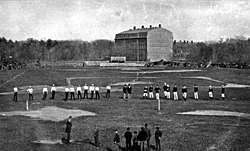
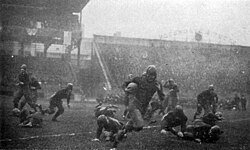
During the late 19th century, the sport began to spread rapidly across the United States. In 1874, McGill and Harvard faced off in Cambridge, Massachusetts, marking an early international intersection of the game.
The Evolution of Scoring
Scoring values have fluctuated significantly since the 1880s. For instance, a touchdown was worth 2 points in 1883, rose to 5 points between 1898 and 1903, and finally settled at the current 6 points in 1912.
| Era | Touchdown | Field Goal | Safety |
|---|---|---|---|
| 1883 | 2 | 5 | 1 |
| 1898–1903 | 5 | 2 | 1 |
| 1912–Present | 6 | 3 | 2 |
Regional Expansion and Growth
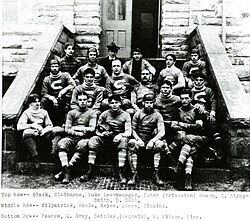
By November 1890, the sport was expanding aggressively. Kansas saw its first game on November 22, 1890, where Baker defeated Kansas 22–9. Tennessee's first organized game occurred on November 27, 1890, with Vanderbilt winning 40–0. That same month saw the birth of the historic Army–Navy Game, with Navy winning the inaugural match 24–0.
The Rise of Western and Southern Powers
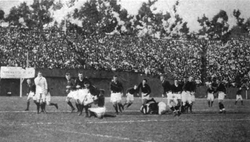
The "Middle West" saw the rise of Michigan under coach Fielding H. Yost. From 1901 to 1905, Michigan maintained a 56-game undefeated streak and participated in the first college football bowl game, which eventually became the Rose Bowl.
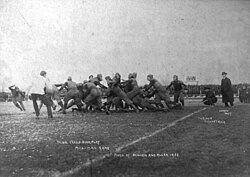
In the South, organized intercollegiate football arrived in Florida in 1901. The first official varsity game took place on November 22, 1901, where Stetson defeated Florida Agricultural College 6–0.
West Coast Development
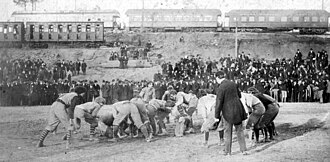
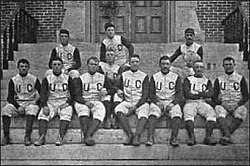
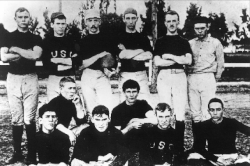
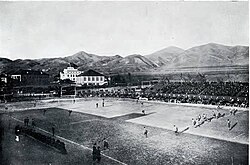
The sport also took root in the West, with Colorado forming its first team in 1890 and USC establishing its first team in 1888 (originally known as the USC Methodists).
Modernization and Innovation
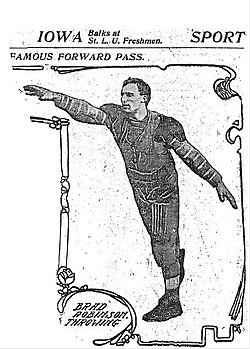
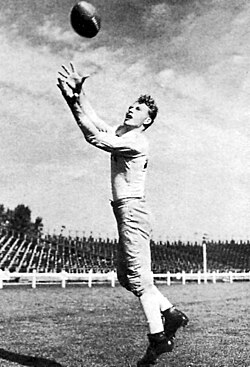
The early 20th century brought critical changes to the game's safety and strategy. In 1906, Brad Robinson threw the first legal forward pass, introducing a new dimension of offensive strategy and becoming the sport's first "triple threat" player.
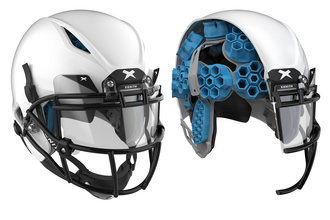
As the game grew, so did the focus on safety. The evolution of the football helmet—from simple leather caps to modern high-tech equipment like the Xenith helmet—reflects the ongoing effort to reduce head injuries and concussions.
Organization and the Path to the Championship
Modern college football is primarily divided into the Football Bowl Subdivision (FBS) and the Football Championship Subdivision (FCS) within NCAA Division I, as well as Division II and Division III. Other organizations like the NAIA and NJCAA also manage competitive programs.
The Bowl System and Playoffs
Bowl games have grown exponentially in number. In 1930, there was only one bowl game; by 2022, that number grew to 42, plus the national championship game.
The method for determining the national champion has evolved through several systems:
- Bowl Coalition (1992–1994)
- Bowl Alliance (1995–1997)
- Bowl Championship Series (BCS) (1998–2013)
- College Football Playoff (CFP) (2014–Present)
Awards and Recognition
The most prestigious individual honor in college football is the Heisman Trophy, awarded to the most outstanding player. Other significant awards include the Maxwell Award, the Walter Camp Award, and the Outland Trophy.
Frequently Asked Questions
Who is considered the father of American football?
Walter Camp is known as the "Father of American Football" due to his significant contributions to the rules and structure of the game while at Yale University.
How is the national champion currently determined?
The national champion is determined by the College Football Playoff (CFP), which began as a four-team playoff in 2014 and expanded to a 12-team format in 2024.
What is the difference between FBS and FCS?
FBS (Football Bowl Subdivision) and FCS (Football Championship Subdivision) are the two divisions of NCAA Division I football, with FBS generally representing the highest level of scholarship and visibility.
When was the first legal forward pass thrown?
The first legal forward pass was thrown in 1906 by Brad Robinson.
Which game holds the record for the highest single-match attendance?
The record was set on September 10, 2016, when 156,990 fans attended the game between Tennessee and Virginia Tech at Bristol Motor Speedway.