Climate Change Mitigation: Strategies for Global Decarbonization
Climate change mitigation, often referred to as decarbonization, involves a comprehensive set of actions designed to limit the concentration of greenhouse gases (GHGs) in the atmosphere. By reducing the emission of these gases and enhancing the earth's natural ability to absorb them, mitigation aims to slow or stop the progression of global warming.
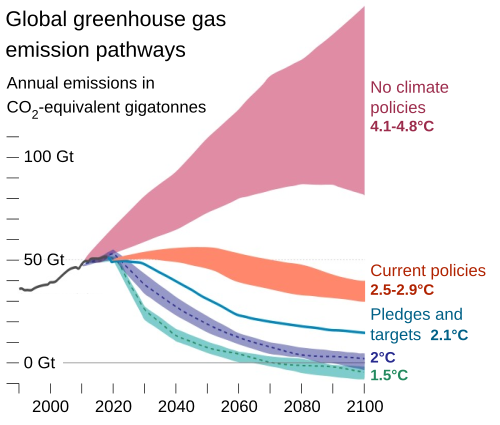
Current scientific assessments indicate a critical timeline: global greenhouse gas emissions must peak before 2025 and decline by approximately 43% by 2030 to limit warming to 1.5 °C. Achieving this requires rapid, transformative transitions across energy, transport, and land-use systems. While current policies have initiated some change, they remain insufficient; at the present pace, the world is on a trajectory toward 2.7 °C of warming by 2100, significantly exceeding the 2 °C limit set by the 2015 Paris Agreement.
Key Facts
![Since 1950, world population has tripled.[130]](/images/c5/69/c569c661c68ff5a048c426781bd5bed9b80775c52719e497dd81fe69d8815f43.webp)
- Critical Target: Emissions must drop by ~43% by 2030 to maintain the 1.5 °C warming limit.
- Primary Pollutants: Carbon dioxide (CO2) accounts for 72% of emissions, followed by methane (CH4) at 19% and nitrous oxide (N2O) at 6%.
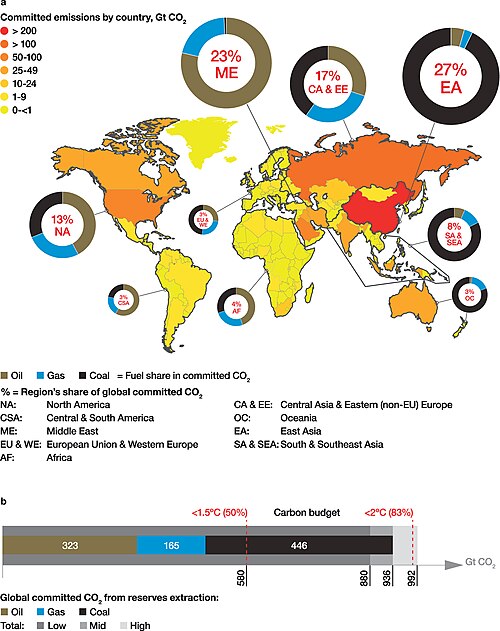
- Fuel Sources: Coal (39%) and oil (34%) are the largest contributors to CO2 emissions.
- Demand-Side Potential: Changes in diet, transport, and consumption could reduce emissions by 40% to 70% by 2050.
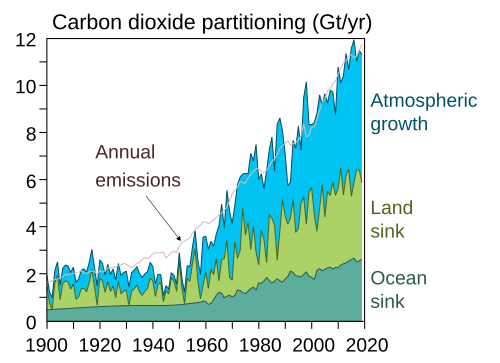
- Carbon Sinks: Approximately 58% of CO2 emissions are currently absorbed by natural sinks like oceans and forests.
The Energy Transition: Moving Beyond Fossil Fuels
![Between 1940 and 2018, aviation CO2 emissions grew from 0.7% to 2.65% of all CO2 emissions.[242]](/images/e4/35/e435ca2e5cd9b83487b62750c09703a4238c3ed4ca6a73c865811f728ee215a5.png)
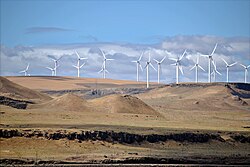
The cornerstone of mitigation is replacing fossil fuels with clean energy. Solar energy and wind power are currently the most cost-effective renewable options. However, because these sources are variable—meaning they only produce power when the sun shines or wind blows—they require systemic upgrades to the electrical grid.
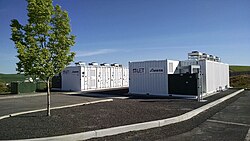
To manage this variability, engineers utilize long-distance electricity transmission to pool diverse power sources and implement energy storage (such as large-scale batteries) to balance supply and demand.
![Coal, oil, and natural gas remain the primary global energy sources even as renewables have begun rapidly increasing.[47][48]](/images/1f/0a/1f0aa3a87acf7d0a7967a29d74b99677509475ace52394baac9d9b1e9bf685e6.webp)
Renewable Energy Technologies
Solar photovoltaic and wind power are rapidly increasing their share of global power capacity. Advanced technologies, such as parabolic trough solar thermal plants, use molten salt to store heat, allowing electricity generation to continue for several hours after sunset.
![Renewable energy sources, especially solar photovoltaic and wind power, are providing an increasing share of power capacity.[52]](/images/49/e7/49e72d39c3c7046c0d5d5e113ee4d342c1ac105552f5b90008d87ab03d4f8dfc.webp)
![The 150 MW Andasol solar power station is a commercial parabolic trough solar thermal power plant, located in Spain. The Andasol plant uses tanks of molten salt to store solar energy so that it can continue generating electricity for 7.5 hours after the sun has stopped shining.[56]](/images/cc/04/cc0449e8319d8e317dc34999cd13f88dbafe80d1cee2c711b5eab05515ba2278.jpg)
Other Low-Carbon Options
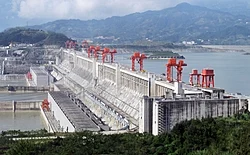
Hydroelectric power remains a massive contributor to clean energy, exemplified by the Three Gorges Dam, the world's largest station. Nuclear power also provides a steady, low-carbon baseline of electricity. In some transition scenarios, natural gas is used to replace coal, though the ultimate goal remains full decarbonization.
Demand-Side Solutions and Lifestyle Changes
![A typology of discourses aimed at delaying climate change mitigation[306]](/images/b8/a0/b8a00f0e2b4fcae108ebbd1400b2b1a5d412d62b89a7bdc0eaf1c6906611fb60.png)
While supply-side changes (how we make energy) are vital, demand-side solutions (how we use energy) offer massive potential. Research suggests that shifts in human behavior can significantly improve well-being while slashing emissions.
Transportation and Urban Planning
Transitioning from internal combustion engines to electric vehicles (EVs) and battery-electric buses is a primary goal. Furthermore, promoting bicycles—which have almost no carbon footprint—and improving urban planning can reduce the reliance on high-emission transport.
![Bicycles have almost no carbon footprint.[220]](/images/4e/9b/4e9bf06ccfe375645854118f66676503f253ba983adf38a5bfe9e81ac2d6efc7.jpg)
![Sales of electric vehicles (EVs) indicate a trend away from gas-powered vehicles that generate greenhouse gases.[223]](/images/4a/c7/4ac7ea9c301b2b5885e39a65cca0d7781e72399c4e9851734f71ed9cfafaac99.webp)

Diet and Consumption
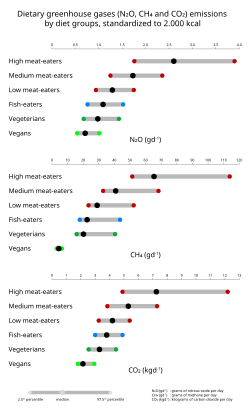
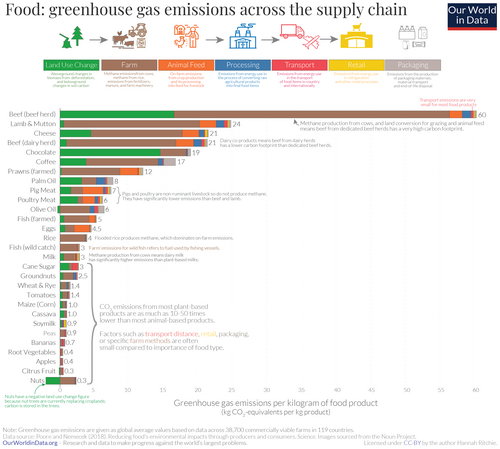
Dietary changes, particularly reducing the consumption of high-emission foods, can lower the global environmental footprint. Additionally, reducing material consumption and improving building energy efficiency are key levers for reducing the overall demand for energy.
Carbon Sinks and Carbon Dioxide Removal (CDR)
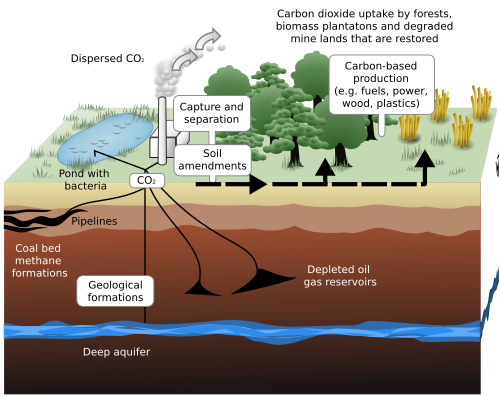
Mitigation is not just about stopping new emissions; it is also about removing existing CO2 from the atmosphere. This is achieved through carbon sequestration—the process of capturing and storing atmospheric carbon.
Natural Carbon Sinks
Forests, soils, and wetlands act as natural sinks. Protecting existing forests and helping tree stumps regrow in deforested areas is often more efficient than planting new trees. Transferring land rights to indigenous inhabitants has been shown to be an effective way to conserve these vital forests.

![Helping existing roots and tree stumps regrow even in long deforested areas is argued to be more efficient than planting trees. Lack of legal ownership to trees by locals is the biggest obstacle preventing regrowth.[153][154]](/images/4d/de/4ddeac939e5089439a2058bff2a668c4bad96313cbeb2472ec994a20e67c9e95.jpg)
Technological Removal
For sectors that are difficult to decarbonize, such as cement production and air travel, Carbon Capture and Storage (CCS) is an option. CCS involves capturing CO2 from large point sources and storing it geologically underground. While promising, CCS for power plants currently remains a high-cost strategy.
Global Emission Trends and Responsibility
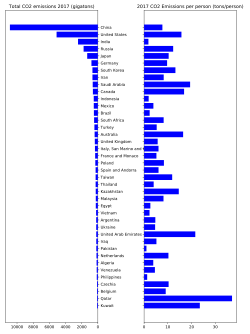
Emissions are not distributed evenly across the globe or across income levels. While China is the leading total producer of CO2, the United States has higher per capita emissions. Furthermore, the wealthiest 10% of the population are responsible for half of all carbon emissions.
![This pie chart illustrates both total emissions for each income group, and emissions per person within each income group. For example, the 10% with the highest incomes are responsible for half of carbon emissions, and its members emit an average of more than five times as much per person as members of the lowest half of the income scale.[112]](/images/e8/35/e835fb429979449977d2ab9f86845ba9381797ca34a0d97af0f35212a34bed01.webp)
Emission Summary by Source and Region
| Category | Source/Entity | Share/Value |
|---|---|---|
| Gas Type | Carbon Dioxide (CO2) | 72.0% |
| Methane (CH4) | 19.0% | |
| Nitrous Oxide (N2O) | 6.0% | |
| Fluorinated Gases | 3.0% | |
| CO2 Fuel Source | Coal | 39.0% |
| Oil | 34.0% | |
| Natural Gas | 21.0% | |
| Top Emitters | China | 31.8% |
| United States | 14.4% | |
| India | 9.5% |
Policy and Economic Frameworks
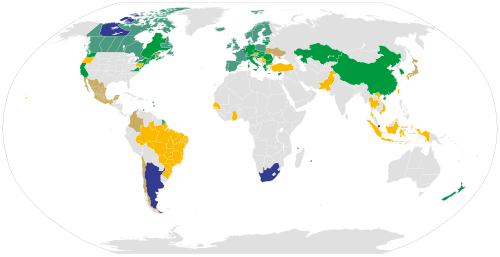
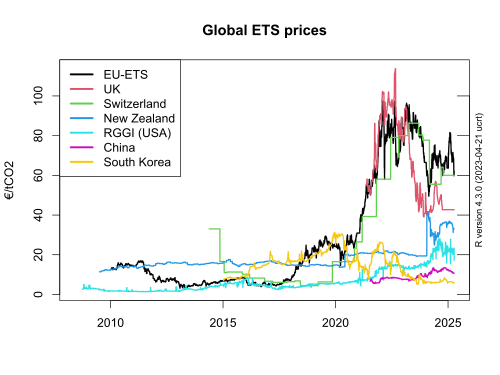
To accelerate mitigation, governments use various policy tools. Carbon pricing, which includes carbon taxes and emission trading schemes, creates a financial incentive for firms to reduce their emissions. Many firms are now shifting investments toward low-carbon sectors to align with these economic pressures.
![More firms plan to invest in climate change mitigation, specifically focusing on low-carbon sectors.[366]](/images/cb/11/cb11be682daac6a8497ca024c169b9179d658b266e5affc6110aba6e4d4ad391.jpg)
Frequently Asked Questions
What is the difference between mitigation and adaptation?
Mitigation focuses on the causes of climate change by reducing greenhouse gas emissions or enhancing carbon sinks to limit future warming. Adaptation focuses on managing the effects of climate change that are already occurring or are inevitable.
Why is it difficult to decarbonize air travel and cement production?
These sectors are considered "hard-to-abate" because they require extremely high temperatures or specific chemical reactions that are currently difficult to achieve with electricity alone, making Carbon Capture and Storage (CCS) a necessary consideration.
Can individual lifestyle changes actually make a difference?
Yes. Demand-side solutions, including dietary shifts, reduced material consumption, and changes in transportation behavior, are estimated to potentially reduce global emissions by 40% to 70% by 2050.
What are carbon sinks?
Carbon sinks are natural or artificial reservoirs that absorb more carbon than they release. Examples include forests, oceans, and soils, which collectively absorb about 58% of human-produced CO2 emissions.
Is natural gas considered a clean energy source?
Natural gas is a fossil fuel and emits CO2, but it emits less than coal. In some mitigation strategies, it is used as a temporary bridge fuel to replace coal while renewable capacity is scaled up.