Afforestation: Strategies for Global Carbon Sequestration and Environmental Restoration
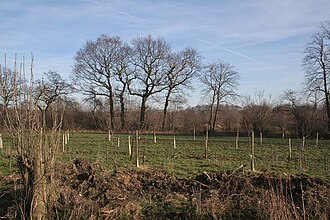
As the global community seeks effective methods to combat climate change, afforestation has emerged as a critical tool. While often discussed alongside reforestation, afforestation specifically refers to the establishment of a forest or stand of trees in an area where there has been no recent tree cover. By transforming open landscapes into wooded ecosystems, we can harness the natural power of trees to stabilize our environment.
Key Facts
- Afforestation involves planting trees in areas that previously lacked forest cover.
- Earth has the capacity to support an additional 0.9 billion hectares of tree canopy.
- Large-scale tree planting could sequester 205 billion tons of carbon.
- Afforestation can mitigate climate change through carbon sequestration—the process of capturing and storing atmospheric carbon dioxide.
- Forests can transition from carbon sinks to carbon sources due to rising temperatures and droughts.
Defining Afforestation and Reforestation
It is essential to distinguish between afforestation and reforestation, though the boundaries between these two practices can sometimes become blurred depending on historical land use. Reforestation is the process of re-establishing a forest that has been lost or removed due to natural causes, such as storms and fires, or human activities like logging. In contrast, afforestation creates new forest ecosystems where they did not recently exist.
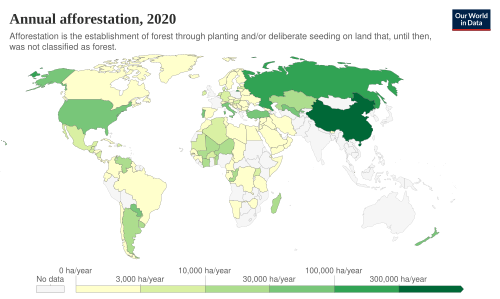
Types of Afforestation
Afforestation is not a one-size-fits-all process. It generally falls into three distinct categories:
- Natural regeneration: Allowing the environment to develop forest cover through natural processes.
- Agroforestry: Integrating trees and shrubs into agricultural landscapes.
- Tree plantations: The intentional planting of trees, often for specific commercial or environmental goals.
Environmental and Climate Benefits
The benefits of expanding forest cover extend far beyond simple aesthetics. One of the most significant advantages is climate change mitigation. By absorbing CO2, trees act as a buffer against global warming. Furthermore, forests can improve local climates by increasing rainfall and acting as natural barriers against high winds.
Beyond the atmosphere, afforestation provides vital physical protections for the land. Trees help prevent or reduce topsoil erosion caused by wind and water, and they play a key role in mitigating floods and landslides. Additionally, these new habitats support biodiversity by providing homes for various wildlife species, while also offering economic opportunities through employment and wood products.
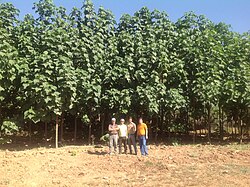
![Strips of forest are planted along hundreds of kilometers of the Yangtze levees in Hubei province[79]](/images/ad/ad/adad0f0fc2fb193d245062d0428469ff85b9bce7d6cb841074a882e7f221b01a.jpg)
The Carbon Cycle and Forest Health
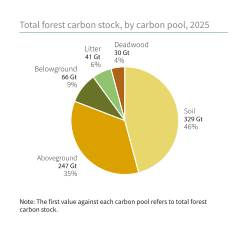
While forests are vital for capturing carbon, they are not permanent storage units. A critical concern for scientists is that forests can shift from being carbon sinks (areas that absorb more carbon than they release) to carbon sources (areas that release more carbon than they absorb). Data from 1999 to 2020 indicates that some forests are approaching climate thresholds that could trigger this shift. For instance, typical tropical forests may become net carbon sources by the 2060s due to higher temperatures and droughts.
![Proportion of carbon stock in forest carbon pools, 2020[25]](/images/be/7b/be7bb17cf01b5d719356456432a1d04443a284b8439ae735599bb663a969dc1c.webp)
Global Implementation and Challenges
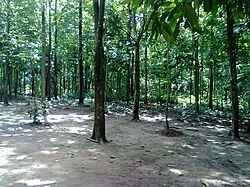
Efforts to expand forest cover are happening worldwide, from the Yangtze levees in China to projects in South India and Iran. However, these efforts face significant scientific and ecological debates.
The Importance of Ecosystem Integrity
One major criticism of aggressive afforestation is the potential impact on non-forest ecosystems. Researchers emphasize that areas like grasslands and savannas are unique biomes that provide essential services to the biosphere. Converting these areas into forests is not always beneficial and can disrupt the natural balance. Effective environmental management requires recognizing that not every landscape is meant to be a forest.
Summary of Afforestation Potential
| Metric | Value/Impact |
|---|---|
| Potential additional tree canopy | 0.9 billion hectares |
| Potential carbon sequestration | 205 billion tons |
| Atmospheric carbon pool impact | Approximately 25% |
| Primary climate benefit | Carbon sequestration and local climate regulation |
Frequently Asked Questions
What is the difference between afforestation and reforestation?
Afforestation is the creation of a forest in an area that has not recently had tree cover, whereas reforestation is the replanting of trees in an area where a forest previously existed but was lost.
Can afforestation actually harm the environment?
Yes, if implemented incorrectly. Planting trees in non-forest ecosystems like grasslands or savannas can disrupt local biodiversity and the natural functions of those specific biomes.
How do trees help prevent natural disasters?
Trees help stabilize the soil, which reduces erosion from wind and water. Their root systems and canopy also help manage water runoff, which can reduce the risk of floods and landslides.
Why might a forest stop absorbing carbon?
Due to factors like rising global temperatures, droughts, and deforestation, forests can reach a threshold where they release more carbon than they absorb, effectively turning from a carbon sink into a carbon source.
How much carbon can new forests sequester?
It is estimated that planting and protecting an additional 0.9 billion hectares of tree canopy could sequester 205 billion tons of carbon, representing about 25% of the atmosphere's current carbon pool.