Clan Mackintosh
Known in Scottish Gaelic as Mac-an-tòisich, Clan Mackintosh is a storied Highland clan with a legacy defined by leadership, strategic alliances, and centuries of fierce territorial disputes. From their origins in the royal house of Dál Riata to their pivotal role in the Chattan Confederation, the Mackintoshes have remained central to the history of the Inverness district.
The clan is identified by its distinctive crest—a cat-a-mountain salient guardant—and the evocative motto, "Touch Not The Cat Bot A Glove," where "bot" is an archaic term meaning "without." Their traditional plant badge is the red whortleberry, also known as bearberry or boxwood.
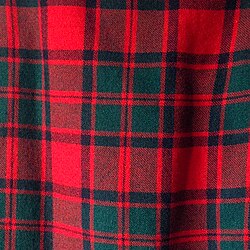
Key Facts
- Chief: John Mackintosh of Mackintosh.
- Region: Highland, specifically the Inverness district.
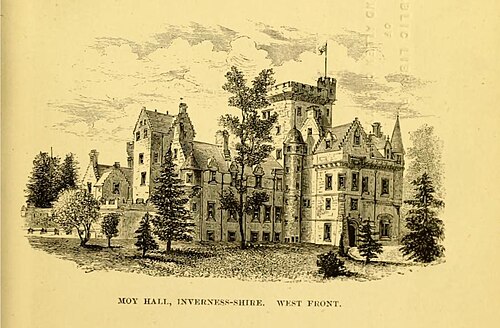
- Seat: Moy Hall.
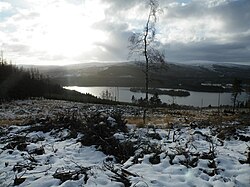
- Historic Seat: Moy Castle on Loch Moy.
- War Cry: Loch Moigh.
- Key Alliance: Leaders of the Clan Chattan confederation.
Origins and Early History
The name Mackintosh derives from the Gaelic word toisiche, meaning leader or chief. According to clan historians, the first chief was Shaw, the second son of Duncan MacDuff, Earl of Fife. In 1160, Shaw accompanied King Malcolm IV of Scotland to suppress a rebellion in Morayshire. By 1163, he was appointed constable of Inverness Castle and granted lands in the Findhorn valley, establishing the lands of Petty as the clan's heartland and the burial place of its chiefs.
The clan's early military involvement included the Scottish-Norwegian War. In 1263, Ferquhar Mackintosh, the fifth chief, led the clan at the Battle of Largs against the forces of Haakon IV of Norway. Ferquhar was later killed in a duel in 1265, leaving his infant son, Angus, as the heir.
The Clan Chattan Confederation
A turning point in the clan's trajectory occurred when Angus Mackintosh married Eva, the only daughter of Dougal Dal, chief of Clan Chattan. This union brought Angus the lands of Glenloy and Loch Arkaig. Over time, this connection evolved into the Clan Chattan, a unique confederation of independent Scottish clans led by the Mackintosh chiefs.
While the Mackintoshes maintained leadership, this position was frequently challenged over the centuries by the Clan Macpherson, who were also members of the confederation. This alliance inextricably linked the destinies of Clan Mackintosh and Clan Chattan.
Centuries of Conflict and Clan Feuds
Clan Mackintosh was embroiled in numerous battles, most notably a 350-year feud with Clan Cameron. Key engagements included the Battle of Drumlui (1337), the Battle of Invernahoven (1370), and the significant Battle of the North Inch in 1396.
The 15th century saw further volatility. Malcolm Beg Mackintosh, the 10th chief, expanded the clan's influence but engaged in a bloody dispute with the Clan Comyn. After the Comyns attempted to drown the Mackintoshes on the island of Moy, the Mackintoshes retaliated during a supposed feast of reconciliation at Rait Castle, where they slaughtered their hosts.
Other notable conflicts included the Battle of Lochaber (1429), the Battle of Palm Sunday (1429), and the Battle of Clachnaharry (1454) against Clan Munro. In 1491, Ferquhard Mackintosh participated in the Raid on Ross and captured Inverness Castle using a "sow" (a protected mobile shelter used in sieges), leading to his long-term imprisonment in Edinburgh and Dunbar castles.
The 16th and 17th Centuries
In 1528, King James V issued a "Letter of Fire and Sword" against Clan Mackintosh and Clan Chattan, ordering their utter destruction due to disorder in Badenoch. This resulted in the execution of 300 clan males before Hector Mackintosh surrendered and pledged fealty to the King.
Later, Lachlan Mor Mackintosh supported Mary, Queen of Scots, fighting at the Battle of Corrichie (1562) and likely at the Battle of Langside (1568). The clan continued to clash with rivals, fighting at the Battle of Bun Garbhain (1570) and the Battle of Glenlivet (1594), and later facing defeat at the Battle of Mulroy (1668) against the combined forces of Clan Cameron and Clan MacDonald of Keppoch.
The Jacobite Risings
During the Jacobite rising of 1715, the Mackintoshes remained loyal to the Stuart cause. Lachlan Mackintosh led 800 clansmen, though they were ultimately defeated at the Battle of Preston, leading to the transportation of many clansmen to the Americas.
The rising of 1745 presented a divided household. While the 22nd chief, Angus Mackintosh, served as a captain in the British Black Watch, his wife, Lady Anne Mackintosh, raised men to fight for Charles Edward Stuart. Under the command of MacGillivray of Dunmaglas, they contributed to the victory at the Battle of Falkirk Muir.
Lady Mackintosh famously hosted Prince Charles at Moy Hall in February 1746. During the "Rout of Moy," five of her retainers deceived 500 Government troops into believing they were facing the entire Jacobite army, causing the soldiers to flee. However, the clan suffered heavy losses shortly after at the Battle of Culloden.
Estate Management and Modern Era
In the 19th century, the clan's lands in Badenoch were managed by various chiefs, including Aeneas Mackintosh, who focused on timber extraction from Glen Feshie and Inshriach. Later chiefs included Alexander Macintosh, a Jamaican plantation owner, and his brother Angus, a Canadian merchant. By the late 1840s, parts of the estate were converted into a deer forest.
The current chief, John Lachlan Mackintosh of Mackintosh, succeeded in 1995. A retired history and humanities teacher from Nanyang Girls' High School, he currently resides in Singapore.
![Historical relics in possession of Mackintosh of Mackintosh, Moy Hall.[18]](/images/e9/e9/e9e9d55006a645d9c9c267e191bf969817764502abc965ad47d9c52b636093bf.jpg)
Clan Strongholds
| Castle/Hall | Significance | Fate/Status |
|---|---|---|
| Moy Castle | Original seat located on an island in Loch Moy. | Replaced by Moy Hall. |
| Moy Hall | Current seat of the Chief. | Rebuilt several times; current house dates to 1955–57. |
| Culloden House | Mansion house near Inverness. | Sold to Clan Forbes in 1626. |
| Keppoch Castle | Disputed with Clan MacDonald of Keppoch. | Passed to Mackintoshes in 1690. |
| Rait Castle | Site of the slaughter of the Clan Comyn. | Passed to Clan Campbell of Cawdor. |
Frequently Asked Questions
Who is the current chief of Clan Mackintosh?
The current chief is John Lachlan Mackintosh of Mackintosh, who succeeded to the position in 1995 and lives in Singapore.
What was the "Rout of Moy"?
The Rout of Moy was an incident during the 1745 Jacobite rising where five retainers of Lady Anne Mackintosh tricked 500 Government troops into believing they were facing a massive Jacobite army, causing the troops to retreat in panic.
What is the relationship between Clan Mackintosh and Clan Chattan?
Clan Mackintosh serves as the leading clan of the Clan Chattan confederation, a group of independent clans that became entwined after the marriage of Angus Mackintosh to Eva, daughter of the chief of Clan Chattan.
Which clan had the longest feud with the Mackintoshes?
Clan Mackintosh had an extensive and violent feud with Clan Cameron that lasted for over 350 years, involving numerous battles such as Drumlui and the North Inch.
What is the significance of the "sow" mentioned in clan history?
A "sow" was a protective mobile shelter used during sieges. Ferquhard Mackintosh used one to successfully take possession of Inverness Castle in 1491.