Chuncheon: The Scenic Capital of Gangwon Province
Nestled in the northern reaches of South Korea, Chuncheon serves as the administrative capital of Gangwon Province. Known for its breathtaking landscapes, the city is situated in a picturesque basin cradled by the Soyang and Han Rivers. With a population of approximately 290,000 as of 2026, Chuncheon blends a rich historical legacy with modern attractions, making it a premier destination for nature lovers and cultural enthusiasts alike.
The city's geography is defined by its abundance of water, featuring prominent artificial lakes such as Soyang Lake and Uiam Lake, which contribute to its reputation as a serene retreat from the bustle of Seoul.
Key Facts
- Role: Capital city of Gangwon Province, South Korea.
- Geography: A basin surrounded by the Soyang and Han Rivers.
- Key Attractions: Legoland Korea Resort, Namiseom, and Soyang Lake.
- Culinary Specialties: Dak-galbi (spicy stir-fried chicken) and Mak-guksu (buckwheat noodles).
- Climate: Humid continental climate with distinct seasonal temperature shifts.
- Infrastructure: Major hub connected via the Gyeongchun Line and Seoul-Yangyang Expressway.
History and Evolution
Human habitation in Chuncheon dates back to the Paleolithic Age. The region has a complex early history, with records indicating the founding of Maekguk, which was later conquered by Goguryeo. During the Silla period, the area saw various administrative changes, evolving through names such as Usu-ju, Suyak-ju, and Sak-ju before being renamed Chun-ju in 940 AD during the reign of King Taejo.
By 1413, the area became known as Chuncheon-gun. A pivotal moment occurred in 1896 when the establishment of the provincial office designated Chuncheon as the capital of Gangwon Province. The city also played a strategic role during the Korean War; in 1950, the South Korean 6th Infantry Division fought a six-day defense war in Chuncheon and Hongcheon, successfully delaying the advance of North Korea's II Corps.
Industry and Economy
Chuncheon's economy is heavily driven by the service sector. As of 2015, the city hosted thousands of businesses across wholesale, retail, accommodation, and restaurant industries. Due to the mountainous terrain—which covers over 90% of the total area—agricultural land is limited. However, the city still produces rice, radish, and cabbage in regions like Sinbuk-eup and Sindong-myeon.
Energy production is another cornerstone of the local economy. The city utilizes three major hydroelectric power plants located on the Chuncheon, Uiam, and Soyang Rivers. The Soyang Dam, completed in 1973, was once the largest rockfill dam in East Asia.
Culture, Tourism, and Gastronomy
Chuncheon is a vibrant hub of arts and festivals. It is globally recognized for the Chuncheon Mime Festival, considered one of the world's three major mime festivals alongside those in France and London. Other notable events include the Chuncheon Puppet Festival, the International Early Music Festival focusing on Baroque music, and the AniTown Festival, which promotes the animation industry.
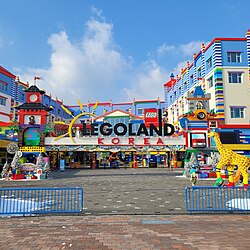
For those seeking leisure, Legoland Korea Resort opened in 2022 as the world's second-largest Legoland theme park. The city is also famous for Namiseom, which gained international popularity following the success of the 2002 drama Winter Sonata.
Regional Specialties
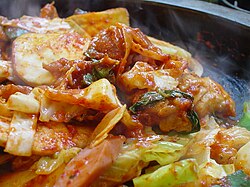
No visit to Chuncheon is complete without tasting its famous local dishes. Dak-galbi is a spicy stir-fried chicken dish created in the 1960s when a restaurant owner substituted chicken for pork. It is typically cooked on a large iron plate with cabbage and onions. Complementing this is Mak-guksu, dark-colored buckwheat noodles that transitioned from a winter snack to a year-round staple in the 1970s.
Sports and Recreation
The city is well-equipped for athletics, featuring the Songam Sports Town, which includes a 25,000-seat complex and a baseball stadium. Chuncheon is also a center for endurance sports, hosting the Chosun Ilbo Chuncheon Marathon (established in 1946) and the Chuncheon Hoban Marathon. For winter sports, the Gangchon area is a highly popular skiing destination.
Transportation and Infrastructure
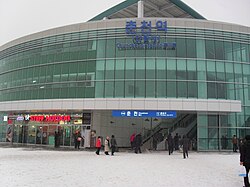
Chuncheon is highly accessible from Seoul via the Gyeongchun Line, a double-track railway terminating at Chuncheon Station. Road access is provided by National Routes 5 and 46, as well as the Seoul-Yangyang Expressway.
For those exploring the lakes, passenger boats operate on Soyang Lake, providing essential links to Yanggu County and the historic Cheongpyeongsa temple.
City Overview Summary
| Category | Details |
|---|---|
| Population (2026) | ~290,000 |
| Total Area | 1,166.8 km² |
| Climate Type | Humid Continental (Dwa) |
| Major Rivers | Soyang River, Han River |
| Key Industry | Service Sector & Hydroelectric Power |
Frequently Asked Questions
What is Dak-galbi and why is it famous in Chuncheon?
Dak-galbi is a regional specialty consisting of marinated, diced chicken stir-fried with vegetables on an iron plate. It originated in the 1960s in Chuncheon and became so popular that a dedicated "Dakgalbi Alley" formed in the Myeongdong district during the 1970s.
How do I get to Chuncheon from Seoul?
The most convenient way is via the Gyeongchun Line railway, which connects Mangu Station in Seoul directly to Chuncheon Station. Alternatively, visitors can use the Seoul-Yangyang Expressway.
What are the best festivals to attend in Chuncheon?
The Chuncheon Mime Festival (May) is one of the most prestigious globally. Other highlights include the Chuncheon Puppet Festival (August), the Dakgalbi & Makguksu Festival (August), and the Soyang River Culture Festival (September).
What is the climate like in Chuncheon?
Chuncheon has a monsoon-influenced humid continental climate. This means winters are cold and dry (with record lows reaching -27.9°C), while summers are hot and rainy (with record highs of 39.5°C).
What is the significance of the Soyang Dam?
Completed in 1973, the Soyang Dam is a critical piece of infrastructure for the region and was once the largest rockfill dam in East Asia, providing hydroelectric power and water management for the basin.