Chemical Landmark Scheme: Celebrating the Sites of Scientific Discovery
The Chemical Landmark Scheme (CLS) is a prestigious initiative by the Royal Society of Chemistry (RSC) designed to honor locations where the chemical sciences have significantly advanced human health, wealth, or general quality of life. By installing publicly visible plaques, the scheme aims to provide the general public with a tangible insight into how chemistry shapes everyday existence.
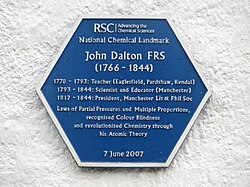
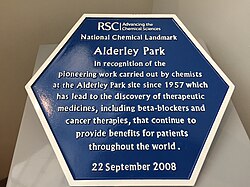
Launched in 2001, the scheme's visual identity has evolved over time. The earliest plaques were rectangular with black lettering on a steel background. Later installations transitioned to a hexagonal design featuring white lettering on a blue background. It is important to note that round plaques bearing RSC attribution are distinct from this specific scheme, as they do not carry the "landmark" designation. While the scheme was suspended around mid-2018, the RSC has indicated intentions to establish a formal nomination process for new plaques.
Key Facts
- Founder: Royal Society of Chemistry (RSC).
- Purpose: To recognize sites of significant chemical contribution to society.
- Timeline: Established in 2001; suspended circa mid-2018.
- Design: Transitioned from rectangular steel plaques to blue hexagonal plaques.
- Scope: Includes sites across England, Scotland, Northern Ireland, Wales, and international locations.
Notable Chemical Landmarks and Discoveries
The scheme spans a vast array of achievements, from the discovery of elements to the development of life-saving pharmaceuticals. In England, landmarks include the birthplace of John Dalton, whose atomic theory revolutionized the field, and the sites associated with Sir Humphry Davy, who identified nine elements and invented the miner's safety lamp.
Medical breakthroughs are also heavily represented. The scheme recognizes the development of Ibuprofen at the Boots Beeston Factory and BioCity Nottingham, as well as the discovery of the electronic blood glucose sensor in Oxford in 1982 by Allen Hill, Tony Cass, and Graham Davis.
Industrial milestones are equally prominent. The scheme honors the discovery of polyethylene (polythene) at the Winnington Laboratory in 1934 and the pioneering work of Sir William H. Perkin, who discovered mauveine—the first synthetic dyestuff—laying the foundation for the organic chemicals industry.
Academic and Research Excellence
Many plaques are located at universities where Nobel Prize-winning research occurred. Examples include the work of Dorothy Hodgkin on the structures of penicillin and insulin at the University of Oxford, and the research of Sir Derek Barton and Sir Geoffrey Wilkinson at Imperial College London.
Summary of Selected Chemical Landmarks
| Subject/Person | Location | Key Contribution | Year Installed |
|---|---|---|---|
| John Dalton | Eaglesfield, England | Atomic Theory and Laws of Partial Pressures | 2007 |
| Dorothy Hodgkin | Oxford, England | X-ray diffraction of vitamins and proteins | 2014 |
| Sir William H. Perkin | London, England | First synthetic dyestuff (mauveine) | 2006 |
| August Kekulé | Ghent, Belgium | Structural and organic aromatic chemistry | 2011 |
| Joseph Black | Glasgow/Edinburgh, Scotland | Discovery of Latent Heat and Carbon Dioxide | 2009 |
| Sir Alec Jeffreys | Leicester, England | Principles of DNA fingerprinting | 2002 |
Regional and International Reach
While heavily concentrated in England, the scheme extends across the United Kingdom and beyond. In Scotland, the contributions of Thomas Graham (dialysis and diffusion) and Joseph Black are celebrated. Northern Ireland recognizes Thomas Andrews at Queen's University Belfast, and Wales honors Professor Edward Hughes for his work on organic chemistry kinetics at Bangor University.
Internationally, the RSC has recognized the Académie de Sciences in Paris and the pioneering aromatic chemistry of August Kekulé at Ghent University in Belgium.
Frequently Asked Questions
What is the purpose of the Chemical Landmark Scheme?
The scheme recognizes sites where chemical sciences have made significant contributions to health, wealth, or quality of life, making the relevance of chemistry visible to the general public.
How can you tell the difference between early and late CLS plaques?
Early plaques (from 2001) are rectangular with black lettering on steel, while later plaques are hexagonal with white lettering on a blue background.
Is the Chemical Landmark Scheme currently accepting new nominations?
The scheme was suspended in or before mid-2018. As of August 2021, the Royal Society of Chemistry had promised to provide a formal nomination process shortly.
Which Nobel Laureates are recognized by the scheme?
Numerous Nobel Laureates are featured, including Dorothy Hodgkin, Sir Derek Barton, Sir Geoffrey Wilkinson, William Ramsay, and Sir Archer Martin and Richard Synge.
Are there any international landmarks in the scheme?
Yes, the scheme includes international sites such as Ghent University in Belgium and the Académie de Sciences in Paris, France.