Royal Society of Chemistry: Advancing the Chemical Sciences Globally
The Royal Society of Chemistry (RSC) is a prestigious learned society and professional association based in the United Kingdom. Dedicated to the goal of "advancing the chemical sciences," the RSC serves as a global hub for chemists, providing professional certification, high-impact publications, and a supportive community for scientists across the world.
The society was officially formed in 1980 through the amalgamation of four established organizations: the Chemical Society, the Royal Institute of Chemistry, the Faraday Society, and the Society for Analytical Chemistry. This merger, sanctioned by a new Royal Charter, allowed the RSC to operate with a dual mandate as both a professional body and a learned society. At its inception, the organization boasted a combined global membership of 49,000.
Key Facts
- Founded: 1980 (with roots dating back to 1841).
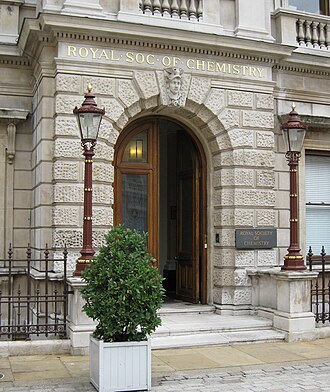
- Headquarters: Burlington House, London, UK.
- Membership: Over 50,000 members worldwide.
- Patron: King Charles III.
- Budget: £65.7 million.
- Global Presence: Offices in the UK, USA (Philadelphia), China (Beijing and Shanghai), and India (Bangalore).
Organizational Structure and Leadership
The RSC is led by a President who is elected biennially. The current president for the 2024–2026 term is Annette Doherty, with Robert Mokaya serving as President-Elect and David Leigh slated for the 2028–2030 term. The President is distinguished by a unique badge featuring a spoked wheel and an enamel depiction of Joseph Priestley.
The society is organized into nine specialized divisions based on subject areas, supported by 35 local sections across the UK and Ireland. These divisions include:
- Analytical Division: Focused on analytical chemistry.
- Dalton Division: Dedicated to inorganic chemistry, named after John Dalton.
- Faraday Division: Focused on physical chemistry, named after Michael Faraday.
- Organic Division: Dedicated to organic chemistry.
- Other Divisions: Education, Chemical Biology Interface, Environment, Sustainability and Energy, Materials Chemistry, and Industry and Technology.
Professional Membership and Designations
The RSC provides several tiers of membership and professional certifications, known as post-nominals, to recognize the expertise and contributions of its members.
| Designation | Title | Requirement/Criteria |
|---|---|---|
| AMRSC | Associate Member | Graduates or equivalent in chemical sciences. |
| MRSC | Member | Graduates with at least 3 years of professional experience. |
| FRSC | Fellow | Those who have made major contributions to chemistry. |
| HonFRSC | Honorary Fellow | Awarded for distinguished service in the field. |
| CChem | Chartered Chemist | MRSC/FRSC demonstrating specific professional attributes. |
| CSci | Chartered Scientist | Registered via the Science Council. |
| EurChem | European Chemist | Awarded to Chartered Chemists via the ECCC. |
| MChemA | Mastership in Chemical Analysis | Statutory UK qualification for Public Analysts. |
Publications and Academic Resources
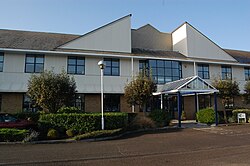
Operating as a not-for-profit publisher, the RSC reinvests its surpluses back into the chemical sciences. Its publishing arm is based at Thomas Graham House in the Cambridge Science Park.
The society produces several flagship scientific journals, including Chemical Communications, Chemical Science, and Chemical Society Reviews. For the broader community, it publishes Chemistry World, a monthly magazine covering news, history, and technological developments. Additionally, the RSC provides educational resources such as the Tutorial Chemistry Texts and the Molecular World series.
Facilities and Heritage
The society's primary headquarters is located at Burlington House in Piccadilly, London. This historic site has been the residence of the society since 1857. It houses the Chemistry Centre and a vast library and information centre dating back to 1842, which contains significant gifts from notable fellows like Michael Faraday.
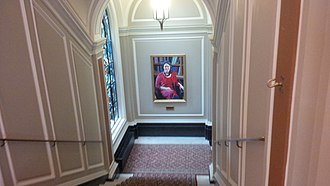
Burlington House serves as a public engagement hub, hosting free lectures on the chemical aspects of everyday life, featuring renowned science writers such as Philip Ball and John Emsley.
Community Support and Recognition
The RSC demonstrates its commitment to its members through the Chemists' Community Fund (formerly the Benevolent Fund). Established in 1920 as a memorial to members lost in World War I, the fund provides financial advice, guidance, and volunteer support to members and their families during times of hardship.
To recognize scientific excellence, the RSC grants various awards. Notable examples include the Harrison–Meldola Memorial Prizes for promising young British chemists (under 32) and the Corday–Morgan medals for meritorious contributions to experimental chemistry. The Faraday Division also presents the Marlow Award for physical chemistry.
Modern Innovation: The Twitter Conference
Embracing digital transformation, the RSC operates an annual 24-hour online conference via Twitter (X). This unique format is designed to eliminate the financial and environmental costs of traditional travel, allowing researchers worldwide to network and share their work across disciplines instantaneously.
Frequently Asked Questions
What is the difference between MRSC and FRSC?
MRSC (Member) is generally awarded to graduates with at least three years of professional experience and key skills. FRSC (Fellow) is a higher distinction awarded to those who have made outstanding or major contributions to the chemical sciences.
What is a Chartered Chemist (CChem)?
CChem is a professional designation awarded to those who are already MRSC or FRSC and can demonstrate specific professional attributes while working in a role that requires their chemical expertise.
Where is the RSC headquartered?
The main headquarters are located at Burlington House in Piccadilly, London, though the society also maintains offices in Cambridge, the United States, China, and India.
How does the RSC support its members in need?
The society operates the Chemists' Community Fund, which provides financial assistance, volunteer support, and guidance to members and their families during difficult periods.
What is the purpose of the RSC's Twitter Conference?
The conference aims to remove the environmental and financial barriers of traditional scientific meetings, enabling global researchers to network and share findings in a 24-hour online format.