Charles Kennedy: The Life and Political Legacy of a Liberal Democrat Leader
Charles Peter Kennedy was a defining figure in British politics at the turn of the millennium. A charismatic Scottish politician, he served as the Leader of the Liberal Democrats from 1999 to 2006 and represented the constituency of Ross, Skye and Lochaber in the House of Commons for over three decades. Known for his affable public persona and principled stances, Kennedy navigated his party through a period of significant growth and high-profile opposition to government policy.
Key Facts
- Leadership: Led the Liberal Democrats from August 9, 1999, to January 7, 2006.
- Parliamentary Career: MP for Ross, Skye and Lochaber (and predecessor seats) from 1983 to 2015.
- Major Achievement: Led the party to its highest number of seats since 1923 during the 2001 and 2005 elections.
- Defining Stance: Spearheaded the largest British party opposition to the Iraq War.
- Academic Role: Served as the Rector of the University of Glasgow from 2008 to 2014.
Early Life and Rise in Politics
Born on November 25, 1959, in Inverness, Scotland, Kennedy's political journey began early. At age 15, he joined the Labour Party, later moving to the Social Democratic Party (SDP) in 1981. His ascent was rapid; by 1983, at just 23 years old, he became the youngest sitting Member of Parliament after winning the seat of Ross, Cromarty and Skye.
Throughout the 1980s and 1990s, Kennedy built a reputation as a capable legislator and communicator. He served on various select committees, including Social Services and the Televising of Proceedings of the House. As the SDP merged with the Liberals to form the Liberal Democrats, Kennedy took on increasing responsibilities, serving as party president from 1991 to 1994 and as a spokesperson for health and foreign affairs.
Leading the Liberal Democrats
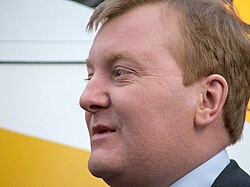
Following the resignation of Paddy Ashdown in 1999, Kennedy assumed the leadership of the Liberal Democrats. His tenure was marked by a strategic shift, positioning the party to the left of New Labour and leveraging his charisma to increase the party's visibility on television.
In the 2001 general election, Kennedy led the party to 52 seats, reflecting a growing appetite for a liberal alternative in British politics. However, his most enduring legacy from this era was his staunch opposition to the Iraq War. Under his leadership, the Liberal Democrats became the largest British party to vote against or abstain from the invasion of Iraq.
The 2005 Election and Leadership Challenges
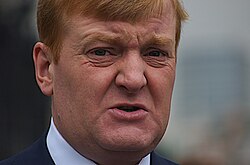
While the 2005 general election maintained the party's strength, the latter stages of Kennedy's leadership were fraught with internal tension. By late 2005, some party members and MPs began questioning his effectiveness, with some calling for a leadership election. This period of instability was compounded by concerns regarding his health.
Resignation and Later Years
The crisis reached a breaking point in January 2006. After learning that ITN intended to report on his treatment for alcoholism, Kennedy pre-empted the story by admitting he had received treatment. Lacking support from his parliamentary party, he resigned as leader on January 6, 2006, and was succeeded by Menzies Campbell.
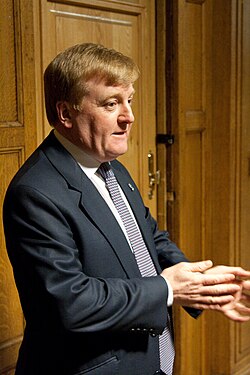
Kennedy continued to serve as a backbench MP, where he remained a principled voice, notably voting against the formation of the Cameron–Clegg coalition in 2010. Beyond Westminster, he found success in academia, being elected Rector of the University of Glasgow in 2008 and re-elected in 2011.
Kennedy's political career ended in 2015 when he lost his seat in the general election. He passed away shortly after on June 1, 2015, at the age of 55 in Fort William, Scotland.
Summary of Political Career
| Period | Role/Event | Key Detail |
|---|---|---|
| 1983–2015 | Member of Parliament | Represented Ross, Skye and Lochaber (and predecessors) |
| 1991–1994 | President of Liberal Democrats | Internal party leadership role |
| 1999–2006 | Leader of Liberal Democrats | Led party through 2001 and 2005 elections |
| 2008–2014 | Rector of University of Glasgow | Elected representative for students |
Frequently Asked Questions
Why did Charles Kennedy resign as leader of the Liberal Democrats?
Charles Kennedy resigned in January 2006 after admitting he had received treatment for alcoholism. The admission followed reports from ITN and a lack of support from his parliamentary colleagues.
What was Charles Kennedy's stance on the Iraq War?
Kennedy led the Liberal Democrats in strong opposition to the Iraq War, making them the largest British political party to vote against or abstain from the invasion.
Which constituency did Charles Kennedy represent?
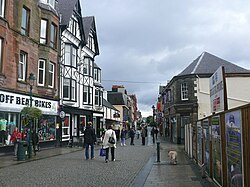
He represented the Highlands of Scotland for 32 years, serving the constituencies of Ross, Cromarty and Skye; Ross, Skye and Inverness West; and finally Ross, Skye and Lochaber.
What was his role at the University of Glasgow?
Kennedy served as the Rector of the University of Glasgow from 2008 to 2014, a role in which he represented the students' interests.
Did Charles Kennedy support the 2010 coalition government?
No, as a backbench MP, Kennedy voted against the formation of the coalition between the Conservatives and the Liberal Democrats led by David Cameron and Nick Clegg.