His Majesty's Government
The Government of the United Kingdom, formally known as His Majesty's Government (and commonly referred to as the UK or British Government), serves as the central executive authority for the United Kingdom of Great Britain and Northern Ireland. Led by the Prime Minister, the government is responsible for the day-to-day administration of the state and the implementation of policy.
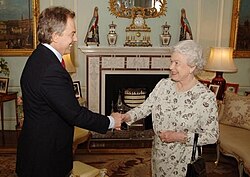
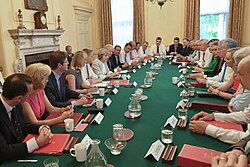
Currently, the government is formed by the Labour party, which has held a majority in the House of Commons since 2024. The Prime Minister, Andy Burnham (in office since 20 July 2026), leads the administration and advises the monarch on the appointment of all other ministers. The highest level of decision-making is conducted by the Cabinet, a supreme committee consisting of the Prime Minister and the most senior ministers.
Key Facts
- Established: 1 May 1707.
- Current Leader: Prime Minister Andy Burnham.
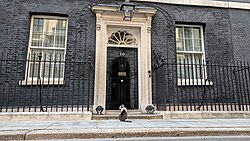
- Seat of Power: 10 Downing Street, London.
- Annual Budget: £1.416 trillion (2025–2026).
- Composition: 24 ministerial departments and 20 non-ministerial departments.
- Accountability: Responsible to the House of Commons.
The Constitutional Framework
The United Kingdom operates as a constitutional monarchy. In this system, the reigning monarch serves as the head of state but does not make open political decisions. Instead, all political authority is exercised by the government and Parliament. This structure evolved over centuries of limiting monarchical power, a process that began with the Magna Carta in 1215.
By long-standing convention since 1901, the Prime Minister must be an elected Member of Parliament (MP), ensuring they are directly answerable to the House of Commons. A similar convention applies to the Chancellor of the Exchequer.
Powers and the Royal Prerogative
While the monarch is the sovereign, they are not the head of government. Executive power is vested in the Crown, and the government exercises these powers through the Royal Prerogative—a set of privileges and powers belonging to the sovereign.
Domestic Powers
- Appointments: The monarch appoints and dismisses the Prime Minister (conventionally the leader capable of commanding a majority in the House of Commons) and other ministers (on the Prime Minister's advice).
- Royal Assent: For a bill passed by Parliament to become an act (law), it requires royal assent. No monarch has refused this since Queen Anne in 1708.
- Legal Mercy: The power to pardon convictions.
- Privy Council: The power to appoint members to this body.
Foreign Powers
- The power to recognize foreign states and receive diplomats.
- The authority to make and ratify international treaties.
- The power to deploy the Armed Forces overseas.
Government Structure and Administration
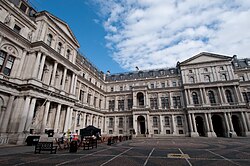
The executive branch is supported by a vast administrative network. As of 2019, approximately 120 government ministers are supported by 560,000 civil servants. These staff operate across 24 ministerial departments and 20 non-ministerial departments.
While ministers are typically members of the House of Commons or the House of Lords to ensure accountability, Prime Ministers occasionally appoint non-parliamentarians, who are often subsequently appointed to the House of Lords.
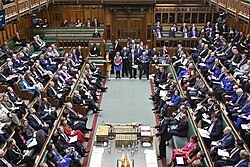
Accountability in Parliament
The government is held to account through several mechanisms:
- Prime Minister's Questions (PMQs): A weekly session where MPs from all parties question the Prime Minister.
- Departmental Questions: Sessions where cabinet or junior ministers answer questions regarding their specific briefs.
- Select Committees: Specialized committees in both Houses that scrutinize government work and legislation.
- The Ministerial Code: A set of rules requiring ministers to make major policy statements to Parliament before announcing them publicly.
Limits and Scope of Power
The sovereign enjoys sovereign immunity, meaning they are immune from criminal prosecution and cannot be sued without permission. While not legally required to pay income tax, recent monarchs have done so voluntarily.
The central government also wields significant influence over local authorities through financial grants, funding essential services such as housing and council tax benefits.
Terminology and Symbols
In a broad sense, "the government" includes the ministers (the frontbench) and the civil service—the impartial body of officials who implement executive decisions. It also encompasses government-owned companies like HS2 Ltd and UK Government Investments.
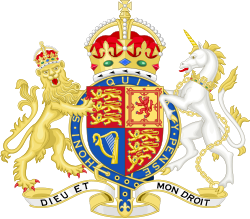
The government's visual identity is represented by the lesser arms, a simplified version of the Royal Arms. A new depiction of these arms is created at the start of each new reign.
Devolution
Since 1999, certain powers have been devolved to accountable governments in Scotland, Wales, and Northern Ireland. These devolved administrations are not part of His Majesty's Government; they are directly accountable to their own institutions under the Crown. England has no devolved national government, though some powers are delegated to combined authorities and the Greater London Authority.
| Feature | Detail |
|---|---|
| Head of State | The Monarch (Sovereign) |
| Head of Government | The Prime Minister |
| Supreme Decision Body | The Cabinet |
| Legislative Requirement | Parliamentary approval for primary legislation |
| Administrative Support | Civil Service |
Frequently Asked Questions
Who leads His Majesty's Government?
The government is led by the Prime Minister, who is currently Andy Burnham. The Prime Minister is the head of government and advises the monarch on ministerial appointments.
What is the Royal Prerogative?
The Royal Prerogative refers to the set of executive powers and privileges held by the monarch. In practice, these are exercised by the government, including the power to deploy troops, ratify treaties, and appoint ministers.
How is the Prime Minister held accountable?
The Prime Minister is held accountable primarily through Prime Minister's Questions (PMQs), parliamentary debates, and scrutiny by select committees in the House of Commons and House of Lords.
What is the difference between the government and the civil service?
The government consists of the political ministers who set policy and hold office based on election results. The civil service is a politically impartial body of professionals who advise ministers and implement their decisions.
Are the Scottish and Welsh governments part of His Majesty's Government?
No. The governments of Scotland, Wales, and Northern Ireland are devolved administrations. While they operate under the Crown, they are separate from the central UK Government (His Majesty's Government).