Charity Schools and the Evolution of English Education
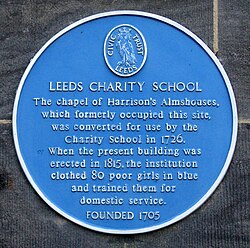
Long before the establishment of state-funded education, charity schools—often referred to as blue coat schools or simply the Blue School—played a pivotal role in shaping the educational landscape of England. These institutions were designed to provide the children of the poor with the essential tools for literacy and basic knowledge, bridging the gap between total illiteracy and the opportunities of the working world.
Founded and maintained through the voluntary contributions of local parish inhabitants, these schools were typically managed by religious organizations. Their mission extended beyond the classroom; they provided students with clothing and education either entirely for free or at a very low cost, ensuring that financial hardship was not an absolute barrier to basic learning.
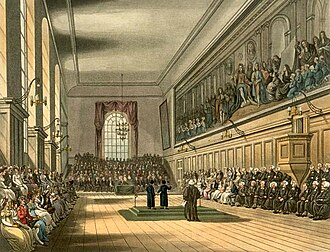
The Scope and Purpose of Charity Education
The primary objective of the charity school system was to teach poor children how to read and write, alongside other necessary components of a basic education. However, the ultimate goal for most students was not academic scholarship, but vocational stability. Most foundations focused on transitioning students into the workforce by placing them in trades or services through apprenticeships (formal training under a skilled master).
While the majority of students were prepared for manual or service labor, some institutions held higher ambitions. A small number of exceptional pupils were supported in their pursuit of higher education and sent to universities.
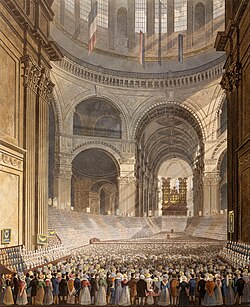
Growth and Statistical Impact
The movement began in London and gradually expanded across the urban centers of England and Wales. By the 19th century, charity schools had become the predominant form of elementary education in England.
To understand the scale of these institutions, one can look at the statistics from the London area around 1710. During this period, the network consisted of 88 schools serving thousands of children, with a significant portion of graduates moving directly into apprenticeships.
| Category | Count/Number |
|---|---|
| Total Number of Schools | 88 |
| Boys Taught | 2,181 |
| Girls Taught | 1,221 |
| Boys Placed in Apprenticeships | 967 |
| Girls Placed in Apprenticeships | 407 |
Key Facts
- Alternative Names: Commonly known as blue coat schools or Blue Schools.
- Funding: Maintained via voluntary contributions from parish inhabitants and religious organizations.
- Core Curriculum: Focused on reading, writing, and essential basic education.
- Vocational Path: Most students were placed into trades or services by the charitable foundation.
- Geographic Spread: Originated in London before spreading to urban areas in England and Wales.
- Historical Dominance: They were the primary elementary schools in England by the 19th century.
Frequently Asked Questions
What were blue coat schools?
Blue coat schools were another name for charity schools, which were institutions funded by voluntary donations and religious groups to provide free or low-cost education and clothing to poor children.
Who funded these schools?
They were maintained by the voluntary contributions of inhabitants within various parishes and were usually managed by religious organizations.
Did all students go into trades?
While the majority of students were put out to trades or services, some more ambitious schools provided a pathway for a few pupils to attend university.
Where did the charity school movement start?
The movement began in London and subsequently spread throughout most of the urban areas of England and Wales.
How many children were served by London charity schools around 1710?
Around 1710, there were 88 schools in and around London teaching 2,181 boys and 1,221 girls.