Cephalopoda: The Evolution and Biology of Nature's Most Intelligent Mollusks
The class Cephalopoda represents some of the most sophisticated invertebrates on Earth. From the ancient, coiled shells of the nautilus to the highly intelligent, camouflage-capable octopus, these marine mollusks have evolved a suite of biological adaptations that allow them to thrive as apex predators in diverse oceanic environments. Defined by their head-footed anatomy, cephalopods combine complex nervous systems with unique physiological capabilities.
Key Facts
- Diverse Lineages: Includes extant nautiluses, octopuses, squids, and cuttlefish, as well as extinct ammonites and belemnites.
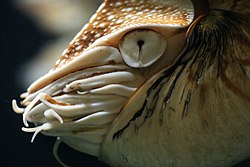
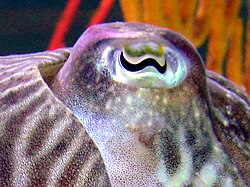
- Advanced Vision: Possess highly developed eyes, ranging from the pinhole camera style of the nautilus to the complex pupils of cuttlefish.
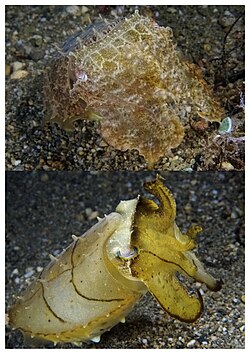
- Dynamic Camouflage: Use specialized cells called chromatophores to change skin color and pattern almost instantaneously.
- Jet Propulsion: Many species utilize a siphon to expel water, allowing for rapid, headfirst movement.
- Ancient History: Fossil records trace their origins back to the Cambrian Period, with significant diversification in the Ordovician.
Biological Systems and Adaptations
Vision and Sensory Perception
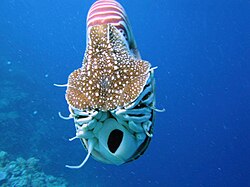
Cephalopods are renowned for their exceptional visual systems. While the primitive nautilus eye functions similarly to a pinhole camera, lacking a lens, other cephalopods have evolved complex eyes that rival those of vertebrates. Cuttlefish, for instance, possess W-shaped pupils that may assist them in discerning colors and contrasting light patterns.
Coloration and Communication
One of the most striking features of the Coleoidea (squids, octopuses, and cuttlefish) is their ability to manipulate their appearance. This is achieved through chromatophores—pigment-containing cells that can be expanded or contracted via muscular control. This allows for rapid camouflage, signaling, and communication.
Locomotion and Buoyancy
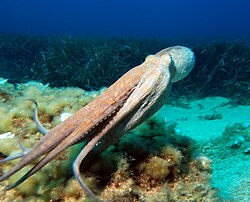
Movement in cephalopods varies by group. Octopuses typically swim headfirst with their arms trailing, while squids and cuttlefish often rely on jet propulsion. Buoyancy is managed differently across the class: nautiluses use chambered shells, while some squids have internal shells or specialized fluid-filled cavities.
Feeding and Anatomy
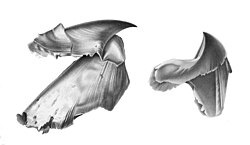
Most cephalopods are carnivores, utilizing a radula (a chitinous ribbon of teeth) and a powerful beak to process prey. The beak is typically composed of two parts, as seen in the giant squid, allowing them to tear through tough tissues of fish and other mollusks.
Reproduction and Life Cycle
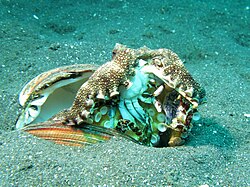
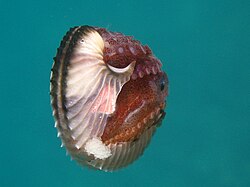
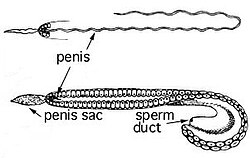
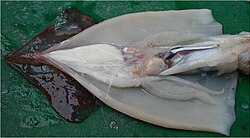
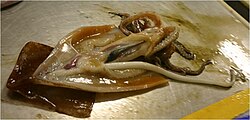
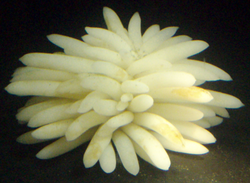
Reproductive strategies vary widely. Many species exhibit significant sexual dimorphism (physical differences between males and females). In some species, males possess a specialized arm called a hectocotylus used to transfer sperm to the female. Some species, like the Argonauta, produce specialized eggcases for their offspring.
Evolutionary History and Taxonomy
The evolutionary trajectory of Cephalopoda is marked by the rise and fall of several major groups. The ancestral cephalopods, such as the Plectronocerida, appeared in the Cambrian Period. Over millions of years, they diverged into the shell-bearing Nautiloidea and the more streamlined Coleoidea.
The Extinct Giants
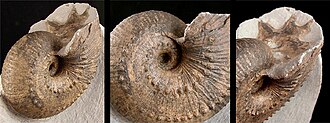
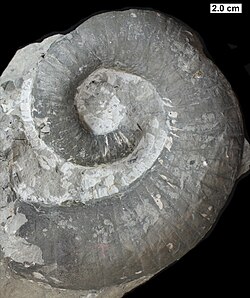
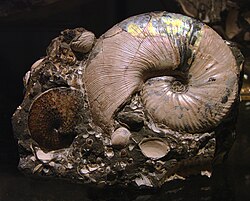
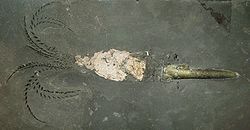
The Ammonoidea (ammonites) were a dominant group of coiled cephalopods that thrived from the Devonian until the end of the Cretaceous period. Similarly, the Belemnoidea (belemnites) were squid-like creatures with internal skeletal structures that are frequently found in the fossil record.
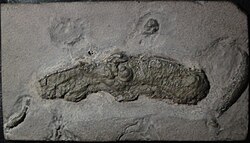
Modern Classification
Today, the class is broadly divided into the Nautiloidea (the chambered nautilus) and the Coleoidea. The latter is further split into the Decapodiformes (ten-armed squids and cuttlefish) and the Octopodiformes (eight-armed octopuses and vampire squid).
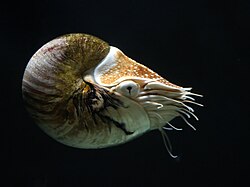
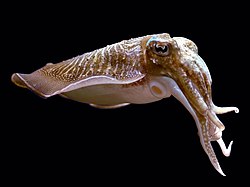
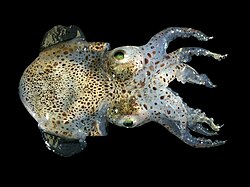
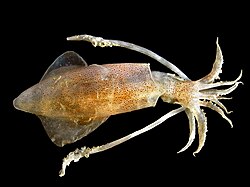
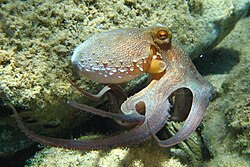
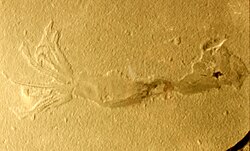
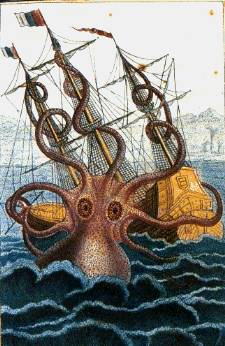
While early naturalists sometimes imagined colossal octopuses attacking ships, modern science focuses on the genetic and morphological evidence of their evolution.

Summary of Cephalopod Groups
| Group | Key Characteristics | Example Species | Status |
|---|---|---|---|
| Nautiloidea | External coiled shell, pinhole eyes | Chambered Nautilus | Extant |
| Ammonoidea | Complex coiled shells, undulating septa | Ammonites | Extinct |
| Octopoda | Eight arms, no internal shell, high intelligence | Common Octopus | Extant |
| Sepiida | Ten arms, internal cuttlebone, W-shaped pupils | Common Cuttlefish | Extant |
| Teuthida | Ten arms, streamlined body, jet propulsion | European Squid | Extant |
Frequently Asked Questions
How do cephalopods change color so quickly?
They use chromatophores, which are specialized organs containing pigment sacs. These sacs are surrounded by muscles that can rapidly expand or contract the cell, changing the visible color of the skin in less than a second.
What is the difference between a squid and an octopus?
Squids typically have ten limbs (eight arms and two longer tentacles) and an internal shell called a pen. Octopuses have eight arms and generally lack an internal shell, allowing them to squeeze through tight spaces.
Are ammonites related to the modern nautilus?
Yes, both belong to the broader group of shell-bearing cephalopods, but they are distinct lineages. Ammonites are extinct, while the nautilus is often referred to as a "living fossil" because it has changed little over millions of years.
How do cephalopods move through the water?
Many use jet propulsion by taking water into their mantle cavity and forcefully expelling it through a muscular tube called a siphon, which pushes them in the opposite direction.
What is a hectocotylus?
A hectocotylus is a specialized arm found in male cephalopods that is used to transfer sperm packets to the female during mating.