Caumsett State Park: The Legacy of a Gold Coast Estate
Nestled along the scenic shores of Long Island, Caumsett State Park stands as a testament to the opulence of the American Gold Coast and the enduring beauty of the natural landscape. Once a private sanctuary for one of the era's most prominent figures, the park now offers the public a glimpse into early 20th-century luxury and a haven for ecological preservation.
The Era of Marshall Field III
The story of the modern estate began in 1921 when Marshall Field III purchased the property. By 1925, he had completed the construction of an estate house that became one of the largest and most prestigious mansions of the Gold Coast. Field chose the name "Caumsett," drawing from the original terminology of the Matinecock tribe, meaning "place by a sharp rock."
Transition to a Public State Park
The transition from a private residence to a public treasure occurred on February 3, 1961, when New York State purchased the 1,426-acre (577 ha) estate for $4 million. This acquisition ensured that the sprawling grounds and historic architecture would be preserved for future generations. In recognition of its architectural and historical significance, the former estate was officially listed on the National Register of Historic Places in 1979.
The Proposed Caumsett State Parkway
Shortly after the park's establishment in May 1961, officials planned the Caumsett State Parkway. Intended as a northern extension of the Bethpage State Parkway, this road was designed to improve public access to the park. While the state acquired the necessary right-of-way, the parkway was never actually constructed. However, this land was not wasted; portions of it were later utilized to establish Cold Spring Harbor State Park and Trail View State Park.
Expanding the Ecological Footprint
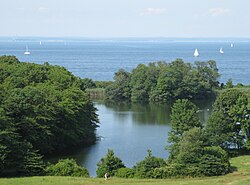
The park continues to grow in size and ecological importance. In January 2026, the New York State Office of Parks, Recreation and Historic Preservation acquired an additional 180 acres (73 ha) of land. This territory, formerly part of the Seminary of the Immaculate Conception and located directly south of the park, adds critical estuarine (where freshwater from rivers meets saltwater from the sea) and marine wetlands, as well as steep slopes and bluffs overlooking Lloyd Neck Harbor.
Key Facts
- Original Owner: Marshall Field III (purchased 1921).
- Meaning of "Caumsett": "Place by a sharp rock" (Matinecock tribe).
- State Acquisition: Purchased by New York State in 1961 for $4 million.
- Historic Status: Listed on the National Register of Historic Places in 1979.
- Recent Expansion: 180 acres added in January 2026 from the former Seminary of the Immaculate Conception.
| Feature | Detail |
|---|---|
| Original Estate Size | 1,426 acres (577 ha) |
| 2026 Addition | 180 acres (73 ha) |
| Purchase Price (1961) | $4 million |
| Key Geographic Features | Marine wetlands, bluffs, and Lloyd Neck Harbor |
Frequently Asked Questions
What does the name Caumsett mean?
The name Caumsett is derived from the Matinecock tribe's original name for the peninsula, which translates to "place by a sharp rock."
When did the property become a state park?
The property became a state park on February 3, 1961, after being purchased by New York State for $4 million.
Was the Caumsett State Parkway ever completed?
No, although the right-of-way was acquired in 1961, the parkway was never built. The land was eventually used for Cold Spring Harbor State Park and Trail View State Park.
What was added to the park in 2026?
In January 2026, 180 acres of the former Seminary of the Immaculate Conception were added, encompassing marine and estuarine wetlands and bluffs adjacent to Lloyd Neck Harbor.
Is the estate recognized for its historical value?
Yes, the former estate was listed on the National Register of Historic Places in 1979.