Carnegie: The Rise and Fall of a California Brick Town
Nestled within the landscape of Corral Hollow in San Joaquin County, California, lies the ghost of a once-thriving industrial hub. From 1902 to approximately 1915, the town of Carnegie served as a center for architectural production, transforming local natural resources into the building blocks of California's growing cities.
The Birth of an Industrial Center
The origins of Carnegie were rooted in a geological discovery. While operating the Tesla coal mines in Corral Hollow, the San Francisco & San Joaquin Coal Company found that the area contained rich deposits of clay. At the time, California was experiencing rapid population growth, which created an urgent demand for durable building materials.
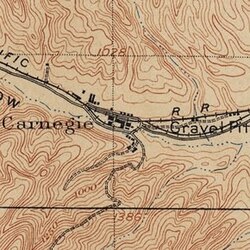
Recognizing this opportunity, James and John Treadwell—owners of the Treadwell gold mine—established the Carnegie Brick and Pottery Company in 1902. The company was named in honor of the renowned philanthropist Andrew Carnegie. By 1904, the Treadwells had constructed a specialized plant for producing bricks and architectural terra cotta—a fired clay ceramic used for ornamental building facades. This facility was strategically located near the Alameda and San Joaquin Railroad line, roughly four miles east of the coal mining town of Tesla.
Growth and Prosperity
Carnegie quickly evolved from a construction site into a bustling community. At its peak, the town housed over 300 residents, many of whom were skilled Italian artisans brought in to manage the complex pottery and brick-making processes. The industrial output was staggering, with the brick factory producing more than 100,000 bricks every day. To further expand their capabilities, a pottery sewer pipe plant was constructed in 1904 between the settlements of Carnegie and Tesla.
The materials produced in Carnegie were not just local; they contributed to significant landmarks across the state. The company's products were used in the construction of the Natural History Museum of Los Angeles County, the Oakland Hotel, and the Carnegie libraries located in Lodi and Livermore, California.
Decline and Destruction
The prosperity of Carnegie came to an abrupt end due to natural disaster. In 1911, a devastating flood swept through the region, destroying critical infrastructure, including roads, bridges, and buildings. The Carnegie Brick and Pottery Company lacked the financial resources to rebuild, leading to the eventual abandonment of both Carnegie and the neighboring town of Tesla.
The decline continued as the Western Pacific Railroad abandoned the rail line from Carbona in January 1916. That same year, the company was sold to Gladding, McBean of Lincoln, California. To eliminate market competition, the new owners sold the factory equipment and demolished the remaining buildings. The final remnants of the town's industrial skyline vanished on May 27, 1917, when the plant's tall smokestacks were dynamited.
Key Facts
- Location: Corral Hollow, San Joaquin County, California.
- Active Years: 1902 to approximately 1915.
- Peak Production: Over 100,000 bricks per day.
- Population: Over 300 inhabitants, primarily Italian artisans.
- Historical Status: Registered as California Historical Landmark No. 464.
- Current State: Only foundations remain within the Carnegie State Vehicular Recreation Area.
| Category | Details |
|---|---|
| Founding Year | 1902 |
| Founders | James and John Treadwell |
| Primary Products | Bricks, architectural terra cotta, and sewer pipes |
| Cause of Decline | 1911 Flood and subsequent financial failure |
| Final Demolition | May 27, 1917 (Smokestacks dynamited) |
Frequently Asked Questions
Why was the town of Carnegie founded?
The town was established after rich clay deposits were discovered in the Tesla coal mines. James and John Treadwell founded the Carnegie Brick and Pottery Company to meet the high demand for building materials during California's population boom.
Who lived in Carnegie during its peak?
The town had a population of over 300 people, consisting largely of Italian artisans who provided the skilled labor necessary for brick and terra cotta production.
What caused the abandonment of the town?
A major flood in 1911 destroyed the town's infrastructure. Because the company could not afford to rebuild the damaged roads, bridges, and buildings, the settlement was abandoned.
What happened to the factory after the town was abandoned?
The company was sold to Gladding, McBean in 1916. The new owners sold the equipment and destroyed the remaining buildings to reduce competition, eventually dynamiting the smokestacks in 1917.
Can you still visit the site of Carnegie today?
Yes, the site is now part of the Carnegie State Vehicular Recreation Area. While the buildings are gone, the foundations of the brick works are still visible, and the site is recognized as California Historical Landmark No. 464.