Burundian Civil War: From the 1993 Coup to National Peace
The Burundian Civil War was a devastating period of ethnic conflict and political instability that reshaped the nation's landscape. Triggered by a violent political upheaval in 1993, the conflict pitted Hutu and Tutsi factions against one another in a struggle for power, leading to a decade of insurgency, massacres, and fragile peace attempts.
At the heart of the conflict were the FRODEBU (Front for Democracy in Burundi), a party largely supported by the Hutu majority, and UPRONA (Union for National Progress), which was predominantly supported by the Tutsi minority. The tension between these groups, exacerbated by historical ethnic divisions, culminated in a cycle of violence that required international intervention to resolve.
Key Facts
- Trigger: The 1993 assassination of President Melchior Ndadaye.
- Casualties: An estimated 50,000 to 100,000 deaths occurred within the first year of the conflict.
- Major Factions: Hutu rebel groups including CNDD-FDD and PALIPEHUTU-FNL, and the Tutsi-dominated military.
- Peace Framework: The Arusha Peace and Reconciliation Agreement (2000) established a power-sharing system.
- Resolution: The conflict largely stabilized following the 2005 elections and the presidency of Pierre Nkurunziza.
The 1993 Coup and the Outbreak of Violence
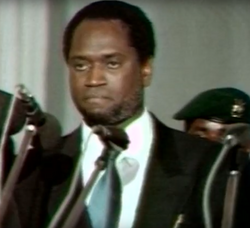
The conflict began with the murder of President Melchior Ndadaye, the first Hutu president of Burundi. His death sparked immediate chaos, as Hutu supporters attacked UPRONA members (mostly Tutsi), while putschists and Tutsi groups targeted FRODEBU sympathizers.
Violence quickly escalated as civilians formed local militias for self-defense, which soon evolved into proactive killing squads. Urban street gangs, previously biethnic, split along ethnic lines and were funded by extremist politicians to carry out murders. Within a year, between 50,000 and 100,000 people died. While international pressure eventually returned power to a FRODEBU-dominated civilian government, the social fabric was deeply torn.
Decline of State Authority (1994–1996)
Between 1994 and 1996, a series of bi-ethnic governments failed to stabilize the country. Tutsi extremists within the army continued to undermine the civilian government, while Hutu radicals grew disillusioned with negotiations. This led to the rise of the CNDD-FDD (National Council for the Defense of Democracy–Forces for the Defense of Democracy), led by Léonard Nyangoma, which became the most prominent Hutu rebel group.
The security situation worsened on April 6, 1994, when President Cyprien Ntaryamira was killed in a plane crash alongside Rwandan President Juvénal Habyarimana. This event triggered the Rwandan genocide and further destabilized Burundi. As state authority collapsed, non-state actors—including paramilitary wings of political parties and youth gangs—filled the vacuum, often terrorizing civilians in cities like Bujumbura.
The Presidency of Pierre Buyoya
In 1996, Pierre Buyoya seized power in a coup to restore order. While Buyoya attempted to integrate Tutsi militias into the military and open negotiations with rebels, the coup was viewed as illegitimate by Hutu groups and neighboring countries, leading to an international embargo and an escalation of the war.
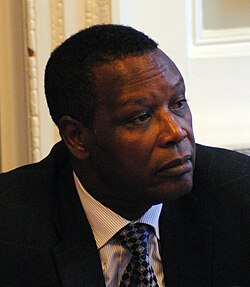
To combat the insurgency, the government implemented a tiered security strategy. Initially, they coerced poor Hutu civilians into unarmed patrols. Later, they created the abajeunes (the young men), an armed Hutu militia trained by the military. By 1997, these "Guardians of the Peace" numbered 3,000 and were effective in holding back rebel advances.
The Arusha Peace Process
Peace talks began in Arusha, Tanzania, in 1998, mediated first by Julius Nyerere and later by Nelson Mandela. These negotiations were grueling, as Tutsi extremists resisted power-sharing and Hutu rebels remained skeptical. The resulting Arusha Peace and Reconciliation Agreement (August 2000) proposed a transitional government with a rotating presidency and vice-presidency every 18 months.
Despite the agreement, violence continued. The Titanic Express massacre in December 2000 and the Itaba massacre in 2002 highlighted the ongoing brutality. However, by December 2002, major wings of the CNDD-FDD agreed to a ceasefire and joined the peace process.
Transition and Final Peace (2003–2006)
On April 30, 2003, Domitien Ndayizeye became president as part of the power-sharing agreement. The African Union Mission in Burundi (AMIB), comprising South African, Ethiopian, and Mozambican personnel, helped stabilize the region. The military reform was surprisingly successful, with Hutu and Tutsi troops remaining loyal to the new government.
The final holdout was the PALIPEHUTU-FNL. After the 2004 Gatumba massacre, where 160 Congolese Tutsi refugees were killed, the FNL was labeled a terrorist organization, severely damaging its political standing and forcing it toward negotiations.
In 2005, Burundi held its first referendum and parliamentary elections since 1994. The FDD won the elections, and Pierre Nkurunziza was elected president by parliament.
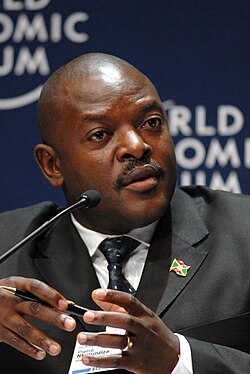
The end of the conflict was symbolized on April 15, 2006, when the midnight-to-dawn curfew—in place since 1993—was finally lifted, marking the most stable period in the country's recent history.
| Period/Year | Key Event | Outcome |
|---|---|---|
| 1993 | Assassination of Pres. Ndadaye | Outbreak of mass ethnic violence |
| 1994-1996 | State Collapse | Rise of CNDD-FDD and ethnic militias |
| 1996 | Pierre Buyoya Coup | Military consolidation of power |
| 2000 | Arusha Accords | Agreement on power-sharing |
| 2003 | Presidency of Ndayizeye | Integration of rebels into government |
| 2005 | National Elections | Election of Pierre Nkurunziza |
Frequently Asked Questions
What caused the start of the Burundian Civil War?
The war was triggered by the 1993 assassination of President Melchior Ndadaye, the country's first Hutu president, which led to widespread ethnic killings between Hutu and Tutsi supporters.
What were the Arusha Accords?
The Arusha Peace and Reconciliation Agreement was a 2000 treaty that established a transitional government based on power-sharing, including a rotating presidency between Hutu and Tutsi leaders.
Who were the CNDD-FDD and PALIPEHUTU-FNL?
These were the primary Hutu rebel groups. The CNDD-FDD eventually integrated into the government, while the PALIPEHUTU-FNL remained an insurgent force longer, eventually being labeled as terrorists after the Gatumba massacre.
How did the international community help end the war?
International efforts included mediation by leaders like Nelson Mandela and the deployment of peacekeepers from the African Union (AMIB) and the United Nations to stabilize the country.
When did the country finally achieve stability?
Stability significantly improved following the 2005 elections and the subsequent lifting of the national curfew in April 2006.