Burundi Political Crisis: Protests, Coup Attempts, and Civil Unrest
In 2015, Burundi was plunged into a period of intense political instability and violence. The crisis was triggered by the decision of President Pierre Nkurunziza to seek a third term in office, a move that sparked widespread protests, a failed military coup, and a cycle of targeted assassinations and armed rebellion.
The Spark: The Third-Term Controversy
On 25 April 2015, the ruling CNDD-FDD party announced that President Nkurunziza would run in the presidential election scheduled for 26 June 2015. This announcement ignited immediate backlash from opponents who argued that a third term violated the national constitution, which limits a president to two terms.
Protests erupted in the then-capital, Bujumbura, where demonstrators used felled trees to blockade roads. The government response was swift and severe. President Nkurunziza declared the protests illegal, and Security Minister General Gabriel Nizigama labeled the demonstrators as "criminals, terrorists and even enemies of the country." Reports from the International Red Cross and the United Nations High Commissioner for Human Rights indicated that hundreds of protesters were detained, some were beaten in prison, and at least six people were killed during the initial demonstrations.
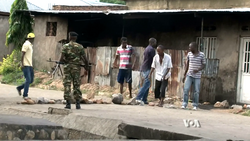
The Failed Coup d'État of May 2015
The tension peaked on 13 May 2015, while President Nkurunziza was attending an emergency conference in Tanzania. Major General Godefroid Niyombare, a former army chief of staff, declared a coup d'état via radio, announcing the dismissal of the President and his government. The announcement was supported by several senior army and police officers.
While rebel soldiers seized control of the Bujumbura International Airport and crowds celebrated in the streets, the coup struggled to maintain momentum. Prime Niyongabo, head of the armed forces, declared the attempt defeated from the state radio complex (RTNB), which remained under loyalist control despite heavy fighting. By 14 May, Nkurunziza had returned to Burundi, and the coup collapsed. General Cyrille Ndayirukiye, one of the coup leaders, admitted the movement failed due to the military's determination to support the existing system.
In the aftermath, several coup leaders surrendered, and eighteen individuals, including General Ndayirukiye, appeared in court on 16 May. The government also purged its cabinet, dismissing the ministers of National Defence, Foreign Affairs, and Trade.
Pre-Election Violence and Boycotts
The period leading up to the July election was marked by escalating violence. Heavily armed soldiers were deployed in Bujumbura, and the city saw a rise in grenade attacks. On 23 May, Zedi Feruzi, leader of the Union for Peace and Development, was assassinated, leading opposition parties to break off negotiations with the government.
High-ranking officials also defected. Second Vice-President Gervais Rufyikiri and National Assembly President Pie Ntavyohanyuma both fled to Belgium, citing the unconstitutionality of Nkurunziza's bid for power. By 26 June, opposition groups officially announced a boycott of the election.
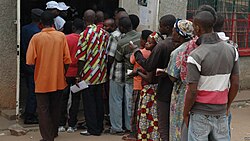
Post-Election Aftermath and Armed Rebellion
The presidential election took place on 21 July 2015 without opposition participation. While opposition leader Agathon Rwasa proposed a national unity government, the government rejected any truncation of Nkurunziza's term. The following months saw a wave of high-profile assassinations, including General Adolphe Nshimirimana (chief of presidential security) and Jean Bikomagu (a Civil War military leader).
By December 2015, the conflict shifted toward organized insurgency. On 11 December, coordinated attacks hit three military camps and an officers' school in Bujumbura. The government reported 87 "enemies" killed, though residents reported seeing bodies of young men with their hands tied, suggesting extrajudicial killings. This period saw the emergence of rebel groups such as the Republican Forces of Burundi (FOREBU) and the Resistance for the Rule of Law in Burundi (RED-Tabara).
Constitutional Shifts (2016–2017)
Despite the unrest, the government pursued political reforms. In August 2016, a consultative commission suggested the removal of presidential term limits. By May 2017, Nkurunziza appointed a commission to draft constitutional changes to formalize this removal, potentially allowing him to run for a fourth term. Throughout 2017, sporadic violence continued, with several grenade attacks targeting bars in Bujumbura and other districts, resulting in numerous casualties.
Key Facts
- Trigger: President Nkurunziza's bid for a third term in 2015, viewed as unconstitutional.
- Coup Attempt: Led by Major General Godefroid Niyombare on 13 May 2015; failed due to loyalist control of state media and the presidential palace.
- Casualties: Hundreds detained and dozens killed through street protests, grenade attacks, and military clashes.
- Rebel Groups: Formation of FOREBU and RED-Tabara to forcibly remove the president.
- Outcome: Nkurunziza was sworn in for a third term on 20 August 2015, followed by efforts to remove term limits entirely.
| Date | Event | Key Outcome |
|---|---|---|
| April 2015 | Third-term announcement | Widespread protests in Bujumbura |
| May 13, 2015 | Coup attempt | Failed; loyalists retain power |
| July 21, 2015 | Presidential Election | Boycotted by opposition; Nkurunziza wins |
| Dec 11, 2015 | Bujumbura attacks | Heavy casualties; rise of FOREBU/RED-Tabara |
| May 2017 | Constitutional Commission | Drafting removal of presidential term limits |
Frequently Asked Questions
Why did the protests start in April 2015?
The protests were triggered by the ruling CNDD-FDD's announcement that President Pierre Nkurunziza would run for a third term, which opponents claimed violated the constitution's limit of two terms per president.
Who led the attempted coup in May 2015?
The coup was led by Major General Godefroid Niyombare, a former army chief of staff and head of intelligence, along with other senior military and police officers.
What was the role of the African Union during the crisis?
The African Union condemned the coup attempt and later planned to send peacekeepers to Burundi in December 2015. However, the Burundian government rejected the deployment, calling it a potential invasion.
What happened to the opposition during the 2015 election?
Main opposition groups boycotted the election on 26 June 2015. Following the vote, opposition leader Agathon Rwasa proposed a national unity government, but his conditions for truncating the president's term were rejected.
What were FOREBU and RED-Tabara?
These were rebel groups formed in late 2015 dedicated to forcing President Nkurunziza out of power through armed struggle.